

Vai in più basso per leggere l’originale in italiano.
PART I – THE ROOTS (1954-1970)
Chapter 1 – Osvaldo’s Birth and Childhood (continued)
The March bath
A few months later, still in that house on via Asti, the episode happened that my mother would recount for the rest of her life.
It was March, and it was still cold. I was three years old, Aunt Tina four. Uncle Luigi was still a newborn in the carriage. I had removed the safety chain—back then it was used from the inside to keep small children in the house. My small but determined fingers on the cold iron. Click. The door opened. And we went out.
«I don’t know what flashed through our heads,» says Aunt Tina when she tells the story. «We went down to play and then headed toward the sea.»
Straight toward the beach. Bare feet running on the asphalt, then on the sand. And then into the water. In the middle of March. We took off all our clothes, stayed in our underwear. I don’t know who lost their shoe, who lost their socks.
Nonna was looking for us around the house. She couldn’t find us. She looked out from the balcony—from the corner you could see a sliver of sea, through via Roma. There weren’t all those buildings that are there now.
And she saw two little black things in the middle of the water.
«She got a terrible suspicion,» recounts Aunt Tina. «I don’t know who enlightened her.» She took Uncle Luigi, left him in the carriage, and said «I’ll be right back, I’m going to look for the other two.»
She took off running. She found us in the water playing, having fun in that freezing March water. She dried us, dressed us with what we had.
And then she gave us a thrashing I can’t even tell you about.
«I was crying,» says Aunt Tina. «And he didn’t shed a tear. He was tough, as a child he was tough. I mean, you couldn’t break him easily.»
This was the first adventure. And the first sign of what my character would be for the next twelve years.
Bicycle adventures
«After that episode nonna was always more careful,» says Isabella. «But you… you kept going anyway. It was as if you already had the sea in your veins. There was no way to keep you still.»
From there I started accompanying Aunt Tina to school on the bicycle. I’d take her to the Virgilio, she was in first grade and I wasn’t going to school yet. I was five years old, but already the passion for bicycles ran through my veins like adrenaline. And then not even one car passed through those streets, so they let me do it.
Gaeta of the 1950s. A world without traffic where a child could pedal freely. The wheels biting the asphalt, the wind whistling in the ears. Every morning the same routine: wake up, breakfast, bicycle. Aunt Tina on the back seat, me pedaling like crazy toward her school.
One day I was racing with another little kid, more or less my age. Via Marconi, on the flat part. I pushed hard. I stood up on the pedals to go faster. And then boom! Tumbled to the ground.
They carried me home in their arms, all bloody, with a tooth sticking out to the side. «Mama was convinced it was an extra tooth,» says Aunt Tina. «But no, it was actually the tooth that with the fall you took, came up, punctured your gum basically.»
I made a mess that time. The taste of blood stayed in my mouth for days.
Isabella shakes her head. «And the beating?»
«Of course. But you knew it. And quiet.» I say. Troublemaker equals beating. It was an unwritten pact that everyone knew. Even knowing you’d get it, you accepted it without replying. This was the education of that era, in a patriarchal family that had already lived through too much and just wanted to look forward.
Grandpa’s Sundays
Sundays had a different taste. I’d run toward the sports field where the sports hall is now, in Serapo. Back then there were pines, grass growing between the roots, and a small box where Grandpa Luigi, the paternal grandfather, kept his bocce balls.
He was originally from Torrice, a small town in Frosinone. He was a miner, his hands always dirty with earth and stone dust. He had met Grandma Gelsomina when they were building the railway tunnel between Fondi and Itri.
He’d see me coming from far away and his face would light up. «Come here Oshvà.»
He had this big basin with all the ice slabs, and stuck in there were the little bottles of San Pellegrino orangeade. We siblings would go there on Sunday and he’d give us the orangeade with a straw. He’d hug and kiss us, I remember.
With Grandma Gelsomina it was different. She was tall, had an authoritarian aura, you know. She slept on the kitchen table with a blanket, always kept the door open. I liked listening to all the things grandpa told in the evening, but if she saw me…
«Pina, what are you serving this son of yours?»
Love, in that voice, there wasn’t any.
The violated piggy bank
When I was a bit older, in middle school, Aunt Maria had a clay piggy bank. She’d put in the little coins she managed to save. I’d look at them through the narrow slit, those coins that shone like small unreachable treasures.
But I had found a way.
«He with the nozzle,» recounts Aunt Maria laughing, «you know the nozzle? The one they’d put with hair curlers to hold the curler. With that thing he’d enter, then he’d open it slowly and slip out the little coins.»
The thin iron penetrating the piggy bank like a magic key. Fingers trembling with concentration. Coins sliding out one at a time, the metallic sound filling my heart with guilt and satisfaction together.
«And he’d smoke cigarettes, understand? And then he’d tell me: ‘You shouldn’t smoke, understand? You shouldn’t smoke.’»
I was already starting in middle school to smoke in secret. MS cigarettes stolen with the money from my sister’s piggy bank. The hypocrisy of those who preach well and behave badly, already at twelve years old. But at least I knew I was a hypocrite. That’s something.
The sweater of discord
In the house there was only one piece that everyone coveted: a yellow turtleneck sweater they’d given to Aunt Tina. «This sweater was really beautiful, proper 1970s,» recounts Aunt Maria, «and we competed over who woke up first to put it on.»
Those were the boom years, when even a sweater could make the difference. The turtleneck that made you feel important, the yellow that shone like the sun. There wasn’t much else in the closet, imagine that. That sweater was our piece of fashion, our window onto the changing world.
«The sweater made the rounds even for Aunt Tina,» continues Aunt Maria. Even she, who was the rightful owner, had to wait in line to wear it.
Every morning was a silent race. Whoever opened their eyes first had the right to the yellow treasure. Whoever arrived second had to settle for normal rags. It was a fierce but mute competition, because waking the others meant losing the advantage.
Naked in the snow
Once, as Aunt Tina recounts, I was five years old and I’d gotten angry inside the house for the usual reason: I couldn’t get what I wanted. As always, when I didn’t get something, I snapped.
But that time it was winter and I did something that even I can’t explain. I undressed. Naked. Without even underwear. And I went outside, into the snow.
The lady from the building across, who lived on the first floor, saw me. «Osvaldo, where are you going? You’ll almost catch bronchitis. Go get dressed, now I’ll call your mother.»
And I went back home fuming. Nonna, who probably had been warned by the neighbor, was waiting for me inside. And she gave me such a thrashing I still remember it. Not just for getting angry, but for going out naked. «You could have died,» she said. «What’s in that head of yours?»
Nothing, evidently. Or too much. I never knew which of the two.
The Venetian blinds
The Venetian blinds in the house were my favorite torment. Those horizontal slats that with a pull cord went up and down. I pulled that cord so many times, so violently, that I broke them all. One by one.
«Every time,» says Aunt Maria, «they had to replace them. And it wasn’t cheap back then.»
But I couldn’t help it. I saw that cord, I had to pull. Like a compulsion. The slats would lift, lower, get crooked. Until they’d break. And then nonna would look at the broken blinds and shake her head. Another expense. Another thing to fix because Osvaldo couldn’t keep his hands still.
«It was almost a game for him,» continues Aunt Maria. «But for nonna it was a cross to bear.»
Actually, it wasn’t a game. It was just me. Unable to stay still. Unable to leave things as they were. Everything I touched had to move, change, break. It was my way of being in the world, the only one I knew.
Daily destructions
Whatever I encountered on the street, I had to throw. Stones, sticks, everything I found. Shoes would regularly split open, and every month nonna was forced to buy a new pair.
Aunt Tina, who maybe also needed new shoes, had to wait. Because there wasn’t money for two pairs, and I couldn’t go with broken shoes.
Same story with beds. When we couldn’t go outside, the pastime was jumping on the bed. Nonna begged us not to do it because the bed springs back then were what they were, they’d break easily. But regularly the springs would loosen and she had to buy new springs.
And it wasn’t just the shoes and bed springs paying the price for my restlessness. Even the rusty tin buckets they kept in the house would chip when I’d bang into them running through the rooms. Back then ceramic pots like now didn’t exist, only that metal that left red traces on the white walls.
I never stopped. I didn’t know what “carefully” or “slowly” meant. Everything I touched, sooner or later broke.
It was my way of being in the world. As if I couldn’t control the force I had inside.
The treasure of Monte Orlando
When I was in middle school I lived through the most difficult period. Because of the difficult situation at home, but also because of bad company, as you’ll understand better later.
Sundays always started the same. Mass at the chapel of the Montagna Spaccata, me and the other kids serving the altar. There was also Antonio, my cousin two years older, but he preferred to watch.
After mass the real program began.
My friends and I headed toward the actual Montagna Spaccata. We’d climb above the dome of the chapel embedded in the rock and suspended in the void above the sea. Then we’d climb over the low railing, which back then was the only protection. And down there, in the precipice, the little coins that the faithful threw shone, for devotion or superstition. Fifty lire, twenty lire, one hundred lire. A small treasure that was just waiting for me.
Antonio stayed behind, watched us worried. At thirteen he understood the danger better. He’d see me leaning over the abyss, hands rummaging among the rocks where the coins got stuck, and his heart beat fast.
«If you fall from here, who will find you again?» he repeated every Sunday, increasingly terrified. Because the precipice was the real deal. If you slipped, you went down. And down meant dying.
But I wasn’t afraid of anything, at eleven years old. I stretched over the abyss more than the others. I’d collect the coins with bare hands, without even the wires with magnets that someone else had figured out how to use. I was reckless. Every Sunday the same story.
Papa in that period was in Latina, in prison. Nonna was holding the family together alone with four children. «Think that I don’t know when they discovered this, he probably had been doing it for a while,» says Aunt Maria. And she was right. I’d been going to get those coins for months.
Antonio finally couldn’t take it anymore. He got scared and broke down.
«But you on Sunday when you go hear mass at the spaccata, where do you go after?» Aunt Tettina asked him with that voice that didn’t allow lies.
«Eh no, then we’re around there a bit…»
«I heard this rumor that Osvaldo goes to get the little coins. Is it true, tell me the truth.»
Antonio betrayed. Because you couldn’t lie to auntie, and because fear was stronger than loyalty between cousins.
«Yes, it’s true. He goes.»
And the storm arrived.
When I got home, I locked myself in the bedroom and didn’t want to open. «I remember this detail that Osvaldo went to lock himself in the bedroom and didn’t want to open,» recounts Aunt Maria.
Uncle Antonio would come knock on the door every so often. «Osvaldo, open. Everyone makes mistakes.»
But I was ashamed. The real kind, the kind that changes you.
When I finally came out of the room, my mother Pina didn’t yell. Worse. She talked. «What does your brain tell you? Do you realize that those are offered money, thrown there because people have faith and say a prayer? And if you fall from up there, who will find you again?»
She continued until she made me cry. Until I truly understood what I had risked. Not just my life, but the pain of the whole family. As if my mother didn’t already have enough worries with papa in prison.
From that moment I didn’t go anymore. The coins continued to shine on the Montagna Spaccata, but without me. I’d understood that some things aren’t worth the risk. And that when you’re eleven and you act stupid, it’s not just your life you’re putting in danger.
The Coca-Cola of shame
Benito’s little van always arrived at the same time. The wheels squeaking on the asphalt of via Cristoforo Colombo, the load of drinks clinking in the truck bed.
Coca-Cola, orangeade, lemon soda. Glass bottles that shone like forbidden jewels.
Antonio Bacchettone, future brother-in-law (husband of Franca, Isabella’s sister) looked at me. I looked at him. Temptation had the taste of bubbles we couldn’t afford. «While he unloaded, we imagine before there was nothing,» recounts Aunt Maria. «And they swiped this bottle.» I didn’t even know what that stuff was, that Coca-Cola. But we wanted it. We wanted it with the desperation of those who at thirteen believe the world owes them something. Benito was unloading the crates. We waited for the right moment. Antonio was faster—he grabbed a bottle and ran. I did the same thing, but not fast enough. Benito’s fingers closed around my wrist. «What are you doing, kid?»
The school bag fell on the asphalt. Lisi Osvaldo, via Cristoforo Colombo number 12.
Everything written there, black on white. Like an anticipated confession. Antonio disappeared around the corner. I stayed there with that bottle in hand that suddenly weighed like a boulder. The walk home lasted an eternity. Benito holding me by the arm, me dragging my feet on the asphalt. The Coca-Cola rippling in the dark glass. When we arrived at the door, mama opened even before Benito rang the bell. As if she’d felt the weight of my shame through the walls. «Signora, your son…» Not many words were needed. The bottle spoke for itself.
Mama didn’t raise her hands. Worse. She talked. With that voice that enters you and digs out your soul. «What does your brain tell you? Do you realize that that’s money from someone who works? And if the carabinieri catch you? If you get in trouble?»
Aunt Maria was clinging to her clothes, tiny. She looked at me with those eyes that already knew. Already understood that this was the moment when something would break forever. Mama’s words continued.
Every syllable a hammer blow bending the iron of my bravado. Until I truly understood what I’d done. Not just steal—betray. Betray the trust of those who raised me thinking I was better than this. From that day the change began. Not immediately, not all at once. Slowly, month by month, the devil left room for the lamb.
But when, many years later, Aunt Franca joined us for Easter Monday in Itri, showing up with Antonio, mama was speechless. Because she remembered him, and not with a good opinion.
The boy who laughed
«He was always the one who maintained harmony in the house,» says Aunt Maria when I ask her the first memory she has of me. «Telling jokes, playing tricks. Always.»
It was strange. Outside the house I was the devil himself, the one who broke everything, who made mama and papa despair. But within the domestic walls I became the entertainer. «He was the person who made us laugh at the table, told jokes.»
As if I had two distinct personalities. The demon for the outside world, the jester for siblings at home. Maybe it was my way of getting forgiven for all the trouble I caused. Or maybe it was simply my character, different from the others.
What’s certain, as Aunt Maria also admits, is that I was the one who took the most beatings of all. Many. Especially from my father, obviously. Partly because that’s how it was done, and then anyway because I was the first male, so papa probably felt more responsibility.
«Then he became a lamb,» continues Aunt Maria speaking of the change that would come at fifteen. But back then, as a child, I was this: a little showman who by day caused disasters and in the evening put on a show for his family.
To be continued…
Subscribe to follow along or check back regularly to read the next installment.
Copyright © Andrew Lisi
Nel primo episodio abbiamo assistito all’ingresso drammatico di Osvaldo nel mondo—un neonato di sei chili nato il giorno dopo che sua madre aveva divorato un pollo intero—e alla sua esperienza di quasi morte cadendo in un pozzo nero aperto a due anni e mezzo.
Questo secondo episodio continua a raccontare la sua infanzia a Gaeta durante gli anni Cinquanta e l’inizio degli anni Sessanta.
La narrazione continua con la sua voce, catturando i dettagli sensoriali crudi di un’infanzia vissuta a tutta velocità, in un’Italia che portava ancora le cicatrici della guerra ma si stava rapidamente trasformando in qualcosa di nuovo.
PARTE I – LE RADICI (1954-1970)
1 – Nascita e infanzia di Osvaldo (continua)
Il bagno di marzo
Qualche mese dopo, sempre in quella casa di via Asti, è successo l’episodio che mia madre avrebbe raccontato per tutta la vita.
Era marzo, e faceva ancora freddo. Io avevo tre anni, Tina quattro. Zio Luigi era ancora un neonato nella carrozzina. Avevo tolto la catenella di sicurezza – all’epoca si usava dall’interno per tenere i bambini piccoli dentro casa. Le mie dita piccole ma decise sul ferro freddo. Clic. La porta si aprì. E noi uscimmo.
«Non lo so che cosa ci è balenato nella testa» dice Tina quando racconta. «Siamo scesi giù a giocare e poi ci siamo avviati verso il mare.»
Dritti verso la spiaggia. I piedi nudi che correvano sull’asfalto, poi sulla sabbia. E poi in acqua. In pieno marzo. Ci siamo tolti tutti i panni, siamo rimasti in mutandine. Non so chi ha perso la scarpa, chi ha perso le calze.
Nonna ci cercava per casa. Non ci trovava. Si è affacciata al balcone – dall’angolo si vedeva uno spicchio di mare, attraverso via Roma. Non c’erano tutte quelle case che ci sono adesso.
E ha visto due cosine nere in mezzo all’acqua.
«Gli è venuto un dubbio atroce» racconta Tina. «Non so chi l’ha illuminata.» Ha preso zio Luigi, l’ha lasciato nella carrozzina, e ha detto «vengo subito, vado a cercare gli altri due.»
È partita di corsa. Ci ha trovati che stavamo in acqua a giocare, a divertirci con quell’acqua gelida di marzo. Ci ha asciugati, ci ha vestiti con quello che avevamo.
E poi ci ha fatto una trescata che non te la dico.
«Io ci piangevo» dice Tina. «E lui manco una lacrima. Era tosto, da piccolo era tosto. Cioè non lo abbattevi facilmente.»
Questa è stata la prima avventura. E il primo segnale di quello che sarebbe stato il mio carattere per i prossimi dodici anni.
Avventure in bicicletta
«Dopo quell’episodio nonna stava sempre più attenta,» dice Isabella. «Ma tu… tu hai continuato lo stesso. Era come se avessi il mare nelle vene già da allora. Non c’era modo di tenerti fermo.»
Da lì ho iniziato ad accompagnare Tina a scuola con la bicicletta. La portavo fino al Virgilio, lei andava in prima e io ancora non ci andavo a scuola. Avevo cinque anni, ma già la passione per la bicicletta mi correva nelle vene come adrenalina. E poi non passava manco una macchina per quelle strade, quindi mi lasciavano fare.
Gaeta degli anni ’50. Un mondo senza traffico dove un bambino poteva pedalare libero. Le ruote che mordevano l’asfalto, il vento che fischiava nelle orecchie. Ogni mattina la stessa routine: sveglia, colazione, bicicletta. Tina sul sellino dietro, io che pedalavo come un pazzo verso la sua scuola.
Un giorno stavo facendo la gara con un altro ragazzetto, più o meno della mia età. Via Marconi, nella parte in piano. Spingevo forte. Mi alzo sui pedali per andare più veloce. E poi boom! Capitombolo per terra.
M’hanno portato a casa in braccio, tutto sanguinante, con un dente che mi usciva di lato. «Mamma era convinta che fosse un sopraddente» dice Tina. «E invece no, era proprio il dente che con la caduta che hai fatto, ti è salito, ti ha bucato la gengiva praticamente.»
Ho fatto un macello quella volta. Il sapore del sangue mi è rimasto in bocca per giorni.
Isabella scuote la testa. «E le botte?»
«Certo. Ma lo sapevi. E zitto.» dico io. Monello uguale botte. Era un patto non scritto che tutti conoscevano. Anche sapendo che le avresti prese, le accettavi senza replicare. Questa era l’educazione dell’epoca, in una famiglia patriarcale che aveva già vissuto troppo e voleva solo guardare avanti.
Le domeniche del nonno
Le domeniche avevano un sapore diverso. Correvo verso il campo sportivo dove adesso c’è il palazzetto, a Serapo. Allora c’erano i pini, l’erba che cresceva tra le radici, e un piccolo box dove nonno Luigi, il nonno paterno, teneva le sue bocce.
Era originario di Torrice, un paesino del Frusinate. Faceva il minatore, aveva le mani sempre sporche di terra e polvere di pietra. Aveva conosciuto nonna Gelsomina quando costruivano il tunnel ferroviario tra Fondi e Itri.
Mi vedeva arrivare da lontano e il viso gli si illuminava. «Vieni qua Oshvà.»
C’aveva questa grande bacinella con tutte le lastre di ghiaccio, e ci stavano infilate le bottigliette di aranciata San Pellegrino. Noi fratelli andavamo lì la domenica e lui ci dava l’aranciata con la cannuccia. Ci abbracciava e baciava, mi ricordo.
Con nonna Gelsomina era diverso. Lei era alta, aveva un’aura autoritaria, sai. Dormiva sul tavolo della cucina con una coperta, teneva sempre la porta aperta. A me piaceva ascoltare tutte le cose che raccontava nonno la sera, ma se lei mi vedeva…
«Pina, che sei a servì stu figlio tuo?»
Amore, in quella voce, non ce n’era.
Il salvadanaio violato
Quando ero un po’ più grande, alle medie, Maria aveva un salvadanaio di coccio. Ci metteva le monetine che riusciva a mettere da parte. Io le guardavo attraverso la fessura stretta, quelle monete che brillavano come piccoli tesori irraggiungibili.
Ma avevo trovato il modo.
«Lui col beccuccio,» racconta Maria ridendo, «hai presente il beccuccio? Quello che si metteva in testa per fermare il bigodino. Con quello lì entrava, poi lo apriva piano piano e sfilava le monetine.»
Il ferro sottile che penetrava nel salvadanaio come una chiave magica. Le dita che tremavano per la concentrazione. Le monete che scivolavano fuori una alla volta, il suono metallico che mi riempiva il cuore di colpa e soddisfazione insieme.
«E si fumava le sigarette, capito? E poi a me diceva: ‘Tu non devi fumare, capito? Non devi fumare.’»
Iniziavo già alle medie a fumare di nascosto. Le MS rubate con i soldi del salvadanaio di mia sorella. L’ipocrisia di chi predica bene e razzola male, già a dodici anni. Ma almeno sapevo di essere ipocrita. Già qualcosa.
Il maglione della discordia
In casa c’era un solo capo che faceva gola a tutti: un maglione giallo a collo alto che avevano regalato a Tina. «Era bellissimo sto maglione proprio degli anni ’70,» racconta Maria, «e facevamo a gara chi si svegliava prima per metterselo.»
Erano gli anni del boom, quando anche un maglione poteva fare la differenza. Il collo alto che ti faceva sentire importante, il giallo che brillava come il sole. Non c’era molto altro nell’armadio, figurati. Quel maglione era il nostro pezzo di moda, la nostra finestra sul mondo che cambiava.
«Il maglione faceva il giro pure di Tina,» continua Maria. Perfino lei, che era la legittima proprietaria, doveva fare la fila per indossarlo.
Ogni mattina era una corsa silenziosa. Chi apriva gli occhi per primo aveva diritto al tesoro giallo. Chi arrivava secondo doveva accontentarsi degli stracci normali. Era una competizione feroce ma muta, perché svegliare gli altri significava perdere il vantaggio.
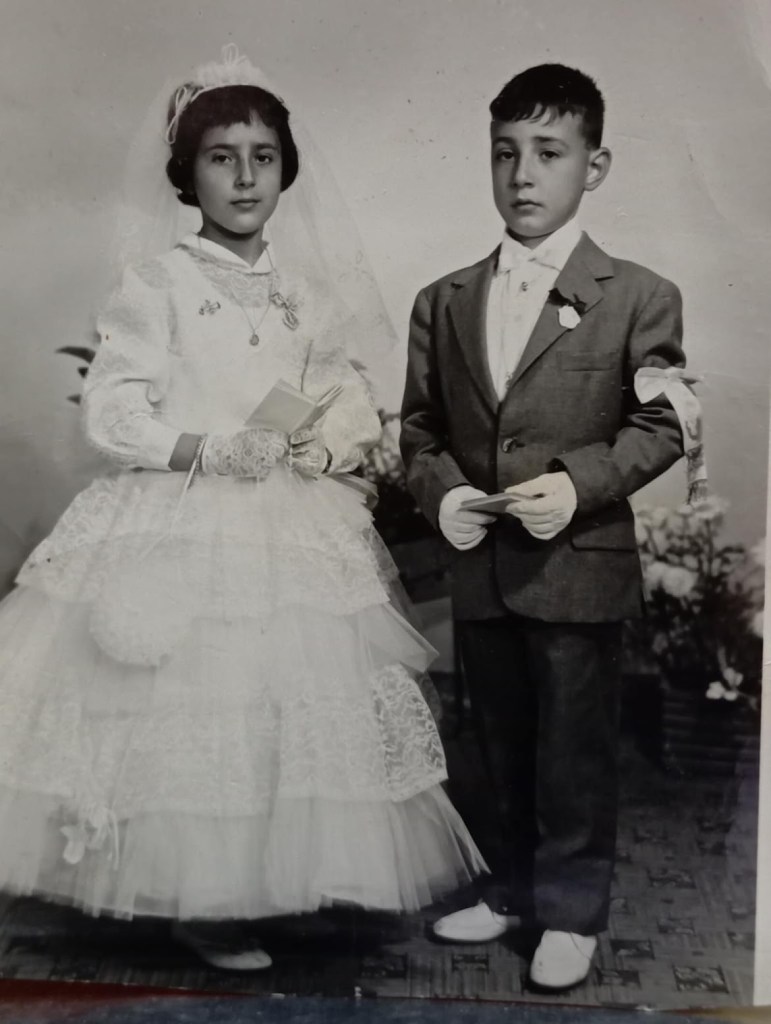
Nudo nella neve
Una volta, come racconta Tina, avevo cinque anni e mi ero incavolato dentro casa per il solito motivo: non riuscivo ad avere quello che volevo. Come sempre, quando non ottenevo qualcosa, scattavo.
Ma quella volta era inverno e ho fatto una cosa che nemmeno io so spiegarmi. Mi sono spogliato. Nudo. Senza manco le mutande. E sono uscito fuori, in mezzo alla neve.
La signora della palazzina di fronte, che abitava al primo piano, mi ha visto. «Osvaldo, ma dove stai andando? Quasi ti prendi una bronchite. Vatti a vestire, ora chiamo tua madre.»
La mia risposta è stata immediata. Ho alzato il braccio e l’ho mandata a quel paese. Come se niente fosse. Come se fosse normale, per un bambino di cinque anni, mandare al diavolo una signora adulta mentre sta nudo nella neve.
Ero piccolo, ma già sapevo come far perdere la pazienza a tutti. Compresi i vicini di casa.
Il tavolo di marmo
Quando qualcosa non andava come volevo io, davo di testa. E quando accadeva, non c’era verso di fermarmi.
Una volta, non so nemmeno più per cosa, mia madre mi aveva detto di no. Due volte, tre volte. Per ripicca e rabbia, ho cominciato a tirare fuori i cassetti della cucina. Tovaglioli, posate, tutto per terra. Un disastro totale.
«Raccogli e metti a posto» mi diceva lei.
«No, io non metto a posto.»
Era la mia risposta. Sempre quella. Non arretravo di un millimetro.
Pina a un certo punto ha detto: «Va bene, metto a posto io. Ma quando torna tuo padre ti faccio fare i conti con lui.»
Quando è tornato Armando, lei gli ha raccontato tutto. Inclusa la parolaccia che avevo tirato fuori nel frattempo, perché quando mi incavolavo non avevo freni.
«Vieni qua» ha detto lui.
Io sapevo cosa mi aspettava, ma sono andato lo stesso. Mi ha preso, mi ha messo in ginocchio e mi ha legato al tavolo della cucina. Quel tavolo non lo muovevi manco col carro armato perché aveva il marmo sopra, pesava quintali.
«Chiedi perdono, sennò non ti sciolgo.»
«Non chiedo perdono.»
E così sono rimasto. In ginocchio, legato a quel tavolo, per ore. Lui che ogni tanto tornava: «Chiedi perdono». Io: «No».
Alla fine nonna si è mossa a pietà. Era già sera quando mi ha slegato. Ma non ho mai chiesto perdono. Nemmeno quando mi facevano male le ginocchia. Nemmeno quando non ne potevo più.
A sei anni ero già testardo come un mulo.
Dieci lire di dignità
Alle elementari andavo dalle suore con Tina. Ogni mattina scendevamo insieme verso il convento.
C’era suor Eufrasia che vendeva cosine dolci per merenda. Ma ci volevano dieci lire.
Quella mattina nostra madre ne aveva date solo cinque. «Io con queste non ci faccio niente. Dammi dieci lire perché sennò non vado a scuola.»
«Tu vai a scuola e ci vai con le cinque lire se ci vuoi andare, sennò non se ne parla. Dieci lire non ce l’ho.»
Tira e molla, tira e molla. Siamo scesi, Tina mi tirava per il braccio. «Muoviti! Facciamo tardi.»
Ma io da sotto al balcone continuavo a protestare. Volevo quelle dieci lire. E nel mezzo, mi è scappata anche una parolaccia.
Dal piano di sopra mamma ha detto: «Sali un attimo, che te le do.»
Io ci sono cascato. Sono salito, e anche Tina dietro di me. Appena mamma ha aperto la porta, ho preso la cartella e l’ho sbattuta per tutto il corridoio. Era lungo, dritto, dalla porta fino al bagno.
Mamma ha chiuso la porta dietro di noi. «Che hai detto? Ripeti un po’?»
«Io… niente.»
Mi ha preso per il muso e me l’ha fatto a zigzag. Sono stato dieci giorni con la faccia gonfia. Quella parola non l’ho mai più detta. Ma nemmeno ho chiesto scusa.
La biglia che costò cara
In prima elementare avevo la maestra più severa di tutte: suor Giulia. Era una parente alla lontana di nonno Luigi, il che non mi aiutava affatto. La scuola era a pochi passi da casa, all’angolo tra via Atratina e via Cristoforo Colombo. Quel giorno, Tina mi aveva detto: «Aspettami, andiamo insieme.» Ma io niente: «No, io vado prima.»
In tasca avevo una biglia di vetro, bella grossa. Arrivato davanti al portone della scuola, ancora chiuso, mi sono messo a giocare da solo. Tiravo la biglia lungo il pavimento liscio dell’ingresso, e a un certo punto — zac — ha preso uno scalino, è schizzata in alto ed è andata a sbattere contro la vetrata della porta interna. Un rumore secco. Il vetro si è incrinato tutto.
Lì per lì sono rimasto impietrito. Poi mi sono voltato e me la sono data a gambe. Una suora di guardia mi ha visto, ma io avevo già ripreso la biglia e stavo tornando a casa.
«Che ci fai qui?»
«Io oggi non vado a scuola.»
Mamma non c’era, era uscita per lavoro. Quando è tornata, la suora aveva già detto tutto a Tina: «Vedi che tuo fratello ha rotto la vetrata, giocando.» E io continuavo a negare: «Non sono stato io.» — «Ma come, eri da solo! Chi è stato, il fantasma?» Alla fine nonno è andato a riparare il vetro rotto. E io mi sono preso la sgridata. Ma la biglia non l’ho buttata.
I litigi con la sorella maggiore
I rapporti con Tina non erano sempre idilliaci. Eravamo quasi coetanei e ci facevamo spesso guerra.
Un giorno stavamo sul balcone di casa. Avevamo una lattina vuota – di quelle dei piselli o dei pelati – e ci stavamo giocando. A un certo punto abbiamo litigato per chi la doveva tenere.
Io sono riuscito a prenderla per primo e l’ho tirata. Nel tirarla, la parte di lamiera aperta l’ha beccata sulla testa. L’ho ferita, non tanto, ma l’ho ferita.
Lì le botte le ho prese eccome. Perché avevo fatto male a mia sorella. E quello, in casa nostra, non si faceva.
Ma qualche anno prima, quando Tina si era ammalata per davvero, mi ero comportato meglio. Lo racconta ancora oggi Maria. Dice che avevano ricoverato Tina perché aveva la febbre alta da giorni e non passava. E io stetti lì, in piedi davanti alla porta dell’ospedale, zitto. Non dicevo una parola. Guardavo la porta dell’ospedale come se volessi entrarci io… Ero piccolo, e impotente. Ma già allora, qualcosa in me sapeva cosa vuol dire aspettare in silenzio.
E a proposito, una volta di sera Maria e Luigi mi hanno trovato appoggiato allo stipite della porta, che dormivo in piedi. Non volevo andare a dormire senza Tina. Avevo detto: “Aspetto Tina”, e mi ero addormentato là.
Distruzioni quotidiane
Qualunque cosa incontravo per strada, dovevo tirare. Sassi, bastoni, tutto quello che trovavo. Le scarpe si aprivano puntualmente, e ogni mese nonna era costretta a comprarne un paio nuovo.
Tina, che magari aveva bisogno pure lei di scarpe nuove, doveva aspettare. Perché i soldi per due paia non c’erano, e io non potevo andare con le scarpe rotte.
Stessa storia con i letti. Quando non potevamo uscire fuori, il passatempo era saltare sul letto. Nonna ci scongiurava di non farlo perché le reti all’epoca erano quelle che erano, si sfasciavano facilmente. Ma puntualmente le reti si allentavano e doveva ricomprare reti nuove.
E non erano solo le scarpe e le reti dei letti a pagare il prezzo della mia irrequietezza. Anche i secchi di stagno arrugginiti che tenevano in casa si scheggiavano quando ci battevo contro girando per le stanze. All’epoca non esistevano i vasi di ceramica come adesso, solo quel metallo che lasciava tracce rosse sui muri bianchi.
Non mi fermavo mai. Non sapevo cosa significasse “con attenzione” o “piano”. Tutto quello che toccavo, prima o poi si rompeva.
Era il mio modo di stare al mondo. Come se non riuscissi a controllare la forza che avevo dentro.
Il tesoro di Monte Orlando
Quando ero alle medie ho vissuto il periodo più difficile. Per via della situazione difficile che c’era a casa, ma anche delle cattive frequentazioni, come capirai meglio più avanti.
Le domeniche iniziavano sempre uguali. Messa alla cappella della Montagna Spaccata, io e gli altri ragazzini che servivamo l’altare. C’era anche Antonio, mio cugino più grande di due anni, ma lui preferiva stare a guardare.
Dopo la messa cominciava il vero programma.
Io e i miei amici ci dirigevamo verso la Montagna Spaccata, nelle falesie di Monte Orlando. Salivamo sopra la cupola della cappella incastonata nella roccia e sospesa nel vuoto sopra il mare. Poi scavalcavamo la ringhiera bassa, che all’epoca era l’unica protezione. E lì sotto, nel dirupo, brillavano le monetine che i fedeli buttavano, per devozione o superstizione. Cinquanta lire, venti lire, cento lire. Un piccolo tesoro che aspettava solo me.
Antonio restava indietro, ci guardava preoccupato. A tredici anni capiva meglio il pericolo. Mi vedeva sporgermi sul baratro, le mani che frugavano tra le rocce dove si incastravano le monete, e il cuore gli batteva forte.
«Se cadete da qua, chi vi ritrova più?» si ripeteva ogni domenica, sempre più terrorizzato. Perché il dirupo era quello vero. Se scivolavi, finivi giù. E giù significava morire.
Ma io non avevo paura di niente, a undici anni. Mi allungavo sul baratro più degli altri. Raccoglievo le monetine a mani nude, senza neanche i fili con le calamite che qualcuno altro si era ingegnato a usare. Ero incosciente. Ogni domenica la stessa storia.
Papà in quel periodo era a Latina, nelle carceri. Nonna teneva in piedi la famiglia da sola con quattro bambini. «Pensa che io non so questo quando l’hanno scoperto, lui probabilmente lo faceva già da tanto» dice Maria. E aveva ragione. Erano mesi che andavo a prendere quelle monetine.
Antonio alla fine non ce la fece più. Si prese paura e crollò.
«Ma tu la domenica quando vai a sentire la messa alla spaccata, dopo dove vieni?» gli chiese zia Tettina con quella voce che non ammetteva bugie.
«Eh no, poi siamo un po’ in giro là…»
«A me è arrivata questa voce che Osvaldo va a prendere le monetine. È vero, dimmi la verità.»
Antonio tradì. Perché alla zia non si poteva mentire, e perché la paura era più forte della lealtà tra cugini.
«Sì, è vero. Ci va.»
E arrivò la tempesta.
Quando tornai a casa, mi chiusi in camera da letto e non volevo aprire. «Mi ricordo questo particolare che Osvaldo si andò a chiudere nella stanza da letto e non voleva aprire» racconta Maria.
Zio Antonio ogni tanto veniva a bussare alla porta. «Osvaldo, apri. Tutti sbagliano.»
Ma io avevo vergogna. Quella vera, quella che ti cambia.
Quando alla fine uscii dalla stanza, mia madre Pina non urlò. Peggio. Parlò. «Ma a te il cervello che ti dice? Ti rendi conto che quelli sono soldi offerti, buttati là perché la gente ha fede e fa una preghiera? E se cadi da lassù, chi ti ritrova più?»
Continuò fino a farmi piangere. Fino a quando non capii davvero cos’avevo rischiato. Non solo la vita mia, ma il dolore di tutta la famiglia. Come se mia madre non avesse già abbastanza pensieri con papà in carcere.
Da quel momento non ci andai più. Le monetine continuarono a brillare sulla Montagna Spaccata, ma senza di me. Avevo capito che alcune cose non valgono il rischio. E che quando hai undici anni e fai lo scemo, non è solo la tua vita che metti in pericolo.
La Coca-cola della vergogna
Il furgoncino di Benito arrivava sempre alla stessa ora. Le ruote che cigolano sull’asfalto di via Cristoforo Colombo, il carico di bibite che tintinna nel cassone.
Coca-Cola, aranciata, gassosa al limone. Bottiglie di vetro che brillano come gioielli proibiti.
Antonio Bacchettone, futuro cognato (marito di Franca, sorella di Isabella) mi guardò. Io lo guardai. La tentazione aveva il sapore delle bollicine che non potevamo permetterci. «Mentre scaricava, noi figurati prima non c’era niente» racconta Maria. «E loro si sono fregati sta bottiglia.» Non sapevo manco che roba era, quella Coca-Cola. Ma la volevamo. La volevamo con la disperazione di chi a tredici anni crede che il mondo gli debba qualcosa. Benito scaricava le casse. Noi aspettavamo il momento giusto. Antonio fu più veloce – afferrò una bottiglia e scappò. Io feci la stessa cosa, ma non abbastanza in fretta. Le dita di Benito si chiusero attorno al mio polso. «Che fai, ragazzino?»
La cartella cadde sull’asfalto. *Lisi Osvaldo, via Cristoforo Colombo numero 12.*
Tutto scritto lì, nero su bianco. Come una confessione anticipata. Antonio sparì dietro l’angolo. Io rimasi lì con quella bottiglia in mano che all’improvviso pesava come un macigno. Il cammino verso casa durò un’eternità. Benito che mi teneva per il braccio, io che trascinavo i piedi sull’asfalto. La Coca-Cola che ondeggiava nel vetro scuro. Quando arrivammo alla porta, mamma aprì ancora prima che Benito suonasse il campanello. Come se avesse sentito il peso della mia vergogna attraverso i muri. «Signora, suo figlio…» Non servivano tante parole. La bottiglia parlava da sola.
Mamma non alzò le mani. Peggio. Parlò. Con quella voce che ti entra dentro e ti scava l’anima. «Ma a te il cervello che ti dice? Ti rendi conto che quelli sono soldi di qualcuno che lavora? E se ti beccano i carabinieri? Se finisci nei guai?»
Maria era attaccata alle sue vesti, piccolina. Mi guardava con quegli occhi che già sapevano. Già capivano che quello era il momento in cui qualcosa si sarebbe rotto per sempre. Le parole di mamma continuarono.
Ogni sillaba un colpo di martello che piegava il ferro della mia spavalderia. Fino a quando non capii davvero cos’avevo fatto. Non solo rubare – tradire. Tradire la fiducia di chi mi aveva cresciuto pensando che fossi meglio di così. Da quel giorno iniziò il cambiamento. Non subito, non tutto insieme. Lentamente, mese dopo mese, il diavolo lasciò il posto all’agnello.
Ma quando, tanti anni dopo, Franca – sorella di Isabella – si unì con noi alla Pasquetta a Itri, presentandosi con Antonio, mamma rimase senza parole. Perché se lo ricordava, e non con una buona opinione.
Il ragazzo che rideva
«Lui era sempre quello che manteneva l’armonia in casa,» dice Maria quando le chiedo il primo ricordo che ha di me. «A raccontare barzellette, a fare scherzi. Sempre.»
Era strano. Fuori casa ero il diavolo in persona, quello che rompeva tutto, che faceva disperare mamma e papà. Ma dentro le mura domestiche diventavo l’intrattenitore. «Era la persona che ci faceva ridere a tavola, raccontava le barzellette.»
Come se avessi due personalità distinte. Il demonio per il mondo esterno, il giullare per i fratelli a casa. Forse era il mio modo di farmi perdonare tutti i guai che combinavo. O forse era semplicemente il mio carattere, diverso dagli altri.
Certo è, come ammette anche Maria, che io sono stato quello che ha preso più mazzate di tutti. Tante. Soprattutto da mio padre, ovviamente. Un po’ perché si usava fare così, e poi comunque perché ero il primo maschio, quindi papà sentiva probabilmente più responsabilità.
«Poi è diventato un agnello,» continua Maria parlando del cambiamento che sarebbe arrivato a quindici anni. Ma allora, da bambino, ero questo: un piccolo showman che di giorno combinava disastri e di sera faceva spettacolo per la sua famiglia.
Continua…
Pubblicherò un capitolo alla volta nei prossimi mesi, condividendo la storia dei miei genitori mentre la scrivo e la raffino.
Iscriviti per seguire o torna regolarmente per leggere la prossima puntata.
A Family Memoir in Progress — All episodes
← Introduction & Episode 1 | Episode 3: Isabella’s Childhood →


One thought on “A Family Memoir in Progress — Episode 2: Osvaldo’s Childhood Adventures”