

In September 2024, I spent a long weekend with my wife and son in Bagno di Romagna, a small Italian town known for its thermal baths.
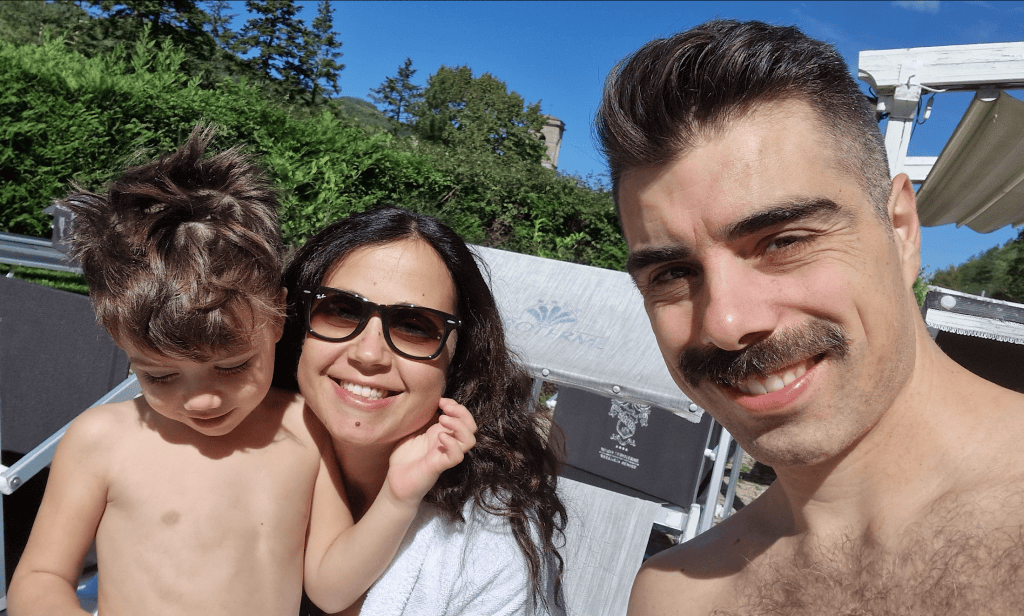
We enjoyed the pools, took walks and generally tried to relax. I also ate too much at the hotel buffet and woke up around four in the morning feeling rather uncomfortable.
A good opportunity to read.
I had recently discovered How to Get Rich by Felix Dennis, thanks to Sam Parr and the My First Million podcast. I’d been following Parr for his entrepreneurial insights, and this particular recommendation caught my attention.
The title was terrible. It sounded like another get-rich-quick manual, written to sell courses or expensive coaching programs.
Dennis, however, had actually made an enormous fortune. He founded a publishing empire, launching and acquiring magazines including Maxim, The Week, and several successful computer titles.
He wasn’t selling the promise of becoming rich. He was describing his own experience, including the mistakes, excesses and personal damage that came with it.
I devoured the book over that weekend.
I deemed it both hilarious and fascinating. What impressed me most was Dennis’s directness, his lack of bullshit and his willingness to discuss the less attractive consequences of his success.
Above all, one passage stayed with me.
If he could live his life again, he wrote, he’d try to make enough money to live comfortably—around £30 or £40 million—by the age of 35. Then he’d cash out and spend his time writing poetry and planting trees.
Forty million pounds.
Just enough, apparently.
I found that wonderfully absurd.
And surprisingly useful.
1. Being rich isn’t necessarily worth the effort
Felix Dennis published How to Get Rich in the mid-2000s, after decades spent building Dennis Publishing into one of Britain’s most successful independent media companies.
His book contains genuine business advice. He discusses ownership, negotiation, risk-taking, hiring, cash flow and the importance of acting instead of endlessly talking about ideas.
But he also repeatedly warns readers about what they’re getting themselves into.
Making a serious fortune requires more than a few clever strategies. Dennis describes years of hard work, enormous personal risks and a willingness to pursue opportunities that most people would find exhausting or frightening.
He also admits that the pursuit took a considerable toll on his personal life.
I particularly appreciate that he doesn’t pretend the experience was entirely negative. He enjoyed building businesses. He enjoyed making deals. He loved the game.
But he recognized that winning it hadn’t automatically made him happier.
That’s unusual in a genre dominated by people who want you to believe that becoming wealthier is an uncomplicated improvement in your circumstances.
By the time I read Dennis, I’d already spent nearly ten years running my own company, Copy Persuasivo®, working with entrepreneurs, and investing much of my income.
I wasn’t close to becoming a multimillionaire, but I had enough experience to understand what he meant.
I loved building my business. I also knew how easily it could consume my attention.
The financial results were gratifying. Some of the work required to produce them was not.
2. His £40 million figure says more about ambition than money
Let’s return to that number.
Dennis imagined stopping at £30–40 million, a sum that would allow him to live exceptionally well without having to work again.
Most people, of course, would consider themselves extremely wealthy with a fraction of that.
In Italy, where I live, the contrast is even more striking.
According to ISTAT, Italy’s national statistics institute, the median net annual income of Italian couples with children was €49,894 in 2024, for the entire household.
Average monthly household consumption in Emilia-Romagna, my region, was €3,159 in 2025.
These figures aren’t my family’s budget, but they provide a useful reference.

We spend most of the year in Ravenna and part of it around Gaeta, the coastal town where I grew up. We have two children, enjoy travelling and try to organize at least one substantial family holiday every year, plus several shorter ones.
It’s a comfortable lifestyle, and one that requires financial resources. But it doesn’t require anything remotely close to Dennis’s proposed fortune.
I don’t think he was offering £40 million as a universal threshold. He was joking, to some extent, about his own extraordinary expectations.
That’s why the passage works.
His version of enough was already an enormous fortune, yet he’d continued accumulating money far beyond it.
At the time I read his book, my personal target was €20,000 a month while working no more than twenty hours a week.
I’d previously aimed for €8,000 a month.
Both numbers were largely arbitrary.
They reflected my changing expectations as my business grew, rather than a detailed calculation of what my family actually needed.
Dennis made me wonder whether I was beginning to play the same game on a much smaller scale.
3. Making money can become an addiction
Dennis was unusually candid about his excesses.
His experiences with drugs, extravagant spending and complicated relationships were hardly examples I’d want to imitate.
He also recognized another obsession: the pleasure of making money itself.
I understand that one rather well.
There’s a particular excitement in finding a commercial opportunity, developing a plan, negotiating a deal and watching it work.
As an entrepreneur, I’ve experienced that satisfaction repeatedly.
A successful marketing campaign.
A client signing a substantial contract.
An apartment purchased at an attractive price and transformed into a profitable rental property.
I enjoy the intellectual challenge almost as much as the financial return.
In September 2024, I’d just acquired my second apartment in Ravenna, financing most of the purchase with a mortgage. I was planning to renovate it into seven rooms for students and young workers.
It was my second substantial real-estate investment in less than two years.
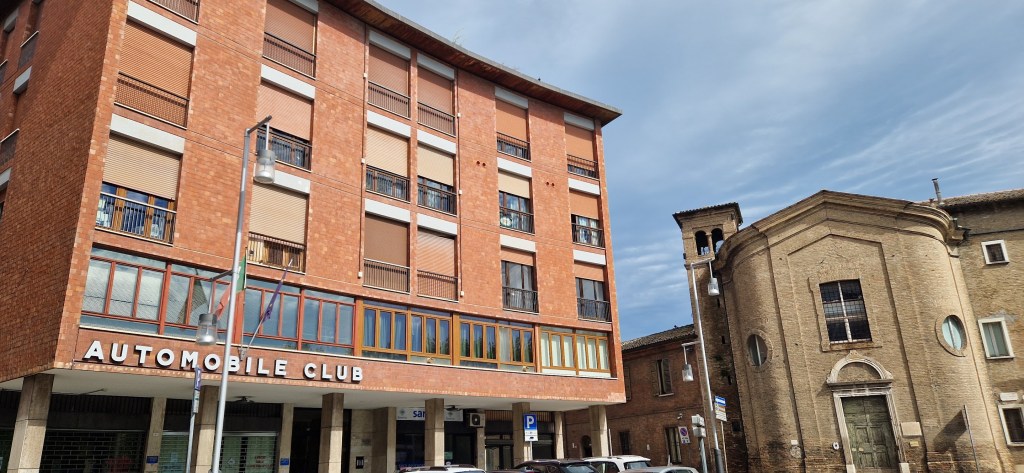
I already had another property producing income, and I could see how to repeat the process.
I remember feeling increasingly like a real investor rather than somebody who simply worked for clients and saved money.
The prospect was exciting.
Yet Dennis reminded me that excitement can become its own trap.
Once you’ve proved you can make money, you may want to prove it again.
And again.
At some point, the challenge becomes more important than the reward.
I’m still susceptible to that. I enjoy looking at property listings, studying businesses and imagining what I could build next.
But I try to distinguish between an interesting opportunity and one that genuinely deserves several years of my life.
4. Ownership matters more than looking successful
One of Dennis’s strongest business lessons concerns ownership.
He built his fortune by owning businesses and valuable publishing assets. He was extremely reluctant to give away equity, because he understood how much the eventual value of a successful company depended on who owned it.
This resonated with me.
I’d spent years working as a copywriter and marketing consultant. I could earn good money by helping clients sell more, but the income depended, at least partly, on continuing to provide services.
I wanted to build things I could own and benefit from for years.
That ambition led me toward intellectual property—books, courses and brands—and eventually residential real estate.
My shared apartments in Ravenna are a good example.
I acquired properties, invested in improvements, organized their management and marketed individual rooms to students and young professionals.
The apartments continue to generate revenue long after the original renovation work is finished.
Of course, they aren’t entirely passive. There are tenants, repairs, taxes, mortgages and occasional unpleasant surprises.
But ownership has changed my relationship with work.
I can benefit from assets without personally performing every task required to keep them operating.
I discussed this distinction in my article and podcast episode, Where I Invested My Money, and Why Liquidity Matters.
Dennis’s publishing empire was far larger and more sophisticated than anything I’ve built.
Still, the underlying principle is relevant even to a small Italian entrepreneur: the ability to create and retain ownership can matter more than earning an impressive fee.
5. Hire talented people, but don’t build yourself another job
Dennis also strongly believed in employing capable people and allowing them to create value.
This was another idea I wanted to apply immediately.
In my diary, I wrote about recruiting better collaborators, transferring responsibilities and eventually stepping away from day-to-day operations.
I had already experimented with delegation in Copy Persuasivo®, sometimes successfully and sometimes with frustrating results.
In September 2024, I was considering giving a promising collaborator increasing responsibility for client projects. I wanted to keep working on strategy, business development and investments, while reducing my involvement in execution.
The logic made sense.
If I wanted more freedom, somebody else had to take over work that didn’t require my particular skills.
But I discovered that delegation introduces its own problems.
Employees and contractors need direction. Their work needs checking. Hiring mistakes can damage customer relationships and destroy the time you expected to save.
A larger organization can produce higher profits while demanding considerably more attention from its owner.
That’s one reason I’ve never been particularly enthusiastic about building a large company merely for the sake of doing so.
Dennis operated at a scale where investing heavily in management talent was essential.
My situation is different.
A small team of reliable people, combined with good systems and appropriate technology, can be more attractive to me than a much larger business that requires constant supervision.
I’ve spent years experimenting with that balance, and I still haven’t found a perfect solution.
But Dennis’s example helped me think more clearly about the difference between being an indispensable operator and becoming the owner of an organization.
6. Don’t postpone poetry until retirement
This is the part of the book I found most moving.
Dennis was a publisher, businessman and dealmaker, but he also loved poetry.
He began writing and publishing it relatively late in life, particularly after serious health problems forced him to reconsider his priorities.
He became a prolific poet, supported poetry readings and invested substantial resources in reforestation.
His Heart of England Forest project had planted its millionth tree by September 2013.
These weren’t fantasies about what he’d eventually do after retirement. He really did devote substantial time and money to them.
Still, he wished he’d started earlier.
This struck a chord with me because I’ve always been interested in writing and music.
Long before becoming a marketer, I wrote poems and songs, experimented with recording music and imagined making a living through creative work.
Then I became fascinated by entrepreneurship.
I devoted most of the following decade to building a business and accumulating assets.
That was a good decision financially. It gave me opportunities I wouldn’t otherwise have had.
But there were interests I kept postponing.
In October 2024, just a few weeks after reading Dennis, I wrote about wanting to make music again.
My son had recently spent much of a family celebration watching the musicians and playing around with the drums. Seeing his enthusiasm reminded me how much I missed making music myself.
I started imagining a small rehearsal space where we could play together.
No audience required.
No business plan.
At least not initially, although my entrepreneurial brain naturally began inventing one almost immediately.
I also wanted to keep writing fiction, even though novels offered much lower financial returns than my professional marketing work.
Dennis made those ambitions feel less frivolous.
He had spent decades building wealth before allowing himself to dedicate serious attention to poetry.
I was beginning to realize that I might already have enough financial security to give my creative interests a more important place in my life.
There was no particular reason to wait until I was sixty.
7. Decide what ENOUGH means, before reaching it
In February 2025, roughly five months after that weekend in Bagno di Romagna, I reviewed my finances and realized I’d reached financial independence.
My recurring income was more than sufficient to cover our family’s living expenses.
I’d spent a decade working toward that objective, investing most of what I earned rather than immediately increasing my consumption.
And now I’d reached it.
I expected to feel liberated.
Instead, I went through several months of serious reflection about my work, ambitions and identity.
I’d built my professional life around becoming independent. Once I no longer needed to work for money, I had to decide which activities I genuinely wanted to continue.
Reading Dennis beforehand had been useful preparation, even if it didn’t prevent the crisis.
I knew that money alone wouldn’t make me happy. I’d heard that observation countless times.
But until I reached financial independence, I could always postpone the question of what I’d do afterward.
Today I’m still an entrepreneur.
I continue working with selected clients, studying investments and developing projects.
I haven’t lost my appetite for making money.
I simply have more freedom to decide when it’s worth the effort.
I’m also a father, husband and writer. I enjoy learning, travelling and exercising, and I’d like to devote more time to music.
At 39, I hope I have several decades ahead of me.
I don’t want to spend them pursuing higher financial targets merely because I know how to do it.
I’d rather make good use of what I’ve already built.
Is How to Get Rich by Felix Dennis worth reading?
Absolutely, although I wouldn’t recommend treating it as a literal manual for becoming rich.
Dennis made his fortune in publishing during a period when the economics of media were very different from today’s.
When he wrote the book, the tools now available to small entrepreneurs—AI, inexpensive online software, remote collaboration and digital distribution—were either much less capable or didn’t exist.
Some of his strategies therefore need adapting.
Others remain valuable, particularly his emphasis on ownership, independence, negotiation and recruiting competent people.
I also enjoyed his writing. It’s entertaining, opinionated and occasionally outrageous, qualities sadly missing from much contemporary business literature.
Above all, Dennis had enough experience to acknowledge the limitations of his own success.
That’s what makes the book special.
If you’re interested in reading it, start with the publisher’s description of How to Get Rich.
I originally discovered the book thanks to Sam Parr, co-host of My First Million. In that June 2021 episode, around the nine-minute mark, Sam discusses Dennis and why the book appealed to him.
I can understand his enthusiasm.
It’s one of the rare books about wealth that made me think seriously about the advantages of becoming rich—and the possibility of becoming far too interested in the process.
My conclusion, two years later
When I first read Dennis in September 2024, I was still determined to grow my income and investments.
I had just acquired my second rental property and was considering how to build a business that could generate €20,000 a month without demanding more than twenty hours of work per week.
Today, in October 2026, my estimated net worth is around €550,000.
That isn’t £40 million. Not even close.
And I’m perfectly aware that Dennis was operating in another league.
But with our family’s basic financial needs already covered by recurring income, I no longer feel obliged to chase his numbers—or anybody else’s.
I still want to improve my businesses and make profitable investments.
I also want to write better books, spend time with my family and pursue creative projects that may never make serious money.
In my 2024 diary, I wrote that Dennis combined a rational, realistic approach to life with poetry and the courage to overcome fear.
That’s what I admired about him.
I’d like to keep those qualities together in my own life, rather than treating creativity as something I’ll finally deserve after another ten years of making money.
Dennis wished he’d stopped earlier.
I think I’ll take that advice seriously.
Andrew Lisi is an Italian entrepreneur, author and real estate investor. He founded Copy Persuasivo® in 2015 and writes about books, business, financial independence and personal development on Eyes to See.
Related reading and listening
- Felix Dennis, How to Get Rich — Penguin Books
- My First Million — Sam Parr discusses How to Get Rich
- Felix Dennis on wealth, poetry and regret — Inc.
- Felix Dennis plants his millionth tree — The Guardian
- My financial independence crisis — Il Baffo Podcast
- How Much Money Do You Need to Be Happy?
- Where I Invested My Money, and Why Liquidity Matters
- My 2015 review of Alfio Bardolla’s book on wealth

