
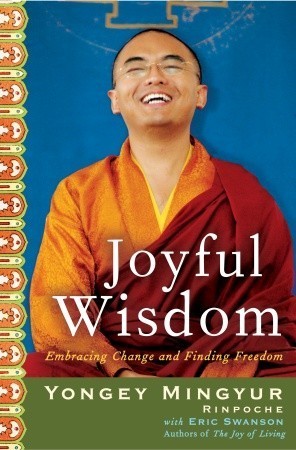
I picked up Joyful Wisdom after seeing it recommended by Mathieu Ricard, the Tibetan Buddhist monk and scientist often dubbed “the happiest man alive.”
based on 1,536 ratings
I was already familiar with many of the basic ideas and techniques from the Tibetan tradition—mindfulness, meditation, non-attachment—but what surprised me was how practical and psychologically insightful many of the chapters were, especially those focusing on emotions.
Even though I had been exposed to similar principles through other sources, something about Mingyur Rinpoche’s tone—warm, direct, humble—made the material hit deeper. His approach to emotional discomfort, particularly fear, was both clear and actionable. And I had the opportunity to test it directly.
From Thought to Practice: Overcoming a Lifelong Fear
Over the past few years, I’ve had multiple unpleasant experiences on Alpine trails—paths with steep drop-offs and little protection.
These triggered intense anxiety and, at times, borderline panic attacks. As a result, I began avoiding any path or location that might activate that fear. It was a serious limitation, especially when vacationing in mountain areas with my family.
But this August, I decided to challenge that fear. We spent the entire month in Trentino, Italy, surrounded by friends, kids, and some of the most stunning high-altitude landscapes in Europe.
Many of the best family-friendly spots were reachable only via ski lifts or cable cars—the very thing I had avoided for years.

Cable lifts on thed Latemar Dolomites, Val di Fiemme
Motivated by Joyful Wisdom, I meditated daily for two weeks, applying the specific emotional techniques described in the book. Then I tried a short but steep cable car ride. To my surprise, I stayed calm. A few days later, I attempted a longer ride that passed over four valleys—the kind of trip my previous self would have found completely unbearable.
But I didn’t just survive it.
I enjoyed it.
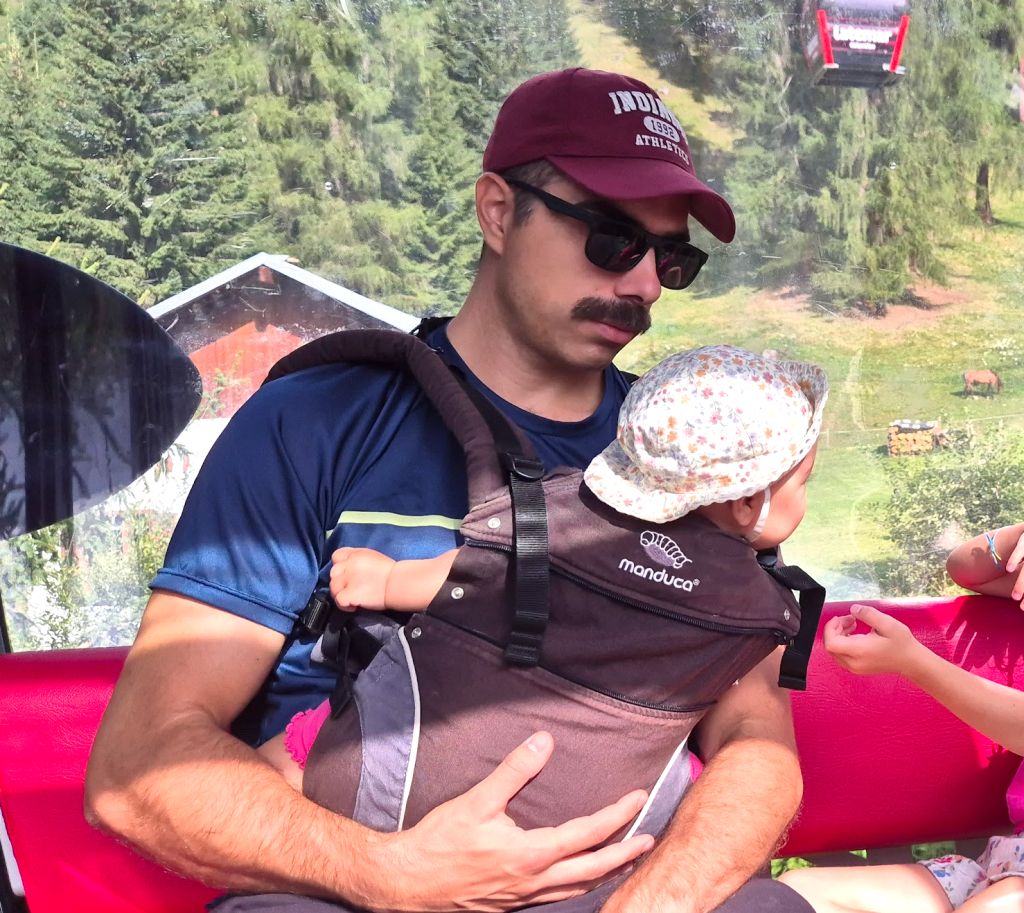
My wife even remarked that I looked more relaxed than the first time. This was a radical shift. I had only managed to board a cable car once in my life before, and it had been a miserable experience. I covered my eyes on the way back down, overwhelmed by nausea and panic.
So this change—though partially supported by rational preparation and circumstance—was largely thanks to the emotional reconditioning prompted by this book.
On Living the Teachings in Real Life
While Joyful Wisdom shines in its presentation of techniques, its true challenge lies in integration. Applying Buddhist practices in everyday Western life is not a trivial task. We live in a performance-driven world, where achievement and identity are deeply intertwined.
I’m an ambitious person. Over the last few years, I’ve radically transformed my career and lifestyle through disciplined goal-setting and hard work. That success has brought freedom—enough to pause, reflect, and ask deeper questions.
But I still wrestle with the tension between detachment and motivation.
As I wrote elsewhere:
“What I fear in relation to Buddhism, and what many researchers warn about, are the risks associated with a ‘liquid self’. It is very useful to detach and look at thoughts and emotions as phenomena, and not to identify with them. But if you take it too far, this can cause serious psychological issues and loss of motivation, even depression.”
There is wisdom in non-identification—but also danger if taken without nuance. I’ve questioned my identity as a marketer and copywriter, wondering whether I should abandon it entirely to embrace a new path: as a meditator, a researcher, a creative of a different kind. But there is guilt there, too. That identity has provided for my family, enabled a comfortable life, and allowed me to serve others.
“So this is not just an ego story. It’s a story of continuity and transformation. Of building new structures, not destroying the old ones.”
Who Should Read This?
This book is for anyone looking to develop greater emotional resilience, presence, and clarity—whether you’re interested in Buddhism or not. Mingyur Rinpoche doesn’t preach dogma. He shares stories, experiences, and tools.
But it’s especially helpful for:
- Those battling anxiety or emotional reactivity.
- High achievers seeking more inner stability.
- People in transition, questioning their professional or personal identity.
Favorite Ideas
- “You are not your thoughts. You are the awareness behind them.”
- “The joy is already inside you. You don’t need to create it, just stop covering it.”
- “Meditation is not about having no thoughts. It’s about being present with whatever is happening.”
Final Verdict:
Joyful Wisdom is not a miracle book, but a field manual—gentle, profound, and deeply humane. It doesn’t promise enlightenment overnight, but it gives you tools to find more clarity, peace, and—yes—joy, in the middle of life’s mess.
And in my case, it helped me rise hundreds of meters above the ground… with a smile.

Further Reading on OcchiPerVedere.com
 EYES TO SEE
One thought on “How a Tibetan Monk Helped Me Defy a Lifelong Fear- “Joyful Wisdom” Review”