
What Dan Koe gets right about purpose, profit, and the work that transforms you
In his new book, Dan Koe dismantles common myths around purpose, work, and meaning. His central message is both simple and radical: purpose is not something you find—it’s something you build.
Koe critiques both the classical idea of a fixed calling and the modern obsession with passion. He argues that these paradigms—though appealing—often trap people in passivity, waiting for clarity or inspiration before taking meaningful action.
Instead, Koe offers a modern path based on entrepreneurship—not just as a business model, but as a developmental path.
In this frame, you don’t start with passion. You start with problems. By solving real issues for real people, purpose emerges. Through constraint, repetition, and contribution, you build alignment. You earn clarity.
Koe’s framework mirrors ideas from Cal Newport and the Ikigai model, which emphasize the convergence of what you’re good at, what the world needs, and what you can be paid for. He brings this together into a powerful map for anyone who wants more than comfort and distraction.

How I came to love purpose & profit
When I first read Purpose & Profit by Dan Koe, something clicked. In the book, he dismantles the popular myth that passion should come first. His core message is simple—but radical: purpose is not found, it is built.
Dan is much younger than me, and madonna santa, I would have killed for his clarity of thought ten years ago.
I’m now 38, and it took me a full decade to go from broke and confused to fulfilled and thriving across all areas of life.
As a young adult, I didn’t know “my place in society.” Worse: I was a victim of the idea that I needed to find one.
Money felt sporco—dirty. Success? Reserved for either the corrupt or the lucky.
I drifted into socialist circles, mostly out of frustration. And ended up wasting years of my life trying to fit in with a group of angry, helpless people. They were my friends—but they weren’t helping.
Made to create—but sabotaged by bad beliefs
Looking back, I think I was always wired to create and build.
Even during the Myspace era (2005–2006), I was hustling to promote my music. I didn’t own a laptop, so I’d walk to a Pakistani-run internet point in Rome and pay 2.50€ an hour to use a browser. As a broke student, I spent hours every day trying to get labels and venues to notice my bands. I was, in hindsight, an ante-litteram spammer.
But I made one huge mistake: I made it all about me and my “product.”
It was pure self-expression—and the world was supposed to “get it.” I rejected genres. I cursed reviewers who expected consistency. I wanted to be seen, not to serve.
I was hostile to the very idea of a “market.” That mindset—mixed with zero business skills—led me to abandon music altogether for the next 15 years.
Truth is, I didn’t think I could make a living from it. And I wasn’t ready to sacrifice everything to try. So I moved on. Or rather, I drifted.
But slowly—painfully—I began to realize something: solving real problems for real people is how you discover what you’re good at, and why it matters.
Fast forward to April 2025. As a long-time subscriber to Dan Koe’s newsletter, I download his new book (he was offering it free as a PDF). I start reading, not expecting much—and find myself immersed.
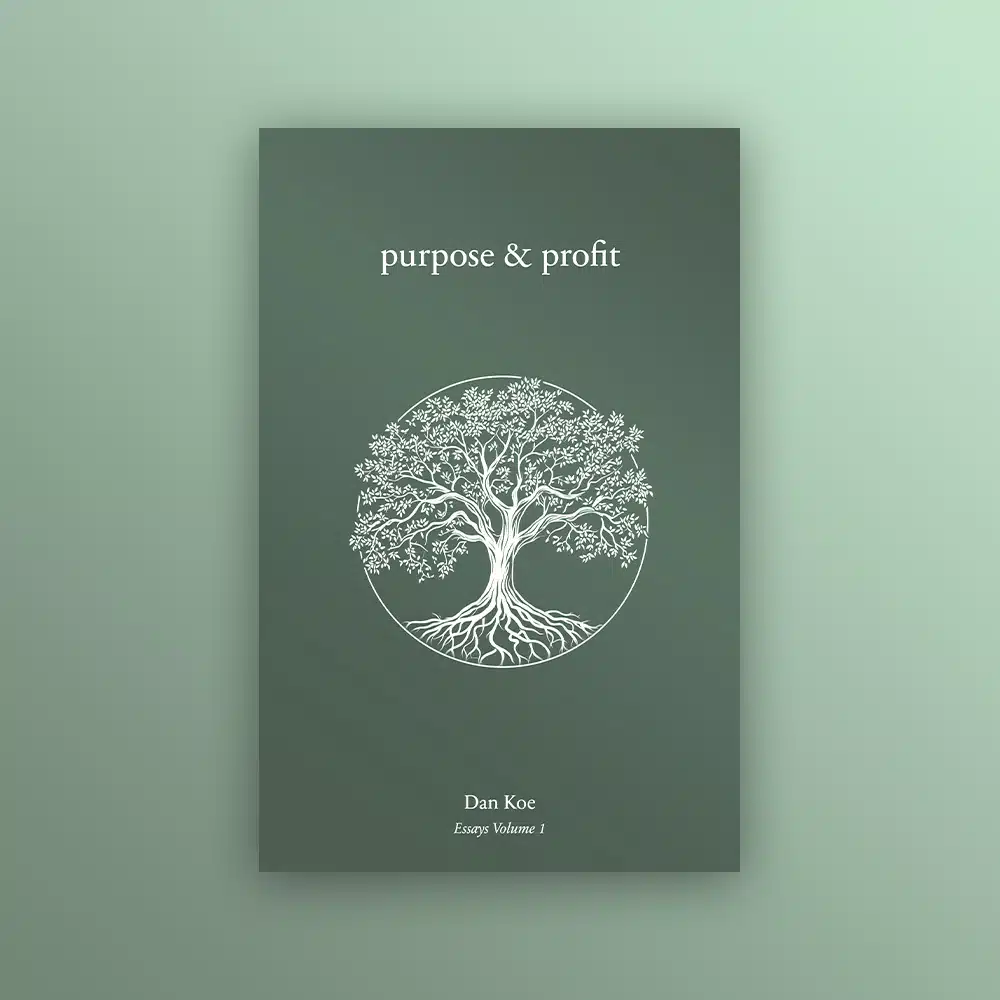
Even though he never says it outright, Purpose & Profit is about the epidemic of meaninglessness. It’s something I’ve thought about for years. Something I see spreading like wildfire, especially here in the West.
My life today: designed, not accidental
Unlike most self-help content, the book wasn’t preaching. It was describing. And I could see myself—both who I was and who I’ve become.
As I write this, I’m in the best place I’ve ever been:
A loving wife. Two kids. A profitable digital business. Several properties. Enough passive income to cover over three times my family’s expenses. Plenty of time to take care of my health. And a deep, active circle of friends and relatives.
It didn’t happen by accident. It took design. Commitment. Courage.
And yes, a bit of luck.
But I’m not blind to what’s happening around me. AI is advancing. Democracies are shaking. And under it all, I see the same emptiness I once felt—now spread across entire segments of society. Unfulfillment is the symptom. And it’s becoming epidemic.
A decade ago, I was spiraling
I look back to the person I was 10 years ago: angry, confused, adrift.
Drinking every day. Trapped in bad habits. A vague interest in Eastern philosophy, a faint pull toward entrepreneurship—but no clear way forward.
Music felt like a luxury I couldn’t afford. Jobs felt like prisons I couldn’t escape.
What saved me was curiosity.
Even while employed, I used spare time to dive into topics I’d once rejected: sales, marketing, persuasion. Things my university never taught me—and that I’d previously dismissed as manipulative.
That changed everything.
One day, I stumbled across The 4-Hour Workweek by Tim Ferriss. Then The Millionaire Fastlane by MJ De Marco. Those books cracked something open.
I never wanted to work four hours a week. I just wanted the freedom to wake up and obsess over what truly interested me.
I didn’t care about becoming a millionaire or driving a Lambo. I lived (and live) in Italy, where everything costs much less than in the US.
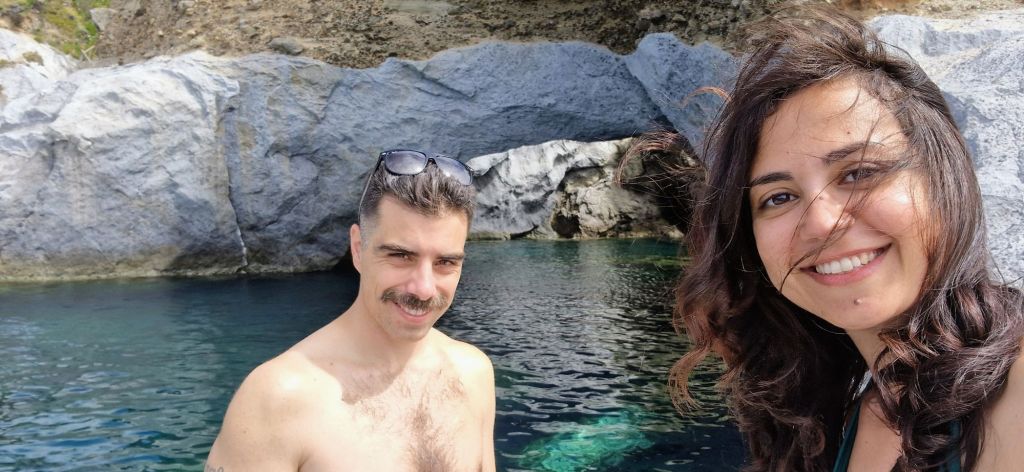
My dreams were simpler: build something of my own. Travel. Spend time with the woman I love.
Entrepreneurship as adaptation—and meaning
Ferriss and De Marco introduced me to a different path—entrepreneurship as a way to buy back time and focus. I jumped in. And I rebuilt my life.
What fueled me was a belief rooted in evolution: adapt, or suffer. If I could share the rewards with the people I love, that would be enough. That would be meaning.
And it worked.
I focused relentlessly on building something solid. I learned hard skills—copywriting, sales, marketing strategy, digital and offline advertising, people management, taxes, and investing. I risked and failed several times. Then I left my comfort zone again: real estate, construction site management, negotiation, property management.
I tracked my finances every month. I increased my savings rate every year. I multiplied my income—and grew my net worth by almost 15,000%.
But I didn’t do it just to get rich. I did it so I could focus on what really mattered.
I chose love with my wife. I chose to grow our children with presence. I chose to travel, to play, to create—without being obsessed with scaling, impressing, or chasing recognition.
Now I can
I can afford to follow my passions.
I went back to this blog (which started in 2009). Began writing family memoirs alongside new novels. Playing music again. Not to escape. Not to impress. Just because I can. Just because it’s joyful.
Why? Because I have zero financial pressure. Because I bought back my time. Because I spent ten years working both hard and smart.
Koe’s book helped me name this path. He didn’t invent it—but he framed it brilliantly.
Some readers might take his insights for granted. But if you haven’t lived them yet—if you haven’t made the shift—they feel revolutionary.
The main ideas in Dan Koe’s philosophy
Koe maps out a clear path through four levels of purpose:
- Survival – Doing what you must to get by.
- Status – Seeking validation and achievement.
- Creativity – Building and expressing ideas.
- Contribution – Using what you’ve built to help others.
The book urges readers to move beyond self-centered reflection and into disciplined creation. Koe argues that entrepreneurship is not a career, but a mindset—one that values agency, action, and iteration over comfort and clarity.
For those already building something, the book becomes a mirror:
Are you truly solving a problem?
Are you growing through discomfort?
Are you stuck in a status game without noticing?
For those still waiting for inspiration, it offers a clear alternative: start building, and purpose will follow.
Why do most people feel empty even when they have “everything”?
You know the type.
Nice house, steady income, family, maybe even a bit of status in their industry.
Yet something doesn’t sit right. They’re restless. Numb. Always scrolling, chasing the next dopamine hit. Or worse: endlessly busy, but strangely dead inside.
If you’ve ever looked around and thought, “Is this it?”, you’re not broken. You’re not ungrateful. You’re paying attention.
And here’s the uncomfortable truth: most of what we were told about purpose, success, and fulfillment is dead wrong.
From introspection to iteration: a modern path to meaning
Many people approach their life and career with inherited paradigms—some ancient, others modern, but equally misleading. In Purpose & Profit, Dan Koe deconstructs both.
And if you balance introspection with readiness to act, you can too.
On one side, there’s the classical idea of a fixed calling, something external you must “discover” to be fulfilled. On the other, the modern obsession with passion, often reduced to surface-level excitement or creative self-expression.
Both paradigms, Koe argues, lead to paralysis: they keep you waiting for clarity, alignment, or inspiration before acting.
Instead, he proposes a different model—one rooted in modern entrepreneurship. In this view, purpose isn’t a prerequisite but a byproduct. You build it through action, through solving problems, through iteration.
Meaning arises not from meditation alone, but from contribution and constraint: serving others, mastering your craft, creating systems.
Entrepreneurship becomes not just a career choice, but a personal development path—one that forces you to grow in proportion to the challenges you take on.
Dan Koe’s core arguments—explained and expanded
Dan Koe’s thesis in Purpose & Profit unfolds in two movements: a breakdown of the old models (pars destruens), and the proposal of a new framework rooted in modern entrepreneurship (pars costruens).
1. The illusions we inherit: Koe starts by dismantling the two dominant paradigms:
- The classical notion of a fixed calling, where purpose is something pre-written, waiting to be discovered.
- The modern cult of passion, which encourages people to only act when inspired, aligned, or “ready.”
Both, he argues, keep people frozen. They wait. They overthink. They mistake introspection for creation and become trapped in identity instead of movement.
2. The real source of meaning: Koe’s counterproposal is grounded in personal agency. Purpose is built—not found—by taking action, solving problems, and developing competence in service of others.
Entrepreneurship, in this context, is not about startups or scaling. It’s a developmental tool. It pushes you into discomfort, forces you to adapt, and rewards consistency. Koe positions this mindset as a path of both self-discovery and contribution.
The book invites you to stop obsessing over purpose and start designing systems of motion: solve small problems, build in public, ship often, and earn alignment through repetition.
Reasonable doubts
“Easy for Dan Koe to say. He’s a digital creator. I have bills and responsibilities.”
True. But Koe isn’t suggesting you quit your job or move to Bali. He’s saying: build something useful in the margins. 30 minutes a day solving a real problem is enough to start. You don’t need to gamble. You need to iterate.
“I still don’t know what my purpose is.”
That’s normal. Koe would argue: stop asking, start acting. Purpose isn’t discovered in thought—it emerges from repeated engagement with reality. Clarity is earned through exposure.
“But I want to love what I do.”
Of course. But love isn’t instant. Think of relationships. You rarely fall in love on day one. You build trust. You grow together. Work works the same way. Solve something that matters and affection follows.
“What if I’m not an entrepreneur?”
Then don’t be. But you can still approach life with entrepreneurial agency: take initiative, own your learning curve, serve real needs. That mindset is for everyone.
“Isn’t this just hustle culture repackaged?”
Only if you ignore the part where Koe insists on sustainability, clarity, and inner alignment. The goal isn’t to grind endlessly—it’s to build leverage and freedom through competence.
“Sounds too individualistic. What about community?”
Koe doesn’t dismiss community—he just argues that your contribution to it improves once you stop outsourcing your agency. Build yourself, then help others do the same.
“So what should we do in practice?“
Start small. Solve problems. Follow what bothers you more than what excites you.
Pick a constraint—a real one. Time, money, energy. Build something within it.
Serve a real person. Ship a real product.
Write something useful. Teach what you’ve learned.
Don’t wait to feel aligned. Act, and alignment follows.
And remember: purpose isn’t a discovery. It’s a side effect of relentlessly showing up.

From principle to practice: how Purpose & Profit echoes my own journey
What struck me about Purpose & Profit is not how new the ideas were—but how much they reflected what I’ve already lived. It felt less like discovering something, and more like naming something I’d experienced on my skin.
Here are three key concepts from the book—and how they unfolded in my real life:
1. “At first, you create to make money. In the end, you make money to create.”
In the chapter The Unignorability of Money, Koe explains how it’s perfectly natural to begin a creative or business journey for reasons like income or recognition. But if you stay on the path, those external drivers evolve.
“You create for survival or status. But once you taste mastery and contribution, you create to give.”
That was my arc too. I started out writing for results—funnels, email campaigns, sales letters. It was pure direct response. Every sentence had to convert.
But with time, I developed not just skills, but a method. Then a voice. Then a broader vision.
Now, I can write for the sake of clarity. Or joy. Or contribution. I can write novels, essays, or reflections like this—without needing every word to justify itself in ROI.
Money didn’t kill my creativity. It gave me the space to return to it.
2. “Money is not the enemy—it’s the accelerator.”
Koe reframes money as a tool—not a final goal, but a powerful means to access freedom, depth, and even spiritual development.
That’s not something I read in a book. It’s something I tracked on spreadsheets, month after month.
I built a business. Then I built systems. Then I built assets—real estate, automation, partnerships—that now fund most of my lifestyle. Not to impress. But to free up time. For my kids. For my body. For writing. For thinking.
Money isn’t dirty. What’s dirty is staying broke when you have the tools to change it.
And it’s sad: giving up freedom and condemning yourself to trade most of your time (i.e. LIFE) for limited money.
3. “Entrepreneurship is a mindset, not a job title.”
One of Koe’s most useful reframes is that you don’t need to be a founder to think like an entrepreneur. You just need to take ownership of your time, your problems, and your solutions.
“Entrepreneurship is not a title. It’s a state of mind.”
Even when I was a freelancer, I was designing my own systems, pricing, and positioning. I wasn’t waiting for instructions—I was building frameworks. Choosing clients. Inventing formats.
I didn’t just sell words. I built leverage. Piece by piece.
That mindset—what Koe calls agency—is what allowed me to scale, to delegate, and eventually, to write and create for joy again.
Recap: What Purpose & Profit really teaches us
Before closing, let’s revisit the 3 central ideas that run through Purpose & Profit, and why they matter so much—especially today:
1. Merging purpose and profit is essential
True fulfillment doesn’t come from security or survival. It comes from building something meaningful that serves others and sustains you financially. Purpose isn’t separate from business—it thrives inside it.
2. Entrepreneurship is a path of personal evolution
You don’t need to launch a unicorn startup. You just need to solve real problems with intention. Whether you run a business or not, thinking like an entrepreneur—developing autonomy, learning by doing, creating value—is how you accelerate your growth and deepen your identity.
3. Money is not the enemy—it’s leverage
Dismissing money as “evil” or “corrupting” only keeps you stuck. Used wisely, money unlocks time, expands your range, funds your projects, and allows you to contribute without compromise. As Koe writes: In the beginning you create to make money. In the end, you make money to create.
These principles are counterintuitive. But they’re deeply practical. And I’ve lived them.
A purpose-built life—earned, not found
As I write this, my days begin slowly.
A bit of movement. Silence. Breakfast with my family. My son asking me to tell him another story from my travels. Then many chats with Paola, holding our newborn daughter in my arms. No rush, no performance. Just presence.
This isn’t fortuna. It’s not the result of “following my passion.” It’s the long-term effect of treating purpose as a path—something built, not found.
For a decade, I did not consider meaning a priority. I studied persuasion, strategy, systems. I learned how to sell, how to manage people, how to move capital. I exited the loop of endless identity questions and got obsessed with one thing: becoming useful.
That’s what moved me from the survival stage to stability. From status to contribution. Exactly as Dan Koe describes in Purpose & Profit.
Only now, after all that, am I free to write for joy. To make music again. To travel without needing to escape. The passions I once clung to as an identity project—now they’re simply part of a full life. No pressure. No audience to impress. Just me, playing again.
And I realize: that sense of play, of lightness—it’s not the starting point. It’s the reward.
If you’re still in the phase of building, wrestling with doubt, or craving clarity, don’t wait for the lightning bolt. Pick a problem and solve it. For real people. With real constraints. That’s where purpose begins. That’s where freedom is forged.
Everything else, including passion, can return—once you’ve made space for it.
 EYES TO SEE
4 thoughts on “Dan Koe’s Purpose & Profit—After 10 Years of Living It”