
Vai in più basso per leggere l’originale in italiano.
Armando and the war on the wrong side
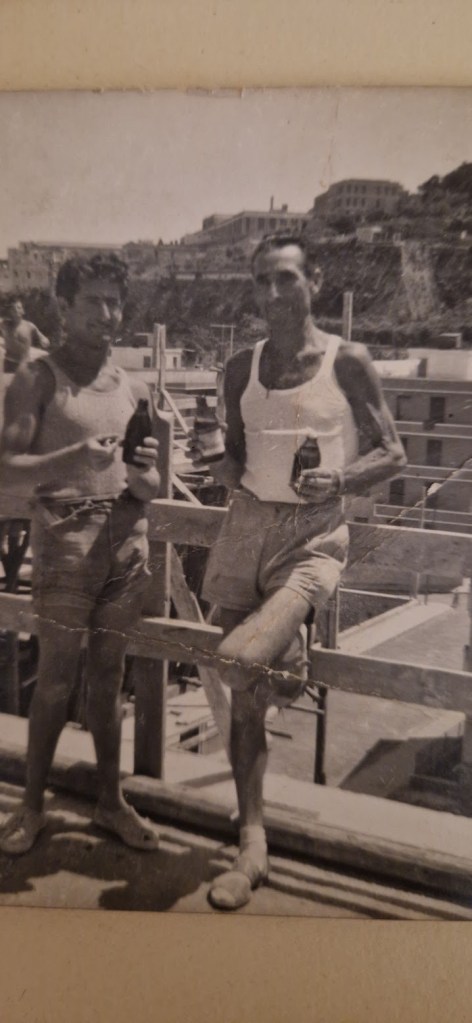
There are stories that fathers don’t tell. They keep them locked in a drawer where the key was lost long ago, and there they remain until their last breath. Armando was like that: a man of few words who carried the weight of war like a second skin, invisible but always on.
This is the story of a my grandfather – told from the point of view of my dad and his siblings: a man who chose a side and remained faithful to it until the end.
The roots of fascism
Why did dad have these political ideas? Neither he nor his brothers had been able to get an education. As a child he was recruited into the Balilla, the youth organization of the Fascist Party, and from then on he tied his destiny to that ideology.
Only once, during a winter evening when the power went out and we sat by candlelight, did he pull out a few fragments. «I enlisted when I was sixteen.»
Before that, dad worked with his great-grandfather and grandfather Luigi. They dug tunnels for road construction. Hands always dirty with earth and stone dust, the pickaxe biting into rock from dawn to dusk.
From what little he said, Armando’s connection to fascism wasn’t for ideological reasons, but for survival. In 1930, hunger won out over everything and he joined the Blackshirts, who paid him a salary.
Ten years from then the war would break out, and he would end up in it up to his neck. The only one among his brothers to enlist in the militia, he left Gaeta.
Arma di Taggia
The only one of his children dad told anything about the war to was my brother Luigi. He always mentioned the same place. Arma di Taggia, a town in Liguria near Sanremo. There he had spent the hardest period of the Republic of Salò.
«He told me they rolled through the mountains there,» Luigi says. Mountains, woods, goat paths. Partisan warfare was like that: ambushes, escapes, improvised hiding places. There were no front lines, only shadows moving in the night. More than once he had escaped partisan ambushes.
Only once did dad tell us an episode from the war. We were children, but Tina remembers it as if it were yesterday. «The reprisals between Blackshirts and partisans had begun,» she says, her voice dropping. «Beyond who was right or wrong, in war everyone loses.»
Dad and his comrades had gone out on leave. When they returned to the barracks, in front of the wooden gate—one of those with pointed beams—they found one of their fellow soldiers. Eighteen years old. He had been impaled on those boards.
When something like that happened on one side, reprisals from the other would begin. And so on, endlessly. A spiral of blood that never ended.
Then at a certain point they captured him and made him a prisoner.
The Ligurian partisan woman
My sister Tina tells that Armando then managed to escape and that after who knows how long walking he arrived home. Imagine that: a thirty-year-old man crossing Italy at war. Feet bleeding in his boots, hunger gnawing at his stomach, eyes searching every shadow because it could hide an enemy. And then home, finally. His wife, and little Mina who had just learned to walk. The relief of someone who made it.
From Mama Pina’s account we know that a woman—a girl, back then—helped him. And that she was even a partisan. Perhaps the only one who didn’t see him just as a Blackshirt, but as a thirty-year-old boy who wanted to live.
During his imprisonment in northern Italy she decided to help him. Then she also helped him escape. She hid him. She gave him shelter, bread, perhaps a false name. She taught him how to avoid roadblocks, what to say if they stopped him. We don’t know who she was. No one in the family ever knew her name.
«Mama Pina told us,» Luigi says, «that in the following years letters actually arrived from Liguria from this woman.» Letters that arrived in Gaeta addressed to Armando. Letters that Pina intercepted before he could see them. «I don’t know who she was, who she wasn’t, because she never told us her name,» Luigi continues. «She never gave them to dad, perhaps also for fear that he would drop everything and leave.»
We don’t know if he ever thought of her in the following years, if at night, before falling asleep, his hands returned to that moment when someone had saved him. We only know that those letters arrived. And that Pina made them disappear, one after another, protecting a marriage that had cost them both so much.
Yet another thing is certain: years later, when the war had been over for some time, that woman came looking for him in Gaeta. Perhaps she just wanted to know if he had made it. Perhaps she was looking for something more. They told her that in the meantime he had remarried and started another family. But he never spoke of her, nor of the journey, nor of what he saw while escaping.
Procida
«Once he returned to Gaeta, in ’45, he lived in hiding anyway,» Tina continues, her fingers drumming on the table. «He thought about his wife and daughter. But someone—always according to Mama Pina—someone informed on him.»
And so the carabinieri arrived.
They took him to Procida. The island that floats in front of Naples like a broken promise. Probably his wife visited him when she could, the sea separating two suspended lives. But the trial had already begun, and there the most atrocious injustice exploded.
«It worked like this,» Tina explains, her voice hardening. «They loaded you with the murders that other people had committed too. Many of his comrades had died, some during the war, some after the war. So he was charged with his own sentence and also with the deaths caused by some of his camerati.»
Three times before the firing squad
«He told me about the period when he was inside,» Luigi says. «After the end of the war they took him, tried him. He always repeated to me that he had been three times before the firing squad.»
Three times. Three mornings when they had taken him out of his cell convinced it was over. The wall, the rifles aimed, his eyes blindfolded. And then the order that never came. The return to his cell with trembling legs.
«In the morning, at noon and in the evening they entered the cell,» Luigi continues, his voice dropping. «A cell two meters by two meters. They positioned themselves one in each corner and filled him with beatings.»
Four guards. Four corners. No way out. Only pain exploding from every direction, ribs cracking, the taste of blood in his mouth.
Papà didn’t go into details. He didn’t describe the tortures, didn’t tell about the nights when he couldn’t sleep from the pain. But he must have said something to Mama, because she never wanted to tell us certain things.
He had left convinced he was fighting for something just. And instead he found himself imprisoned, wondering if he had chosen the wrong side.
«He always told me,» Luigi recounts, «”you had to throw yourself on one side or the other. Maybe I don’t know if I threw myself on the wrong side, but I believed in it then.”»
And with that conviction he would remain his whole life. Right or wrong as it was, he never renounced it. He remained consistent with his ideas until his last breath.
The broken heart of his wife
From Procida the death sentence arrived like lightning. And when the news reached home, Armando’s wife couldn’t bear it. «It seems she didn’t survive this news,» Tina says. «She had a heart attack. And she left Mina who was four years old.»
The heart that stops suddenly from grief. A war widow who dies of fear. Mina left alone with her grandparents, orphaned twice.
In ’46 the Republic arrived and with it Togliatti’s amnesty. Dad was one of those pardoned. He was no longer condemned to death and could return to Gaeta. But freedom had a price: a year of supervised release. Every morning he had to go to the barracks to sign before going to work. Every evening, when he came back, same thing. Sign and return home. No evening outings, no walks with friends. Only work and home, home and work.
«From that moment he closed himself off a bit,» Tina says. «He didn’t talk about these things easily.»
The other Osvaldo
Armando also lost his brother in those years. His name was Osvaldo, like me. That’s why he gave me that name: not after his grandfather (that he gave afterwards to my younger brother), but after his dead brother. He was in Gaeta during a bombing. A mine dropped from planes, the explosion, flying glass. A piece of glass wounded him, and he didn’t survive. He was less than twenty years old, not even enlisted. He was simply at home, in the wrong place at the wrong time.
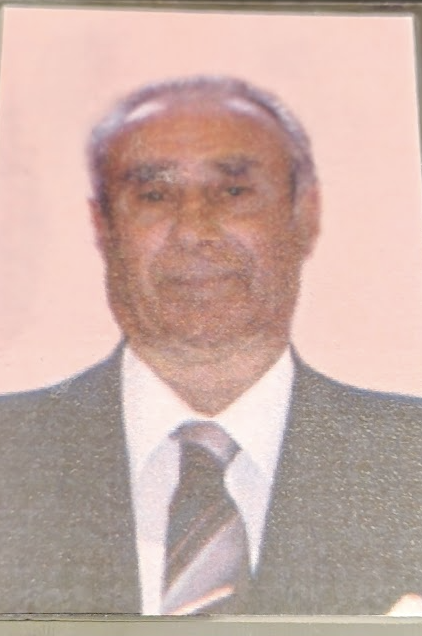
Consistent to the end
Dad certainly never renounced anything. In the Sixties someone from the municipal administration told him that if he renounced everything, he would have the right to vote. Because he couldn’t vote, he was banned like all those who had lost the war. The answer was sharp as a knife: «I’m sorry, but I don’t renounce anything I’ve done.»
And he never voted. Not even when, around seventy, someone told him that by now they had resolved everything, that he could have a ballot if he wanted. «I’m not interested in voting at all,» was his response. Consistent to the end. Consistent as a rock beaten by the sea for decades.
«He never put down a yes or a no, never a mark on a ballot,» Tina says. «But he was consistent. What he did, he did. Why renounce it? What happened happened, it happened because of the war. It was a fratricidal war, World War II. In the same family there were those who were on the left and those on the right, and if they met they killed each other without hesitation.»
God yes, priests no
The relationship with God was complicated, full of contradictions that only a man like him could hold together. «I have nothing against God,» he always said. «I have nothing against God, I have it against priests.» He had seen priests do things that according to him they shouldn’t have done during the war. Once he let slip that he had seen a priest act «in a way that was completely wrong,» and from that moment the hatred deepened.
He tormented us with his questions: «But do you wonder why priests wear black cassocks?» We kids didn’t know what to answer. «Because they were the ones who condemned Christ. And the Bible says the priests condemned him.» Once, when I was older, I pointed out to him that they weren’t the same priests. «They were still priests,» he answered curtly.
The only priest he tolerated was Don Paolo. Otherwise, nothing. At weddings, baptisms, confirmations he was always present, but he couldn’t stay in church for long. He remained outside, standing, like a sentinel.
Yet we had to go to Mass every Sunday. Always at eight o’clock at the nuns’, no exceptions. «You go to that Mass, if you want to go to the beach, otherwise no beach.» It’s not that he didn’t go and prevented us from going. On the contrary. Tina was part of the Daughters of Mary, I served at the altar at the Montagna Spaccata. Never a word against our Christian journey.
The Madonna della Civita
But he made his escapes anyway.
He’d get on his motorcycle and tell Nonna he was going for a ride. He’d arrive at the Madonna della Civita. Up there, alone, without priests, without intermediaries. Nonna discovered it from the new holy cards she found in his pants pockets when she washed them. «He had this devotion to the Madonna,» Tina says. «Probably when he went up there he confessed alone, or just went so that this Madonna would forgive him for everything he had done.»
The only time he truly confessed was on the day of his fiftieth wedding anniversary. My mother had always said she wouldn’t celebrate unless a Mass was said first. And dad, in the end, accepted. But on one condition: «We have to go to the Madonna della Civita.»
That day Mama was there too and had to confess. The priest said: «No, no, he comes first.» Papà entered the little room and confessed. When he came out, it was Mama’s turn. But the friar looked at her and told her: «You are already absolved. You don’t need to tell me anything.»
To be continued…
In the next episode:
Returning home didn’t mean starting over. Armando was free only on paper.
Every morning and every evening he had to sign at the barracks like a monitored criminal. Gaeta looked at him with suspicion, the eyes of others were weighing stones. And then there was Mina, four years old, motherless, waiting for him in a house too empty.
The war was over, but for him other battles were just beginning.
To be continued…
Subscribe to follow along or check back regularly to read the next installment.
Previous episodes available here
Copyright © Andrew Lisi
Armando e la guerra dalla parte sbagliata
Ci sono storie che i padri non raccontano. Le tengono chiuse in un cassetto dove la chiave si è persa da tempo, e lì restano fino all’ultimo respiro. Armando era così: un uomo di poche parole che portava il peso della guerra come una seconda pelle, invisibile ma sempre addosso.
Questa è la storia di mio nonno, raccontata dal punto di vista di mio padre e dei suoi fratelli. La storia di un uomo che ha scelto una parte e vi è rimasto fedele fino alla fine.
Le radici del fascismo
Perché papà aveva queste idee politiche? Né lui né i fratelli avevano potuto avere un’istruzione. Da bambino fu reclutato nei Balilla, l’organizzazione giovanile del Partito Fascista, e da allora legò a quell’ideologia il suo destino.
Una sola volta, durante una serata d’inverno quando andò via la luce e stavamo con le candele, tirò fuori qualche frammento. «Mi ero arruolato che avevo sedici anni»
Prima di quello, papà lavorava con il bisnonno e il nonno Luigi. Scavavano gallerie che servivano per fare le strade. Le mani sempre sporche di terra e polvere di pietra, il piccone che mordeva la roccia dall’alba al tramonto.
Da quel poco che diceva, il legame di papà col fascismo non fu per motivi ideologici, ma per sopravvivenza. Nel 1930, la fame vinse su tutto e si unì nelle Camicie Nere, che gli pagavano un salario.
Da lì a dieci anni sarebbe scoppiata la guerra, e lui ci sarebbe finito dentro fino al collo. Unico tra i fratelli ad arruolarsi nella milizia, lasciò Gaeta.
Arma di Taggia
Tra di noi figli, solo a mio fratello Luigi papà ha confidato qualcosa della guerra. Gli nominava sempre lo stesso posto. Arma di Taggia, un paese in Liguria vicino Sanremo. Lì aveva passato il periodo più duro della Repubblica di Salò.
«Mi raccontava che si rotolava per le montagne lì» dice Luigi. Montagne, boschi, sentieri di capre. La guerra partigiana era fatta così: agguati, fughe, nascondigli improvvisati. Non c’erano linee del fronte, solo ombre che si muovevano nella notte. Più volte era scampato a delle imboscate dei partigiani.
Una sola volta papà ci raccontò un episodio della guerra. Eravamo bambini, ma Tina se lo ricorda come se fosse ieri. «Era cominciata la rappresaglia tra camicie nere e partigiani,» dice, la voce che si abbassa. «Al di là di chi avesse ragione o torto, nella guerra si perde tutti.»
Papà e i suoi erano usciti in libera uscita. Quando tornarono alla caserma, davanti al cancello di legno – uno di quelli con le travi appuntite – trovarono un loro commilitone. Diciotto anni. Era stato impalato su quelle tavole.
Quando accadeva una cosa del genere da una parte, cominciavano le rappresaglie dell’altra. E così via, all’infinito. Una spirale di sangue che non finiva mai.
Poi a un certo punto lo catturarono e lo fecero prigioniero.
La partigiana ligure
Tina racconta che poi papà era riuscito a fuggire e che dopo non so quanto tempo di cammino era arrivato a casa. Immaginalo: un uomo di trent’anni che attraversa l’Italia in guerra. I piedi che sanguinano negli scarponi, la fame che morde lo stomaco, gli occhi che cercano ogni ombra perché potrebbe nascondere un nemico. E poi la casa, finalmente. La moglie, Mina piccola che aveva appena imparato a camminare. Il sollievo di chi ce l’ha fatta.
Dal racconto di mamma Pina sappiamo che una donna — una ragazza, allora — lo aiutò. E che addirittura fosse una partigiana. Forse l’unica che non lo vide solo come una camicia nera, ma come un ragazzo di trent’anni che voleva vivere.
Durante la reclusione in nord Italia decise di aiutarlo. Poi lo aiutò anche a scappare. Lo nascose. Gli diede un rifugio, del pane, forse un nome falso. Gli insegnò come evitare i posti di blocco, cosa dire se lo fermavano. Non sappiamo chi fosse. Nessuno in famiglia ha mai saputo il suo nome.
«Ce lo raccontava mamma Pina» dice Luigi «che addirittura negli anni successivi arrivarono delle lettere proprio dalla Liguria da parte di questa signora.» Lettere che arrivavano a Gaeta indirizzate ad Armando. Lettere che Pina intercettava prima che lui potesse vederle. «Non so chi era, chi non era, perché non ci ha mai detto il nome» continua Luigi. «Lei non le ha mai consegnate a papà, forse anche per timore che lui mollasse tutto e se ne andasse.»
Non sappiamo se lui avesse mai pensato a lei negli anni successivi, se la notte, prima di addormentarsi, le sue mani tornassero a quel momento in cui qualcuno lo aveva salvato. Sappiamo solo che quelle lettere arrivarono. E che Pina le fece sparire, una dopo l’altra, proteggendo un matrimonio che era costato tanto a entrambi.
Eppure è certa un’altra cosa: anni dopo, quando la guerra era finita da tempo, quella donna venne a cercarlo a Gaeta. Forse voleva solo sapere se ce l’aveva fatta. Forse cercava qualcosa di più. Le dissero che nel frattempo si era risposato e si era fatto un’altra famiglia. Ma lui non ne parlò mai, né di lei né del viaggio né di quello che vide scappando.
Procida
«Una volta tornato a Gaeta, nel ‘45, viveva comunque nascosto,» continua Tina, le dita che tamburellano sul tavolo. «Pensava alla moglie e alla bambina. Ma qualcuno – sempre a detta di mamma Pina – qualcuno fece la spia.»
E quindi arrivarono i carabinieri.
Lo portarono a Procida. L’isola che galleggia davanti a Napoli come una promessa tradita. Probabilmente la moglie lo andava a trovare quando poteva, il mare che separava due vite sospese. Ma era già iniziato il processo, e lì scoppiò l’ingiustizia più atroce.
«Funzionava così,» spiega Tina, la voce che si fa dura. «Ti caricavano sulle spalle anche gli omicidi che avevano fatto altre persone. Molti suoi commilitoni erano morti, chi durante la guerra, chi dopo la guerra. Quindi a lui sono state caricate la sua pena e anche i morti causati da alcuni suoi camerati.»
Tre volte davanti al plotone
«Mi raccontava del periodo in cui stava dentro» dice Luigi. «Dopo la fine della guerra lo hanno preso, processato. Mi ripeteva sempre che era stato tre volte davanti al plotone di esecuzione.»
Tre volte. Tre mattine in cui l’avevano portato fuori dalla cella convinto che fosse finita. Il muro, i fucili puntati, gli occhi bendati. E poi l’ordine che non arrivava. Il ritorno in cella con le gambe che tremavano.
«La mattina, a mezzogiorno e la sera entravano nella cella» continua Luigi, la voce che si abbassa. «Una cella due metri per due metri. Si mettevano uno in ogni angolo e lo riempivano di mazzate.»
Quattro guardie. Quattro angoli. Nessuna via di fuga. Solo il dolore che esplodeva da ogni parte, le costole che scricchiolavano, il sapore del sangue in bocca.
Papà non entrava nei dettagli. Non descriveva le torture, non raccontava le notti in cui non riusciva a dormire per il dolore. Ma qualcosa doveva aver detto a mamma, perché lei poi a noi non volle mai riferire certe cose.
Era partito convinto di combattere per qualcosa di giusto. E invece si trovò incarcerato, a chiedersi se aveva scelto la parte sbagliata.
«A me diceva sempre» racconta Luigi «”o ti buttavi da una parte o dall’altra. Forse non lo so se mi sono buttato nella parte sbagliata, però io allora ci credevo”.»
E con quella convinzione sarebbe rimasto tutta la vita. Giusto o sbagliato che fosse, non ha mai rinnegato. È rimasto coerente con le sue idee fino all’ultimo respiro.
Il cuore spezzato della moglie
Da Procida la condanna a morte arrivò come un fulmine. E quando la notizia raggiunse casa, la moglie di papà non resse. «Pare che non abbia resistito a questa notizia,» dice Tina. «Ha avuto un infarto. E ha lasciato Mina che aveva quattro anni.»
Il cuore che si ferma di botto per il dolore. Una vedova di guerra che muore di paura. Mina rimasta sola con i nonni, orfana due volte.
Nel ’46 arrivò la Repubblica e con essa l’amnistia di Togliatti. Papà fu uno dei graziati. Non era più condannato a morte e potè tornare a Gaeta. Ma la libertà aveva un prezzo: un anno di libertà vigilata. Ogni mattina doveva passare in caserma a firmare prima di andare al lavoro. Ogni sera, quando rientrava, stessa cosa. Firmare e tornare a casa. Niente uscite serali, niente passeggiate con gli amici. Solo lavoro e casa, casa e lavoro.
«Da quel momento si è un po’ chiuso in se stesso,» dice Tina. «Non parlava facilmente di queste cose.»
L’altro Osvaldo
Papà perse anche il fratello in quegli anni. Si chiamava Osvaldo, come me. Per questo mi ha dato quel nome: non del nonno (quello lo diede poi a mio fratello minore), ma del fratello morto.

Era a Gaeta durante un bombardamento. Una mina lanciata dagli aerei, lo scoppio, i vetri che volano. Un pezzo di vetro lo ferì, e non riuscì a sopravvivere. Aveva meno di vent’anni, non era neanche arruolato. Stava semplicemente a casa, nel posto sbagliato nel momento sbagliato.
Coerente fino alla fine
Di sicuro papà non ha mai rinnegato niente. Negli anni Sessanta qualcuno dell’amministrazione comunale gli disse che se avesse rinnegato tutto, avrebbe avuto diritto al voto. Perché lui non poteva votare, era bandito come tutti quelli che avevano perso la guerra. La risposta fu netta come un coltello: «Mi dispiace, ma io di tutto quello che ho fatto non rinnego niente.»
E non ha mai votato. Neanche quando, verso i settant’anni, qualcuno gli disse che ormai avevano deliberato tutto, che poteva avere la scheda elettorale se voleva. «A me non mi interessa proprio andare a votare,» fu la sua risposta. Coerente fino alla fine. Coerente come una roccia battuta dal mare per decenni.
«Non ha mai messo né un sì né un no, mai una croce su una scheda,» dice Tina. «Però è stato coerente. Quello che ha fatto, l’ha fatto. Perché rinnegarlo? Quello che è successo è successo, è successo a causa della guerra. È stata una guerra fratricida, la seconda guerra mondiale. Nella stessa famiglia c’erano chi era di sinistra e chi era di destra, e se s’incontravano si ammazzavano senza complimenti.»
Dio sì, i preti no
Il rapporto con Dio era complicato, pieno di contraddizioni che solo un uomo come lui poteva tenere insieme. «Io non ce l’ho contro Dio,» diceva sempre. «Io non ce l’ho con Dio, ce l’ho con i preti.» Aveva visto sacerdoti fare cose che secondo lui non avrebbero dovuto fare durante la guerra. Una volta si lasciò sfuggire che aveva visto agire un sacerdote «in un modo che era tutto fuori», e da quel momento l’odio si fece più profondo.
Ci tormentava con le sue domande: «Ma vi chiedete perché i sacerdoti portano la tonaca nera?» Noi ragazzini non sapevamo cosa rispondere. «Perché sono stati loro a condannare Cristo. E la Bibbia dice che i sacerdoti hanno condannato.» Una volta, da grandicello, gli feci notare che non erano gli stessi sacerdoti. «Sempre sacerdoti erano,» mi rispose secco.
L’unico prete che sopportava era don Paolo. Per il resto, niente. Ai matrimoni, ai battesimi, alle cresime era sempre presente, ma non riusciva a stare in chiesa più di tanto. Rimaneva fuori, in piedi, come una sentinella.
Eppure noi dovevamo andare a messa ogni domenica. Sempre alle otto dalle suore, non c’erano deroghe. «A quella messa si va, se volete andare al mare, sennò niente mare.» Non è che non ci andava lui e a noi ci impedeva di andare. Anzi. Tina faceva parte delle figlie di Maria, io servivo l’altare alla Montagna Spaccata. Mai una parola contro il nostro cammino cristiano.
La Madonna della Civita
Ma le sue scappatelle le faceva lo stesso.
Inforcava la moto e diceva a Pina che andava a fare un giro. Arrivava alla Madonna della Civita. Lassù, da solo, senza preti, senza intermediari. Mamma lo scopriva dai santini nuovi che trovava nelle tasche dei pantaloni quando li lavava. «Aveva questa devozione verso la Madonna,» dice Tina. «Probabilmente quando andava lassù si confessava da solo, o si andava solo perché questa Madonna lo perdonasse tutto quello che aveva fatto.»
L’unica volta che si confessò davvero fu il giorno del suo cinquantesimo anniversario di matrimonio. Mia madre aveva sempre detto che non avrebbe fatto festa se non si diceva prima la messa. E papà, alla fine, accettò. Però a un patto: «Dobbiamo andare alla Madonna della Civita.»
Quel giorno c’era pure mamma che doveva confessarsi. Il sacerdote disse: «No, no, viene lui prima.» Papà entrò nella stanzetta e si confessò. Quando uscì, toccava a mamma. Ma il frate la guardò e le disse: «Tu sei già assolta. Non mi devi dire niente.»
Continua…
Nel prossimo episodio:
Tornare a casa non significava ricominciare. Papà era libero solo sulla carta.
Ogni mattina e ogni sera doveva firmare in caserma come un criminale sorvegliato. Gaeta lo guardava con sospetto, gli occhi degli altri erano pietre che pesavano. E poi c’era Mina, quattro anni, orfana di madre, che lo aspettava in una casa troppo vuota.
La guerra era finita, ma per lui altre battaglie stavano appena cominciando.
Iscriviti al alla newsletter per ricevere in anteprima i prossimi episodi.
Vuoi recuperare gli episodi precedenti? Li trovi qui
 EYES TO SEE