
Vai in più basso per leggere l’originale in italiano.
From the little girl with hands too small for a hoe to crossing a minefield on a night of war, Pina Di Ciaccio had learned that survival means choosing every day to move forward even when everything around her was crumbling.
But after the death of her father Stanislao, the Nazi threats, and the hunger she endured in the war, the girl who at twenty had supported an entire family found herself at thirty-two facing a choice she had never wanted to make: marriage, not for love, so as not to remain a guest in someone else’s house.
The story of her son, my father, continues.
32 years alone
Mom heard about Italy’s entry into the war on the radio, while she was in the fields. «No one in her family had ever been involved in politics, not even her.
At first, like many others, she had appreciated what this man called “il Duce” was doing. But always within the limits of her own knowledge, because there weren’t the media of today. There were only radio, newspapers and billboards full of propaganda. And when the war broke out, she immediately understood it would be a tragedy. According to her, Mussolini made this huge fuck-up: entering the war. She always said this.»
Despite her efforts and curiosity, she had grown up in a peasant and village context. She only spoke dialect. When Isabella started frequenting our house, she had trouble understanding her. «Sorry, I didn’t understand, can you repeat that?» she would say. And Maria would act as translator.
During the occupation, the rest of her family had hidden in the mountains of Itri, sleeping in caves and feeding on roots, berries and carobs. There was real hunger. As in other occupied areas, the Nazis would routinely seize all the food they found, taking it from families, house by house.
So she, who as a farmer had always managed well but was a simple tenant farmer – sharecropper – had to live off the vegetable garden. Before the war she would go sell, but then was forced to cultivate only for subsistence. And knowing her abilities, various refugees and neighbors would often pass by to ask her for something: an eggplant, two tomatoes, and so on.
«She always helped others, always. Of course, she helped the family first, but as long as she had the garden producing, she also gave to other people.» Even in war, even in hunger, she always found something to share.
An unexpected marriage
Armando had just returned from prison. A year, perhaps less, from the cells of Procida to supervised release in Gaeta. Every morning to the barracks to sign in, every evening home before curfew. Seven years in jail had changed him, but he was still a handsome man, as Tina and Maria say. «The grandchildren would be proof of that, years later.»
Like all men returning from too much solitude, he sought the easiest paths. Women.
He had gotten engaged to a girl everyone called “la Viesta.” She would go out in the evening while he had to return home for his signing obligation. An impossible situation, but love knows no police hours.
Until friends started talking.
«Hey, you go home, you retire because you have to retire, and la Viesta goes around.»
Armando didn’t want to believe it. But doubt, once planted, grows like weeds. One evening he broke the rules. He didn’t give a damn about the order that he couldn’t go out after a certain hour. He went out to look for her.
And he caught her.
The betrayal had the bitter taste of all wars lost twice. First by the regime, then by love.
When he talked about it with his sister Anna – the one who would later have the most important funeral home in Gaeta, with Salemme – she didn’t waste time: «Okay, I understand. Now I’ll find you one made to measure for you. I’ll introduce you, but you have to put your mind to doing things right.»
The sister already knew the perfect candidate. Pina Di Ciaccio, thirty-two years old, never married. She would go buy vegetables from her garden. A serious woman, hardworking, who knew the value of hard work.
But mom also had her reasons for saying she was available for marriage. Reasons that had little to do with love and much to do with survival.
She had refused proposals for years. At her age, in postwar Italy, she was already considered a spinster. But she had had things to do. After her father’s death, she had kept the garden and the family going. She had always worked, since she was 8 years old. Her brother Antonio had left for military service, her sisters had married one after another. She had remained. She and the land to cultivate.
When Antonio returned, things changed. He was the male, he said. He was the one to command.
«I raised you, and I did much more than you in the countryside,» Pina replied. It was true. She could teach him everything, she who knew every clod of that land. But in the patriarchal family of Southern Italy, female competence was worth less than male birthright.
«I’m the male,» was Antonio’s response.
That was the final blow. The woman who had sacrificed her youth for the family felt betrayed by the brother she had raised like a son. Anger rose from her chest like steam from a pressure cooker. Determined not to end up “under her sister-in-law,” she began to change her mind about marriage.
She would recount having said to her family, provocatively, «The first one who arrives, I’ll marry.»
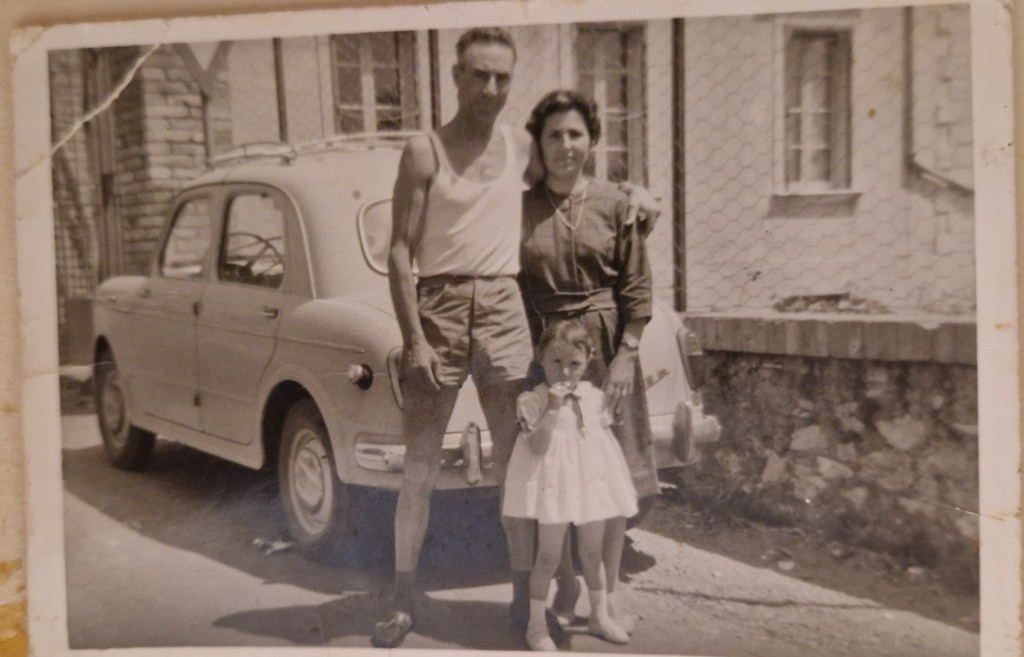
It was September 1952. The first one who arrived was Armando Lisi.
«I’ll introduce you,» Anna had said to Armando. And to Pina: «Look, I’ll introduce you to my brother…»
Mom initially refused. «No, I don’t want to know about it. Enough, I want to stay alone. At this age, what am I doing?»
Anna insisted, explained the situation. He was a widower, he had an eleven-year-old daughter named Mina. He was a man who needed to rebuild.
«Okay, let’s have this meeting. Let’s meet him,» Pina finally said.
On the day of the meeting, Pina was dressed in black. She was still in mourning for her father, Stanislao, who had recently died. She was coming out of malaria – that malarial fever that still plagued the South at the time. She was thin, pale. «Saint Joseph had passed the plane over me,» she would always say when recounting how she felt that day.
She had nothing particularly attractive, according to her. Nothing that could strike a man.
Yet, when they saw each other, something happened.
«As soon as I saw him I fell in love,» mom would always recount years later, her eyes shining at the memory.
Those were her words. Always those. As if love had been lightning that had struck her on a September day, while she was dressed in black and still weak from malaria.
Armando never spoke about that first meeting. But he must have felt something similar, because two months later – in November 1952 – they were already married.
On November 30, to be precise, the feast day of Saint Andrew. A quick marriage.
And she loved him until the last day of her life. Seventy years later, on his deathbed, Armando still called «Piiina, Piiina!» with the voice of one who had never stopped loving her.
Two wounded people who had found each other at the right time. He from betrayal and war, she from family betrayal. Both ready to rebuild on still-smoking ruins.
Sometimes love is born like this. Not from dreams, but from the necessity of not remaining alone.
The generous character
Mom was always kind and generous with everyone, even with those – inside and outside the family – who didn’t deserve it. And she always forgave everyone for everything, as Tina recounts.
«Our aunts – Tettina, Maria, Elisa – were in a difficult situation, you understand? Their husbands… all different, all creating tensions. One had married a fascist, one a communist, one a drunkard. Alberto and dad Armando, who were brothers-in-law – Alberto was aunt Elisa’s husband – would tear each other apart every day over politics. Fascist against communist. But the next day, for them it was nothing anymore.»
We bordered them, only a wall divided us. «So mom called her sisters and said something I’ll never forget. She said: “Listen up, we have husbands, one fascist, one communist, one drunkard, one like this. But what do we do? We are sisters, we love each other. They butt heads and horn each other on their own. We shouldn’t get involved in their fights.” And that’s how it was. Because the next day it was always: what’s mine is yours, what’s yours is mine.»
It was Pina who kept the sisters united when marriages could have divided them. Her wisdom became the glue of the family.
Grandma Civita lived with us in her final years. Every day she walked the coastal road on foot, to go from one daughter to another. She wasn’t afraid of anything, except dogs. Then she would ask Tina to accompany her. «You have the courage,» she would tell her.
Maria also remembers that the first days with grandma weren’t easy. «The night she came to us we nearly died. She had brought a brazier, it was March 12, I’ll never forget, it was that typical March cold, and there was even snow outside. Grandma was on a cot and we all threw ourselves on the big bed. And in that room she had put the brazier, where we all slept huddled together. Well, that night everything nearly caught fire. And even before that, we were about to die poisoned, having breathed all the carbon monoxide that came from the brazier. One of the first nights of cohabitation that could have ended in tragedy.
Defending her own
That same strong character that had faced the Germans at twenty had never softened. When someone touched her family, Pina became a lioness.
When my sister Tina married Saverio in the ’60s, the gossips of Gaeta started immediately. It was always like that. People had nothing to do and spent their time inventing stories.
«She’s pregnant,» the gossips would whisper at the market. «That’s why they got married so quickly. Did you see how she’s swollen up?»
It wasn’t true. Not at all. The marriage had been decided with normal timing, no particular rush. And Tina’s first child was born eleven months after the wedding. Eleven. Anyone who could count understood that the rumors were just malice.
But human malice doesn’t look at truth. It only looks for where it can sink its teeth.
And then there was another thing that bothered the gossips: Saverio was a finance guard. A career military man. Pressed uniform, rank, fixed salary. For Gaeta, where many struggled to get by, that was already too much. Look at that one, she got herself a finance guard. Who does she think she is?
Envy has always had a long tongue.
Mom found out one morning at the market. One of the gossips, thinking she couldn’t hear, said loud enough: «Oh yes, they had to marry off that girl quickly. You know how it is…»
Mom turned sharply. She put her shopping bag on the ground. She approached the woman with that face she had when she was no longer joking. Eyes narrowed. Jaw clenched.
«My daughter is a good girl,» she said in a low voice but sharp as a blade. «And whoever says otherwise has to come repeat it in front of me. To me, understand? Not behind backs like cowards.»
The gossip made herself very small. She stammered something. Confused apologies. Then left quickly.
The rumors died out. No one dared say anything anymore. Because everyone knew that Pina wasn’t one who made empty threats. If she said something, she did it. And no one wanted to have her as an enemy.
«When you do things in the light of day,» she had taught Tina years before, «you can cross an army of soldiers and have nothing to fear if you’re an upright and correct person.»
And Tina was upright. She knew it. God knew it. The rest didn’t matter.
That lesson she had learned in the minefield during the war – the courage of those who have nothing to hide – mom transmitted to all of us. Not with speeches. With example.
The persuasive ability
Mom used less violence with her children compared to dad, but for many years I “wore her out” with my rebellion or recklessness, and so she also reserved a certain dose of beatings for me.
Then, when I became a teenager, she had to change strategy. Since I had become taller than her, she couldn’t hit me anymore. And so she started working with psychology.
She would call me and make me sit down: “Now I have to tell you some things.” And she would begin: “You don’t realize, your parents make sacrifices so you don’t lack anything, to do this, to do that, and they’re trying to give you a civil education.” Every other day, she would repeat this spiel. Until this thing evidently entered both my head and my heart. And so at 15 I had thanks to her that radical change in character.
This showed how she was indeed a woman with third grade education, but who had intuited modern psychology. Despite having also grown up in a retrograde and violent society, she understood that at a certain age hands no longer worked, words were needed. And her words, charged with sacrifice and love, were sharper than any slap.
The price of honesty
«We women of the family have a bit of mom’s character. We’ve never cared what people think, also because we’ve never hurt anyone» Tina recounts.
But this education also had a dark side, as my brother Luigi admits, with a bitter laugh: «We’re fools, the whole family really. Because in the end we trust others too much.
Every now and then I’ve said to my mother: “Damn it, why did you make me such a fool?”
We’re good, but in the end we come across as fools. Whoever is a bit more cunning and manages to understand our weaknesses takes advantage of them. We trust everyone, and then in the end we get screwed over. I think we’ve taken many, and maybe we’ll continue to take them, as long as we live.»

To be continued…
Copyright © Andrew Lisi
In the next episode:
My.
Subscribe to follow along or check back regularly to read the next installment.
Previous episodes available here
Il primo che arriva, sposo
Dalla bambina con le mani troppo piccole per la zappa all’attraversamento di un campo minato in una notte di guerra, Pina Di Ciaccio aveva imparato che sopravvivere significa scegliere ogni giorno di andare avanti anche quando tutto intorno crollava.
Ma dopo la morte del padre Stanislao, le minacce naziste e la fame patita in guerra, quella ragazza che a vent’anni aveva tenuto in piedi una famiglia intera si ritrovò a trentadue anni davanti a un bivio che non aveva mai voluto affrontare: il matrimonio, non per amore, ma per non restare ospite in casa d’altri.
Il racconto di suo figlio, mio padre, continua.
32 anni da sola
Mamma sentì dell’ingresso in guerra dell’Italia dalla radio, mentre era sui campi. «Nessuno della sua famiglia si era mai occupato di politica, neanche lei.
All’inizio, come tanti, aveva apprezzato quello che faceva quest’uomo detto “il Duce”. Ma sempre nei limiti della propria conoscenza, perché non c’erano i media di oggi. C’erano solo radio, giornali e cartelloni pieni di propaganda. E quando scoppiò la guerra, capì subito che sarebbe stata una tragedia. Secondo lei Mussolini fece questa grande cazzata: entrare in guerra. Lei ha sempre detto questo.»
Nonostante i suoi sforzi e la sua curiosità, era cresciuta in un contesto contadino e di paese. Parlava solo dialetto. Quando Isabella ha iniziato a frequentare casa nostra, faceva fatica a capirla. «Scusa, non ho capito, mi puoi ripetere?» le diceva. E Maria faceva da traduttrice.
Durante l’occupazione il resto della sua famiglia si era nascosto tra le montagne di Itri, dormendo nelle grotte e cibandosi di radici, bacche e carrube. C’era la fame vera. Come nelle altre zone occupate, i nazisti erano soliti sequestrare tutto il cibo che trovavano, togliendolo alle famiglie, casa per casa.
Quindi lei, che come agricoltrice se l’era cavata sempre bene ma era una semplice affittuaria – mezzadra – con l’orto doveva camparci. Prima della guerra andava a vendere, ma poi fu costretta a coltivare solo per la sussistenza. E sapendo le sue capacità, i vari profughi e vicini passavano spesso a chiederle qualcosa: una melanzana, due pomodori, e così via.
«Ha sempre aiutato gli altri, sempre. Certo, ha aiutato la famiglia in primis, ma finché aveva l’orto che produceva, comunque dava pure ad altre persone.» Anche nella guerra, anche nella fame, trovava sempre qualcosa da condividere.
Un matrimonio inaspettato
Armando era appena tornato dal carcere. Un anno, forse meno, dalle celle di Procida alla libertà vigilata di Gaeta. Ogni mattina la caserma per firmare, ogni sera a casa prima del coprifuoco. Sette anni di galera l’avevano cambiato, ma era ancora un bell’uomo, come dicono Tina e Maria. «I nipoti ne sarebbero stati la dimostrazione, anni dopo.»
Come tutti gli uomini reduci da troppa solitudine, cercava le vie più facili. Le donne.
Si era fidanzato con una ragazza, che tutti chiamavano “la Viesta”. Lei usciva la sera mentre lui doveva rientrare per l’obbligo di firma. Una situazione impossibile, ma l’amore non conosce orari di polizia.
Finché gli amici non iniziarono a parlare.
«Eh, tu te ne vai a casa, ti ritiri perché ti devi ritirare, e la Viesta va in giro.»
Armando non ci voleva credere. Ma il dubbio, una volta seminato, cresce come l’erbaccia. Una sera sgarrò. Se ne fregò dell’ordine che non poteva uscire dopo una certa ora. Uscì per cercarla.
E la beccò.
Il tradimento aveva il sapore amaro di tutte le guerre perse due volte. Prima dal regime, poi dall’amore.
Quando ne parlò con la sorella Anna – quella che poi avrebbe avuto le pompe funebri più importanti a Gaeta, con Salemme – lei non perse tempo: «Vabbè, ho capito. Mo te la trovo io una fatta su misura per te. Te la faccio conoscere io, però tu devi mettere la testa a fare bene.»
La sorella conosceva già la candidata perfetta. Pina Di Ciaccio, trentadue anni, mai sposata. Ci andava a comprare verdure dal suo orto. Una donna seria, lavoratrice, che sapeva il valore della fatica.
Ma anche mamma aveva le sue ragioni per dirsi disponibile al matrimonio. Ragioni che avevano poco a che fare con l’amore e molto con la sopravvivenza.
Aveva rifiutato proposte per anni. Alla sua età, nell’Italia del dopoguerra, era già considerata una zitella. Ma lei aveva avuto da fare. Dopo la morte del padre, aveva tenuto in piedi l’orto e la famiglia. Lavorava sempre, da quando aveva 8 anni. Il fratello Antonio era partito per il servizio militare, le sorelle si erano sposate una dopo l’altra. Lei era rimasta. Lei e la terra da coltivare.
Quando Antonio tornò, le cose cambiarono. Il maschio era lui, diceva. A lui toccava comandare.
«Ti ho cresciuto, e ho fatto molto più di te in campagna,» gli rispose Pina. Era vero. Poteva insegnargli tutto, lei che conosceva ogni zolla di quel terreno. Ma nella famiglia patriarcale del Sud Italia, la competenza femminile valeva meno del diritto di nascita maschile.
«Il maschio sono io,» fu la risposta di Antonio.
Quello fu il colpo finale. La donna che aveva sacrificato la gioventù per la famiglia si sentì tradita dal fratello che aveva cresciuto come un figlio. La rabbia le salì dal petto come vapore da una pentola sotto pressione. Determinata non finire “ospite in casa d’altri”, cominciò a cambiare idea sul matrimonio.
Raccontava di aver detto alla sua famiglia, in maniera provocatoria «Il primo che arriva, sposo».
Era settembre del 1952. Il primo che arrivò fu Armando Lisi.
«Te la faccio conoscere io,» aveva detto Anna ad Armando. E a Pina: «Guarda, ti faccio conoscere mio fratello…»
Mamma inizialmente rifiutò. «No, non ne voglio sapere. Basta, voglio stare da sola. A questa età, che faccio?»
Anna insistette, spiegò la situazione. Quello era rimasto vedovo, aveva una bambina di undici anni che si chiamava Mina. Era un uomo che aveva bisogno di ricostruire.
«Vabbè, facciamo sto incontro. Conosciamolo,» disse alla fine Pina.
Il giorno dell’incontro, Pina era vestita di nero. Portava ancora il lutto per il padre, Stanislao, morto da poco. Usciva dalla malaria – quella febbre malarica che all’epoca flagellava ancora il Sud. Era magra, pallida. «San Giuseppe ci aveva passato la pialla,» diceva sempre quando raccontava di come si sentiva quel giorno.
Non aveva niente di particolarmente attrattivo, secondo lei. Niente che potesse colpire un uomo.
Eppure, quando si videro, successe qualcosa.
«Appena l’ho visto me ne sono innamorata,» raccontava sempre mamma anni dopo, gli occhi che brillavano al ricordo.
Quelle erano le sue parole. Sempre quelle. Come se l’amore fosse stato un fulmine che l’aveva colpita in un giorno di settembre, mentre era vestita di nero e ancora debole per la malaria.
Armando non parlò mai di quel primo incontro. Ma dovette provare qualcosa di simile, perché due mesi dopo – a novembre del 1952 – erano già sposati.

Il 30 novembre, per la precisione, giorno di Sant’Andrea. Un matrimonio veloce.
E lei gli volle bene fino all’ultimo giorno della sua vita. Settant’anni dopo, sul letto di morte, Armando chiamava ancora «Piiina, Piiina!» con la voce di chi non ha mai smesso di amarla.
Due persone ferite che si erano trovate nel momento giusto. Lui dal tradimento e dalla guerra, lei dal tradimento della famiglia. Entrambi pronti a ricostruire su macerie ancora fumanti.
A volte l’amore nasce così. Non dai sogni, ma dalla necessità di non restare soli.
Il carattere generoso
Mamma era sempre gentile e generosa con tutti, anche con chi – dentro e fuori la famiglia – non se lo meritava. E ha sempre perdonato tutto a tutti, come racconta Tina.
«Le nostre zie – Tettina, Maria, Elisa – erano in una situazione difficile, capisci? I loro mariti… tutti diversi, tutti che creavano tensioni. Chi aveva sposato un fascista, chi un comunista, chi un ubriacone. Alberto e papà Armando, che erano cognati – Alberto era il marito di zia Elisa – si scannavano ogni giorno per la politica. Fascista contro comunista. Ma il giorno dopo, per loro non era più niente.»
Noi confinavamo con loro, solo un muro ci divideva. «Allora mamma chiamò le sue sorelle e disse una cosa che non dimenticherò mai. Disse: “Sentite un po’, noi c’abbiamo dei mariti, uno fascista, chi comunista, chi ubriacone, chi così. Ma noi che facciamo? Noi siamo sorelle, noi ci vogliamo bene. Quelli si scornano e si incornano da soli. Noi non ci dobbiamo entrare nei loro litigi.” E così è stato. Perché il giorno dopo era sempre: quello che è mio è tuo, quello che è tuo è mio.»
Fu Pina a tenere unite le sorelle quando i matrimoni avrebbero potuto dividerle. La sua saggezza diventò il collante della famiglia.
Nonna Civita visse con noi gli ultimi anni. Ogni giorno faceva la litoranea a piedi, per andare da una figlia all’altra. Non aveva paura di nulla, tranne dei cani. Allora chiedeva a Tina di accompagnarla. «Tu ce l’hai il coraggio», le diceva.
Maria ricorda anche che i primi giorni con la nonna non furono facili. «La notte che venne da noi stavamo pure a morire. Ci aveva portato un braciere, era il 12 marzo, non scordo mai, faceva quel freddo tipico di marzo, e c’era pure la neve fuori. La nonna stava su un lettino e noi ci siamo buttati tutti sul letto grande. E in quella stanza aveva messo il braciere, dove dormivamo tutti ammassati. Ebbene, quella notte stava per prendere fuoco tutto. E ancora prima, noi stavamo per morire avvelenati, avendo respirato tutto l’ossido di carbonio che dal braciere si sprigionava. Una delle prime notti di convivenza che poteva finire in tragedia.
Difendere i suoi
Quello stesso carattere forte che aveva affrontato i tedeschi a vent’anni non si era mai ammorbidito. Quando qualcuno toccava la sua famiglia, Pina diventava una leonessa.
Quando mia sorella Tina si sposò con Saverio negli anni ’60, le malelingue di Gaeta cominciarono subito. Era sempre così. La gente non aveva niente da fare e passava il tempo a inventare storie.
«È incinta,» sussurravano le comari al mercato. «Per questo si sono sposati così in fretta. Hai visto come si è gonfiata?»
Non era vero. Niente affatto. Il matrimonio era stato deciso con i tempi normali, nessuna fretta particolare. E il primo figlio di Tina nacque undici mesi dopo le nozze. Undici. Chiunque sapesse contare capiva che le voci erano solo cattiveria.
Ma la cattiveria umana non guarda la verità. Guarda solo dove può affondare i denti.
E poi c’era un’altra cosa che dava fastidio alle malelingue: Saverio era un finanziere. Un militare di carriera. Divisa stirata, grado, stipendio fisso. Per Gaeta, dove molti tiravano avanti a fatica, quello era già troppo. Guarda quella, si è presa un finanziere. Chi si crede di essere?
L’invidia ha sempre avuto la lingua lunga.
Mamma lo venne a sapere una mattina al mercato. Una delle comari, pensando che lei non la sentisse, disse a voce abbastanza alta: «Ma sì, l’hanno dovuta sposare alla svelta quella ragazza. Sai com’è…»
Mamma si voltò di scatto. Posò la borsa della spesa per terra. Si avvicinò alla donna con quella faccia che aveva quando non scherzava più. Gli occhi stretti. La mascella serrata.
«Mia figlia è una ragazza per bene,» disse con voce bassa ma tagliente come una lama. «E chi dice il contrario deve venire a ripeterlo davanti a me. A me, capito? Non dietro le spalle come i vigliacchi.»
La comare si fece piccola piccola. Balbettò qualcosa. Scuse confuse. Poi se ne andò in fretta.
Le voci si spensero. Nessuno osava più dire niente. Perché tutti sapevano che Pina non era una che minacciava a vuoto. Se diceva una cosa, la faceva. E nessuno aveva voglia di averla come nemica.
«Quando le cose le fai alla luce del sole,» aveva insegnato a Tina anni prima, «puoi attraversare un esercito di soldati e non avere nulla da temere se sei una persona retta e corretta.»
E Tina era retta. Lo sapeva lei. Lo sapeva Dio. Il resto non contava.
Quella lezione che aveva imparato nel campo minato durante la guerra – il coraggio di chi non ha nulla da nascondere – mamma la trasmise a tutti noi. Non con i discorsi. Con l’esempio.
La capacità persuasiva
Mamma con i figli usava meno violenza rispetto a papà, ma per molti anni “la sfinivo” con la mia ribellione o incoscienza, e quindi mi riservò anche lei una certa dose di botte.
Poi, quando diventai adolescente, dovette cambiare strategia. Siccome ero diventato più alto di lei, non riusciva più a menarmi. E allora ha cominciato a lavorare di psicologia.
Mi chiamava e mi faceva sedere: “Adesso ti devo dire alcune cose.” E cominciava: “Tu non ti rendi conto, i tuoi genitori fanno sacrifici per non far mancare niente, per fare questo, per fare quello, e stanno cercando di darti un’educazione civile.” Un giorno sì e uno no, ribadiva questa tiritera. Fino a quando questa cosa mi è evidentemente entrata sia nella testa che nel cuore. E così a 15 anni ho avuto grazie a lei quel cambiamento radicale di carattere.
Questo dimostrava come fosse sì una donna con la terza elementare, ma che aveva intuito la psicologia moderna. Nonostante fosse cresciuta anche lei in una società retrograda e violenta, capiva che arrivati a una certa età le mani non servivano più, servivano le parole. E le sue parole, cariche di sacrificio e amore, erano più taglienti di qualsiasi schiaffo.

Il prezzo dell’onestà
«Noi donne della famiglia abbiamo un po’ il carattere della mamma. Di cosa pensa la gente che non ce n’è mai fregato, anche perché non abbiamo mai fatto male a nessuno» racconta Tina.
Ma questa educazione aveva anche un lato oscuro, come ammette mio fratello Luigi, con una risata amara: «Noi siamo fessi, proprio tutta la famiglia. Perché alla fine ci fidiamo troppo degli altri.
Ogni tanto l’ho detto a mia madre: “Porca miseria, ma perché mi hai fatto così fesso?”
Siamo buoni, però alla fine passiamo per fessi. Chi è un pochettino più scaltro e riesce a capire le nostre debolezze se ne approfitta.
Abbiamo fiducia in tutti, e poi alla fine ci pigliamo le fregature. Penso che ne abbiamo prese tante, e forse continueremo a prenderle, fino a quando campiamo.»
Continua…
Nel prossimo episodio:
Ma la storia di Pina è solo una metà del puzzle. Dall’altra parte c’era un uomo che durante quegli stessi anni aveva fatto scelte completamente opposte: Loreto Presciutti, il padre di Isabella, che mentre Armando combatteva nella Repubblica di Salò si nascondeva in una grotta sulla montagna abruzzese portando il pane ai partigiani insieme a sua sorella Lauretta.
Due uomini che la guerra aveva messo su fronti opposti si sarebbero ritrovati anni dopo seduti alla stessa tavola, genero e suocero, a condividere il pranzo della domenica senza mai parlare di politica.
Ma prima di arrivare a quel tavolo, bisogna tornare indietro a Paterno di Celano, dove un ragazzo di vent’anni tornava dall’ex-Jugoslavia con una placca d’acciaio in testa e la certezza che i medici gli davano solo sei anni di vita.
Iscriviti alla newsletter per ricevere in anteprima i prossimi episodi.
Vuoi recuperare gli episodi precedenti? Li trovi qui
 EYES TO SEE