
Vai in più basso per leggere l’originale in italiano.
Loreto wasn’t supposed to make it to thirty. A shell fragment in the war took away part of his skull, doctors fitted him with a steel plate in his head and gave him six years to live. Instead, he lived eighty-six.
This is the story of my maternal grandfather, told by my father.
Loreto
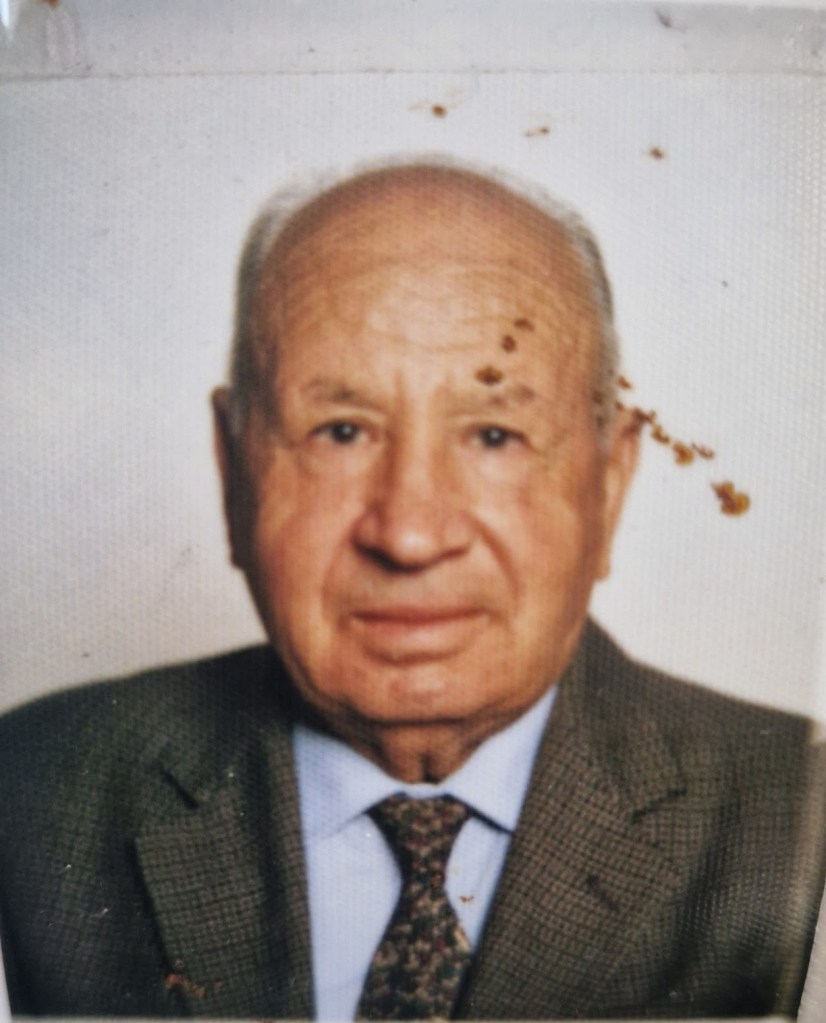
My father-in-law Loreto Presciutti wasn’t supposed to make it to thirty. A shell fragment in the war took away part of his skull, doctors fitted him with a steel plate in his head and gave him six years to live—he lived eighty-six, dying on November 11, 2009. When Isabella told me his story, I finally understood where that quiet strength that had marked our entire family came from.
The war he never talked about
Loreto never spoke about the war. Never.
Until that summer in Paterno, Abruzzo, when Andrea was still in the stroller. Isabella and I spent every afternoon at aunt Lauretta’s house, Loreto’s sister. As Isabella says, aunt Lauretta had this ability to draw words out of people, as if she had the right keys to open doors that stayed closed with everyone else.
“Loreto, tell us a little,” she’d say while pouring coffee into the good cups, those white porcelain ones with blue flowers that she only used for special occasions.
And Loreto, who at home had never opened his mouth about those years, sitting there under his sister’s pergola would start talking.
The return from hell
“These five days at sea,” he began that first time, looking at his hands resting on his knees, “were worse than the war itself.”
The journey from ex-Yugoslavia was an odyssey. Five days without anything to eat, but especially without anything to drink. The thirst that burns more than hunger, the tongue that cracks from complete dehydration, the lips chapped until they bleed.
Isabella says that while listening she could taste the dust on her tongue, feel her throat closing, the panic rising when you understand the water is gone and the sea around you is infinite.
“My tongue had split,” Loreto continued. “I couldn’t speak anymore. The water ran out on the second day, and there were still three to go.”
During that hellish journey, the ship passed near the foibe. They heard the screams. Screams coming from those deep holes in the ground where they threw people—dead and alive. Poor souls crying for help, begging to be saved.
“We couldn’t do anything,” Loreto said, and his voice still broke after all those years. “We couldn’t even stop. You heard those voices, that desperation, and you had to keep going. You had to pretend not to hear.”
Stopping meant dying. There were Tito’s soldiers looking for veterans to bring them back to concentration camps. They were fleeing risk zones, territories still controlled by Yugoslav partisans who made no distinctions. If they caught you, you were finished.
But they could only run away. They couldn’t stop, they had no means to save anyone. The anguish for everything they’d left behind, for those poor people they couldn’t help, stayed inside Loreto forever.
Only in his last years, when television finally started talking about the foibe, he was amazed. “All these years,” he’d say shaking his head, “and they never talked about it on TV. As if those people had never existed.”
When the ship finally arrived in Ancona, at the port there was that multitude of veterans coming from everywhere. From ex-Yugoslavia like him, but also from other war fronts. They passed word among themselves, tried to understand what awaited them.
And what awaited them wasn’t freedom.
The officers called everyone to assembly. They were looking for volunteers to go back to fight. “Step forward,” they said.
Isabella says her father always told this moment with trembling hands. “I took two steps back,” he’d say. “Two steps back while the others went forward.”
Those who took that step were captured again. They took them away, interned them. Many never came back.
Loreto instead started walking toward home.
From Ancona to Paterno, in Abruzzo. All on foot. Shoes splitting apart, bleeding feet, hunger eating away at your stomach. But he was free. He was alive. And he was going home.
The operation that saved him
But before reaching home, something had happened. Loreto had been wounded. A shell fragment—from a mortar or perhaps a grenade, he no longer remembered precisely—had hit him in two places.
One on the arm, which they operated on and then healed. But the second was what almost killed him: it took away part of his skull cap.
They loaded him onto a hospital train. One of those convoys where you didn’t know if you’d arrive alive at your destination. Men crammed into the cars, the smell of blood and death, the screams of those suffering too much to stay silent.
When they arrived at the hospital in Rome, the doctors looked at Loreto’s wound and shook their heads. He was more dead than alive.
But one doctor decided to try. An experimental operation, back then. Something that was almost never done. “Let’s give it a shot,” he said to the other colleagues watching him skeptically, “dead is dead anyway, maybe you’ll last a few more years.”
He put a steel plate behind his ear, at the base of his skull. A metal plate to replace the bone that was no longer there. The doctors gave him six years to live at most.
Loreto lived eighty-four.
He died on November 11, 2009, exactly eighty-four years after being born. That steel plate stayed in his head his entire life, a silent reminder of a war that should have killed him but instead had only given him another reason to be grateful for every day lived.
But the hospital wasn’t a place of healing. The nuns who managed the ward didn’t take care of him. They left him there, in his bed, without even feeding him. Just another veteran, one of the many broken bodies the war had returned.
But there was a Red Cross woman. A noble woman, Loreto always said when he talked about her. She would go to him, feed him, take care of him.
“If it wasn’t for her,” he repeated every time he told this story, “I would have died.”
Isabella says that when her father spoke those words, in his eyes there was still gratitude. After decades. After an entire lifetime. That woman had given him a second chance, and he never forgot it.
Hidden on the mountain
When they finally discharged him from the hospital, Loreto returned to the village. But the war wasn’t over. Not for him.
The Germans were still roaming the streets of Paterno. Looking for draft dodgers, looking for anyone who could be drafted again. Loreto had to hide.
He took refuge on the mountain. That mountain he knew very well since childhood. “We had land up there,” he’d say, “the walnut trees at Nocito—that’s what I called that place because there were all the walnuts. I’d go truffle hunting with the little dog, the small one that had the fine nose to find them.”
There was a cave. Inside there Loreto hid together with another veteran. In the dark, in the humidity that gets into your bones, they waited. Waited for the Germans to leave. Waited for the war to really end.
And they waited for aunt Lauretta.
“You,” Loreto said looking at his sister with that mix of affection and admiration he always had in his eyes when he talked about her, “you, in the face of the Germans who were still around, pretended to go pick asparagus. You’d take your basket and go up the mountain as if nothing was wrong. But actually you came to bring us food, to me and the other guy hiding inside the cave.”
“We were partisans,” aunt Lauretta laughed when she told this story, but in her eyes there was still the memory of that fear. “I knew that if they caught me it would be serious trouble. But you had to eat.”
Loreto nodded. “We stayed in there, in the dark, and waited for the sound of your steps on the stone. When we heard you arriving, it was like salvation was coming.”
Isabella says that listening to these stories, sitting under that pergola, she finally understood who her father was. She understood where that silence came from, that quiet strength, that ability to never complain.
The healing
When the Germans finally left, Loreto came out of the cave. But the wound wasn’t healing. It kept oozing pus, months and months. The skin around it was red, swollen, burning in the sun.
He’d try to go work in the fields, but he couldn’t do it. The heat, the sweat burning on the open skin. He had to return home after a few hours, exhausted.
“It was eating real food, you understand?” he told Isabella once. “After what you had in the war, after what they gave you in the hospital… at home it was different. It was life.”
Grandma Elisabetta and aunt Lauretta cared for him with love. Genuine food, clean air, the attention of a family that had made it. Slowly the wound dried up. The body healed.
Not completely. It would never be what it was before. But he was alive. He was home. And that was enough.
From serving in war to serving in the Finance Guard
After the war ended, Loreto returned to service in the Finance Guard. They sent him to many different places.
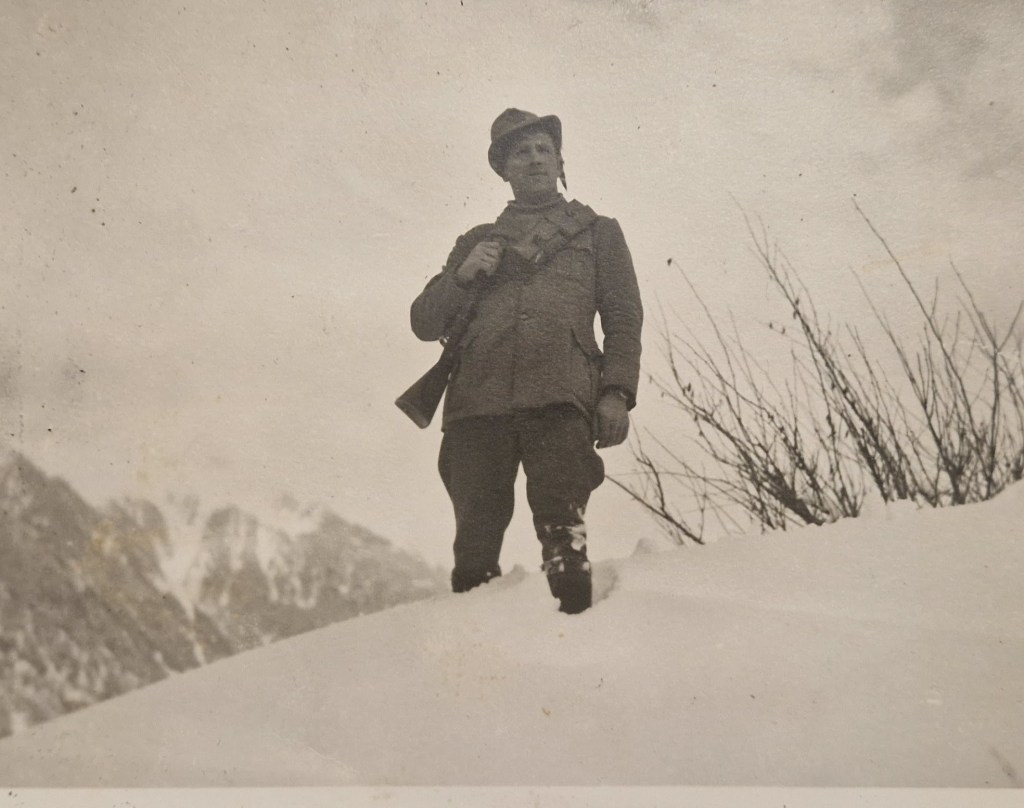
First Sondrio, then Monte Olimpino, where he was an alpine finance guard in the snow. He’d learned to ski on his own as a boy, built his skis with his own hands. Up there was his German shepherd that followed him everywhere. He was so thin in those photos, even thinner than Andrea now. Those were the years right after the war. But he had recovered. He was alive.
Then Elba Island. There he served in the mines and earned double the normal salary. It wasn’t healthy to stay there long—breathing that dust, being in those tunnels—but he had a purpose.
He sent all that money to his father. He knew he would use it to buy land. Loreto gave up so many things to accumulate as much money as possible. He wanted to give the family a future.
Except when he returned he discovered that all that land was registered under Andrea’s name, his older brother. Everything in his name. Not a piece for Loreto. Nothing.
Loreto said nothing. Didn’t make scenes, didn’t fight. He simply shut off the taps. Didn’t send another cent. And never spoke about that story with Andrea again.
But silence didn’t mean forgetting. And Andrea certainly didn’t help things.
When Isabella and Franca went to the village for summer vacations, uncle Andrea would take them aside. Always with that slightly sour, slightly sarcastic voice. He’d badmouth Loreto. Always.
“He thinks he’s someone,” he’d say. “With that uniform. But in the end what has he done? Nothing. I instead…”
Isabella says that as a child she didn’t understand. Why did uncle Andrea have it in so much for her father? Dad was always kind, always respectful. He never raised his voice. What had he done wrong?
“I felt awful every time,” Isabella says. “He was my father. For me he was an idol. And he kept badmouthing him, always sarcastic, always complaining.”
Franca and she endured it in silence. They were girls. What could they say?
But when they grew up, when they became young women, they started answering back. “Uncle, my father hasn’t done anything to you. Why do you keep going on like this?”
Andrea was jealous. Isabella understood it later. Jealous of the life Loreto had built for himself. Of the family. Of the respect he had earned. Maybe even of the happiness you could see.
“He cared a lot about money,” Isabella says. “He loaned money to the whole village. But to us, to the family, no.”
And Loreto never said anything. Not a word against his brother. He simply took his distance. And continued on his way.
The journey to Naples
Then came the transfer to Naples. After the war they sent him to the port, where the first postwar trafficking was already moving. People trying to survive as they could in a city still destroyed.
And Loreto made that journey on foot. On foot, from Paterno to Naples. He passed through Gaeta and saw with his own eyes the devastation. The bastions torn down by the famous mayor who had redone the entire waterfront. Via Attico impassable, rubble everywhere, a city reduced to a ghost of what it had been.
“The transformation is incredible,” he always said when he came back, years later, to visit us. “When I passed through the first time, after the war, it was total devastation. Now look. It’s been reborn.”
In Naples, at the port, Loreto did what he had always done. His duty, but with heart. He turned a blind eye when necessary.
“There was hunger,” he’d say. “It wasn’t right according to my role, but it was right according to conscience. I’d just say: don’t let them catch you, make sure I come out clean, do what you want. Because it was all people who were dying of hunger at home.”
Naples was destroyed. The camorristi were as poor as everyone else. There was no drugs, no big business. Just daily survival. The Americans had come through to help a bit, but Naples had liberated itself. The Germans had to run away in a hurry.
That’s why, even there, Loreto was protected. There were episodes where people he knew and didn’t know helped him, covered for him. They’d understood he was a good one. One who turned a blind eye when necessary. One who understood the difference between law and justice.
And that was what Isabella admired most about her father. Not the uniform. Not the rank. But the fact that in the middle of all that destruction, all that hunger, all that desperation, Loreto had always known how to recognize humanity.
Even when the war had tried in every way to make him forget it.
The transfer to Sora and then to Gaeta
In 1952 Loreto was transferred from Anzio to Sora, where Lina gave birth to Franca after that difficult delivery. In Sora he worked for years, building that reputation as a just and prepared man.
But in 1969 there was a problem. A scandal involving a colonel’s nephew—a story of pedophilia. To hide everything under the carpet, they transferred the entire barracks.
First destination: Narni. A town in Umbria with bad air, factories everywhere. But Lina wasn’t doing well during that period. She couldn’t recover from the death of grandma Elisabetta and the loss of a child.
Loreto wrote a letter to the ministry asking for a transfer to the sea.
They sent him a list of places to choose from. Gaeta was the first option. Gaeta with the sea, but also with the military prison. Back then it didn’t have a good reputation. “They’re sending you to Gaeta” wasn’t a compliment. It was a threat.
But Lina, as soon as she heard “sea,” immediately said yes.
Loreto came here alone to look for a house. He went around and around, but couldn’t find anything. The problem was the dog. That dog had become the third child. He always took it hunting in the mountains, when he went looking for truffles. But in Gaeta nobody wanted to rent to someone with a dog.
In the end he had to give it away. Isabella never tells me directly, but I understand that was also a grief for her father. Like leaving a piece of life in the village.
Loreto found an apartment on the top floor of a building in Serapo.
When, years later, he and Lina bought the house on via Ancona, he had to sell the old house in the village. He used that money plus the savings he’d put aside. But it wasn’t enough. He asked his brother Andrea—the one who had taken all the land—but Andrea said no.
So he turned to Francesco, Lina’s brother. “Listen, I need money for the house.”
Francesco didn’t even think about it. “All you want. And when you can, you give it back to me.”
Loreto and Lina bent over backwards. In one or two years they returned everything.
Uncle Francesco was different from all the others. Isabella remembers him as a man who didn’t seem like a farmer. He had class, bearing. He was a butcher, but top level. The best meat in the area.
Years later, when Isabella and I were already married, something happened that made us understand how respected he was.
There was a butcher in Gaeta, Bruno, who sold at the fish market. Isabella would go to him to get liver sausages for Loreto—the ones only he had, the ones they made in Abruzzo.
One day Bruno said to her: “You know, signora, I go to Abruzzo to get meat. To Avezzano. From Francesco Cardarelli, in Paterno.”
Isabella stopped. “Francesco Cardarelli?”
“Yes, he has an exceptional butcher shop. The best meat you can find.”
“That’s my uncle.”
Bruno was surprised. Then he smiled. “Then quality runs in the family.”
Isabella came home and told Loreto. He nodded, smiled slightly. “Francesco has always been like that. He made an art of that work.”
And Isabella thought: that’s why dad asked him for help. He wasn’t just mom’s brother. He was someone who had earned respect through work, through seriousness. Like him.
When the time came for the inheritance of the house in the village, Lina didn’t forget. “My part I’m giving to Francesco. He treated us well.”
Summers in the village
Every so often, in summer, Loreto would rent the little house in Paterno for a few weeks. They couldn’t stay there long—in winter it was impossible, there was no heating, just the fireplace in the kitchen. But July, when he took vacation, was perfect.
Isabella remembers those afternoons in the courtyard in front of aunt Lauretta’s house. Loreto taking her by the hand and bringing her for walks up the mountain.
“See that spring?” he’d say pointing to a source with very fresh water. “I came here as a boy.”
He’d explain how the village was positioned before the earthquake. How everything had been destroyed and then rebuilt lower down. He’d show her the land they’d had, the ones with the walnut trees. The mountain where he’d hidden during the war.
Isabella would listen and look at her father with different eyes. He was no longer just the precise finance guard who always got up at the same time. He was a man who had a story. Roots. A past that was finally opening up.
They’d return home when the sun set. The air got cooler. The cicadas stopped singing. And Loreto would say to her: “Tomorrow we’ll come back, if you want. There’s still so much to see.”
But then summer would end. They’d return to Gaeta. And those mountains stayed there, distant, like a memory that faded slowly.
The memory that remains
Isabella says that, sitting under aunt Lauretta’s pergola with Andrea in her arms, she understood for the first time why her father was made that way. Why he had that natural authority, why he knew how to command without shouting, why he was precise in everything he did. He had learned that in life you have to be strong, but also just. That you can be firm without being mean.
That evening, returning home, Isabella asked him: “Dad, why did you never tell us these things?”
Loreto looked at her with those eyes that had seen too many things. “Certain stories, Isabella, are better told when you’re ready to hear them.”
That sister, aunt Lauretta, always stayed close to Loreto. Even when she moved to Rome, even when she was a building superintendent managing two huge buildings, even when she bought a house in Boccea with her savings. Every week Loreto called her.
“Don’t you call me,” he’d tell her, “I’ll call you since I have more economic possibilities. You put money aside, don’t spend it to call me.”
That’s how he was made. He always thought of others. Even in small things.
That was Loreto. A man the war had nearly killed but who came back stronger, quieter, more just. A man who knew how to command without shouting, who knew how to be firm without being cruel.
But beside him, for his entire life, there had been a completely different woman. Outgoing where he was reserved. Sociable where he was silent. A woman with golden hands and an easy smile, who made friends with everyone and remembered every name, every face, every story—that woman was Lina, Isabella’s mother, and her story deserves to be told just as much as her husband’s.
To be continued…
Copyright © Andrew Lisi
In the next episode:
That was Loreto. A man the war had nearly killed but who came back stronger, quieter, more just. A man who knew how to command without shouting, who knew how to be firm without being cruel.
But beside him, for his entire life, there had been a completely different woman. Outgoing where he was reserved. Sociable where he was silent. A woman with golden hands and an easy smile, who made friends with everyone and remembered every name, every face, every story—that woman was Lina, Isabella’s mother, and her story deserves to be told just as much as her husband’s.
Subscribe to follow along or check back regularly to read the next installment.
Previous episodes available here
Il papà di Isabella, Loreto Presciutti
Loreto non avrebbe dovuto arrivare a trent’anni. Una scheggia in guerra gli portò via parte del cranio, i medici gli misero una placca d’acciaio in testa e gli diedero sei anni di vita. Ne visse invece ottantasei.
Questa è la storia del mio nonno materno, raccontata da mio padre.
L’uomo preciso
Loreto era un uomo preciso. Come racconta Isabella durante quelle lunghe serate in cui ripercorriamo le nostre storie, suo padre si alzava sempre alla stessa ora, si vestiva sempre bene, anche per andare in ufficio a Sora. La divisa della Guardia di Finanza stirata perfetta, le scarpe lucide che riflettevano la luce del mattino. In casa comandava lui, ma senza urlare. Bastava uno sguardo.
«Non ha mai alzato la voce, non ha mai tirato un ceffone», mi dice Isabella. «Ha sempre dialogato. Sempre la massima educazione.»
Mi racconta di quella volta che disse «scema» a sua sorella Franca. Loreto la riprese con quella voce calma che sapeva di rimprovero definitivo: «In questa casa le parolacce non si dicono.» Punto. Isabella era rimasta zitta per il resto della giornata.
A casa Loreto comprava sempre il giornale. Sempre. Isabella ricorda ancora l’immagine di suo padre seduto al tavolo dopo cena, con gli occhiali che scivolavano sul naso, la matita in mano che tamburellava sul legno quando pensava alle parole crociate. Guardava anche la televisione, ma era sempre aggiornatissimo su tutto.
«Papà e mamma erano diversi da tanti altri genitori», dice. «Loro leggevano, si informavano, ragionavano.»

Il finanziere che aiutava tutti
Per il lavoro Loreto girava le campagne intorno a Sora a fare controlli fiscali. Ma non si limitava agli orari come tanti altri.
Per il lavoro Loreto girava le campagne intorno a Sora a fare controlli fiscali. Ma non si limitava agli orari come tanti altri. Quando era di turno in caserna, passava le notti sveglio a studiare. Si manteneva vigile scrivendo a macchina, battendo sui tasti mentre gli altri dormivano. Leggeva tutte le comunicazioni che arrivavano dal comando, si teneva aggiornato su ogni modifica alle normative. Il ticchettio della macchina da scrivere scandiva le ore notturne, mentre lui trascriveva norme, regolamenti, cavilli fiscali che poi avrebbe applicato con precisione millimetrica.
Aveva fatto il corso per entrare nella Finanza studiando da solo. Solo tre o quattro anni di elementari alle spalle, eppure aveva continuato a studiare tutta la vita. Anni dopo, quando ebbe l’Alzheimer e venne il geriatra a fare i test, alle domande di matematica rispondeva ancora perfetto. Andava in automatico. Il cervello ricordava i numeri anche quando aveva dimenticato tutto il resto.
Il maresciallo se lo portava sempre per i controlli nelle grandi aziende – a Sora c’erano due o tre cartiere all’epoca – perché era capace di fare controlli a livelli che gli altri non sapevano nemmeno immaginare. Quando lavorò al tribunale di Cassino per la tributaria, il colonnello non voleva nessun altro. Solo lui. Loreto se lo portava sempre perché sapeva tutte le ultime novità che riguardavano la finanza, tutti i cavilli per sbrogliare le situazioni più delicate e importanti. Andava ad assistere a tutti i processi, conosceva tutte le normative nuove. Era informatissimo su tutto, anche se non aveva fatto studi regolari.
Ma la cosa che colpisce di più Isabella è come aiutava la gente. Gratis. I contadini analfabeti venivano a casa loro con i fogli sgualciti in mano e gli occhi spaventati. Loreto li faceva sedere al tavolo della cucina, ordinava il caffè forte per tutti, e pazientemente compilava le loro pratiche burocratiche, faceva la denuncia dei redditi, spiegava cosa dovevano fare e quando.
«Non abbiate paura», diceva sempre, «sono qui per questo.»
Per questo a Natale e Pasqua la casa sembrava un emporio. Arrivavano con le caciotte nostrane che profumavano di latte appena munto, pagnotte croccanti avvolte nei tovaglioli a quadretti, uova fresche, bottiglie di vino fatto in casa con l’etichetta scritta a mano. Regalini che valevano più di qualsiasi stipendio.
Loreto era ben voluto da tutti. Non era il finanziere antipatico che tutti temevano.
Un marito diverso
Con Lina, Loreto aveva un rapporto diverso dagli altri dell’epoca. Come mi spiega Isabella, portava lo stipendio a casa e lo dava tutto, proprio tutto, in mano a lei. L’ha sempre lodata per come era stata capace di gestire tutto, di fargli comprare la casa, di vestire sempre bene le figlie. Ancora adesso, dopo tanti anni, la gente dice: «Eh, tua madre sempre tutto elegante, tuo padre sempre tutto preciso.»
Non era il tipo di marito che comandava su tutto come si usava allora. Lui comandava, sì, ma rispettava Lina e si fidava delle sue decisioni. «Lo stipendio te lo do tutto», le diceva, «tu sai come fare.»
Quando conobbi Loreto, capii subito cosa intende Isabella. Aveva un’autorità naturale. Si vedeva che era abituato a comandare. Ma senza alzare la voce.
Quasi mai, almeno.
L’unica volta che urlò
C’era stata un’eccezione. Una sola volta in tutta la vita. Ed era stato per salvare sua moglie e sua figlia.
Isabella non c’era ancora – sarebbe nata due anni dopo – ma la storia gliela raccontarono così tante volte che la conosce come se l’avesse vissuta.
Era il 1955. Lina era incinta di Franca, la prima figlia. Il parto fu difficilissimo. Lina aveva l’albumina alta. I medici erano preoccupati.
Isabella mi racconta la scena come gliela riferì sua madre. Il dottore che usciva dalla sala parto con la faccia seria. Loreto che aspettava nel corridoio con le mani strette dietro la schiena, la divisa stirata perfetta anche in quel momento.
«Deve scegliere», disse il dottore. «La mamma o la bambina.»
Loreto lo guardò. Per un attimo non disse niente. Poi la voce gli cambiò. Non era più quella calma e controllata di sempre. Era dura come pietra.
«Lei rientri dentro», disse, e ogni parola pesava come un macigno. «E se non escono tutti e due qua succede la pena del mondo.»
Il dottore rimase fermo. Non era abituato a sentirsi parlare così. Ma in quegli occhi vide qualcosa che lo convinse a non replicare. Si girò e rientrò.
Fu un parto lunghissimo. Difficile. Ma alla fine uscirono entrambe. Lina e Franca. Vive.
«Per questo», dice Isabella, «i medici le dissero di non fare più figli. Ma due anni dopo sono arrivata io, e per fortuna è andato tutto bene.»
Quella fu l’unica volta. L’unica in cui Loreto alzò la voce davvero. Perché quando la famiglia era in pericolo, l’autorità calma non bastava più.

La guerra che non raccontava
Della guerra Loreto non parlava mai. Mai.
Proprio come Armando con Osvaldo e i suoi altri figli.
Finché non arrivò quell’estate a Paterno, in Abruzzo, quando Andrea era ancora nel passeggino. Isabella e io passavamo tutti i pomeriggi a casa di zia Lauretta, la sorella di Loreto. Come dice Isabella, zia Lauretta aveva questa capacità di tirare fuori le parole dalla gente, come se avesse le chiavi giuste per aprire porte che con gli altri rimanevano chiuse.
«Loreto, ma raccontaci un po’», diceva mentre versava il caffè nelle tazzine buone, quelle di porcellana bianca con i fiorellini blu che usava solo per le occasioni speciali.
E Loreto, che a casa non aveva mai aperto bocca su quegli anni, lì seduto sotto il pergolato di sua sorella iniziava a parlare.
Il ritorno dall’inferno
Questi cinque giorni per mare», cominciò quella prima volta, guardando le mani appoggiate sulle ginocchia, «sono stati peggio della guerra stessa.»
Il viaggio dalla ex Jugoslavia fu un’odissea. Cinque giorni senza niente da mangiare, ma soprattutto senza niente da bere. La sete che brucia più della fame, la lingua che si spacca per la disidratazione completa, le labbra screpolate fino a sanguinare.
Isabella racconta che mentre ascoltava sentiva il sapore della polvere sulla lingua, la gola che si chiude, il panico che sale quando capisci che l’acqua è finita e il mare intorno a te è infinito.
«Mi si era spaccata la lingua», continuava Loreto. «Non riuscivo più a parlare. L’acqua era finita il secondo giorno, e ne mancavano ancora tre.»
Durante quel tragitto infernale, la nave passò vicino alle foibe. Sentivano le urla. Urla che venivano da quelle buche profonde nel terreno dove buttavano la gente – morta e viva. Poverini che gridavano aiuto, che imploravano di essere salvati.
«Non potevamo fare nulla», diceva Loreto, e la voce gli si spezzava ancora dopo tanti anni. «Neanche fermarci. Sentivi quelle voci, quella disperazione, e dovevi continuare. Dovevi fingere di non sentire.»
Fermarsi significava morire. C’erano i soldati di Tito che cercavano i reduci per riportarli nei campi di concentramento. Scappavano zone a rischio, territori ancora controllati dai partigiani jugoslavi che non facevano differenze. Se ti prendevano, eri finito.
Ma loro dovevano solo correre via. Non potevano fermarsi, non avevano i mezzi per salvare nessuno. L’angoscia per tutto quello che si erano lasciati dietro, per quei poverini che non avevano potuto aiutare, rimase dentro Loreto per sempre.
Solo negli ultimi anni, quando la televisione iniziò finalmente a raccontare delle foibe, lui si stupiva. «Tutti questi anni», diceva scuotendo la testa, «e in televisione non ne hanno mai parlato. Come se quelle persone non fossero mai esistite.»
Quando la nave arrivò finalmente ad Ancona, al porto c’era tutta quella moltitudine di reduci che venivano da tutte le parti. Dall’ex Jugoslavia come lui, ma anche da altri campi di guerra. Si passavano la voce fra di loro, cercavano di capire cosa li aspettava.
E quello che li aspettava non era la libertà.
Gli ufficiali chiamarono tutti a rapporto. Cercavano volontari per tornare a combattere. «Chi fa un passo avanti», dissero.
Isabella racconta che suo padre le raccontò sempre questo momento con le mani che gli tremavano. «Ho fatto due passi indietro», diceva. «Due passi indietro mentre gli altri andavano avanti.»
Quelli che fecero quel passo furono catturati di nuovo. Li portarono via, li internarono. Tanti non tornarono più.
Loreto invece iniziò a camminare verso casa.
Da Ancona fino a Paterno, in Abruzzo. Tutto a piedi. Le scarpe che si spaccavano, i piedi che sanguinavano, la fame che ti mangiava lo stomaco. Ma era libero. Era vivo. E stava tornando a casa.
L’operazione che lo salvò
Ma prima di arrivare a casa, qualcosa era successo. Loreto era stato ferito. Una scheggia – di mortaio o forse di granata, non ricordava più con precisione – lo aveva colpito in due punti.
Una al braccio, che operarono e che poi guarì. Ma la seconda fu quella che quasi lo uccise: gli portò via parte della calotta cranica.
Lo caricarono su un treno dei malati. Uno di quei convogli dove non sapevi se saresti arrivato vivo a destinazione. Uomini ammassati sui vagoni, l’odore del sangue e della morte, le grida di chi soffriva troppo per stare zitto.
Quando arrivarono all’ospedale a Roma, i medici guardarono la ferita di Loreto e scossero la testa. Era più morto che vivo.
Ma un dottore decise di tentare. Un’operazione sperimentale, all’epoca. Qualcosa che non si faceva quasi mai. «Facciamo il tentativo», disse agli altri colleghi che lo guardavano scettici, «tanto morto per morto, magari resisti qualche annetto ancora.»
Gli mise una placca d’acciaio dietro l’orecchio, alla base del cranio. Una piastra metallica per sostituire l’osso che non c’era più. I medici gli diedero al massimo sei anni di vita.
Loreto ne visse ottantaquattro.
Morì l’11 novembre 2009, a poco più di ottantasei anni. Quella placca d’acciaio gli rimase in testa per tutta la vita, ricordo silenzioso di una guerra che avrebbe dovuto ucciderlo e invece gli aveva dato solo un altro motivo per essere grato di ogni giorno vissuto.
Ma l’ospedale non fu un posto di guarigione. Le suore che gestivano il reparto non lo curavano. Lo lasciavano lì, nel suo letto, senza nemmeno imboccarlo. Un reduce qualunque, uno dei tanti corpi rotti che la guerra aveva restituito.
C’era però una donna della Croce Rossa. Una donna nobile, diceva sempre Loreto quando ne parlava. Quella sì che andava da lui, lo imboccava, si prendeva cura
«Se non era per quella», ripeteva ogni volta che raccontava questa storia, «sarei morto.»
Isabella dice che quando suo padre pronunciava quelle parole, nei suoi occhi c’era ancora la gratitudine. Dopo decenni. Dopo una vita intera. Quella donna gli aveva dato una seconda possibilità, e lui non l’aveva mai dimenticato.
Nascosto sulla montagna
Quando finalmente lo dimisero dall’ospedale, Loreto tornò al paese. Ma la guerra non era finita. Non per lui.
I tedeschi giravano ancora per le strade di Paterno. Cercavano renitenti, cercavano chiunque potesse essere arruolato di nuovo. Loreto doveva nascondersi.
Si rifugiò sulla montagna. Quella montagna che conosceva benissimo fin da bambino. «Avevamo le terre lassù», raccontava, «le piante di noci a Nocito – così chiamavo io quel posto perché c’erano tutte le noci. Andavo a fare i tartufi con il cagnetto, quello piccolino che aveva il naso fino per trovarli.»
C’era una grotta. Lì dentro Loreto si nascondeva insieme a un altro reduce. Al buio, nell’umidità che ti entra nelle ossa, aspettavano. Aspettavano che i tedeschi se ne andassero. Aspettavano che la guerra finisse davvero.
E aspettavano zia Lauretta.
«Tu», diceva Loreto guardando la sorella con quel misto di affetto e ammirazione che aveva sempre negli occhi quando parlava di lei, «tu alla faccia dei tedeschi che ancora giravano, facevi finta di andare a cogliere asparagi. Prendevi il cestino e andavi su per la montagna come se niente fosse. Ma in realtà venivi a portarci da mangiare, a me e all’altro che stavamo nascosti dentro la grotta.»
«Eravamo dei partigiani», rideva zia Lauretta quando raccontava questa storia, ma nei suoi occhi c’era ancora il ricordo di quella paura. «Io sapevo che se mi beccavano erano guai seri. Ma voi dovevate mangiare.»
Loreto annuiva. «Stavamo lì dentro, al buio, e aspettavamo il rumore dei tuoi passi sulla pietra. Quando sentivamo che arrivavi, era come se arrivasse la salvezza.»
Isabella dice che ascoltando queste storie, seduta sotto quel pergolato, capiva finalmente chi era suo padre. Capiva da dove veniva quel silenzio, quella forza tranquilla, quella capacità di non lamentarsi mai.
La guarigione
Quando i tedeschi finalmente se ne andarono, Loreto uscì dalla grotta. Ma la ferita non guariva. Continuava a mandare fuori pus, mesi e mesi. La pelle intorno era rossa, gonfia, bruciava al sole.
Provava ad andare in campagna a lavorare, ma non ce la faceva. Il caldo, il sudore che bruciava sulla pelle aperta. Doveva tornare a casa dopo poche ore, sfinito.
«È stato mangiare roba vera, capisci?» raccontò una volta a Isabella. «Dopo quello che avevi in guerra, dopo quello che ti davano in ospedale… a casa era diverso. Era vita.»
Nonna Elisabetta e zia Lauretta lo curarono con amore. Cibo genuino, aria pulita, le attenzioni di una famiglia che ce l’aveva fatta. Piano piano la ferita si asciugò. Il corpo guarì.
Non del tutto. Non sarebbe mai più stato quello di prima. Ma era vivo. Era a casa. E questo bastava.
Dal servire in guerra al servire in Finanza
Finita la guerra, Loreto rientrò nel servizio della Guardia di Finanza. Lo mandarono in tanti posti diversi.
Prima Sondrio, poi Monte Olimpino, dove faceva il finanziere alpino sulla neve. Aveva imparato a sciare da solo quando era ragazzino, si costruiva gli sci con le sue mani. Lassù c’era il suo pastore tedesco che lo seguiva ovunque. Era magro magro in quelle foto, più magro ancora di Andrea adesso. Erano gli anni subito dopo la guerra. Ma era guarito. Era vivo.
Poi l’Isola d’Elba. Lì faceva servizio nelle miniere e guadagnava il doppio dello stipendio normale. Non era salutare rimanere là a lungo – respirare quella polvere, stare in quei tunnel – ma lui aveva uno scopo.
Mandava tutti quei soldi al padre. Sapeva che li avrebbe usati per comprare terre. Rinunciò a tante cose, Loreto, per accumulare più soldi possibili. Voleva dare un futuro alla famiglia.
Solo che quando tornò scoprì che quelle terre le aveva intestate tutte Andrea, il fratello maggiore. Tutto in nome suo. Non un pezzo per Loreto. Niente.
Loreto non disse niente. Non fece scenate, non litigò. Semplicemente chiuse i rubinetti. Non mandò più un soldo. E non parlò mai più di quella storia con Andrea.
Ma il silenzio non significava dimenticare. E Andrea non aiutò certo le cose.
Quando Isabella e Franca andavano al paese per le vacanze estive, zio Andrea le prendeva da parte. Sempre con quella voce un po’ acida, un po’ sarcastica. Parlava male di Loreto. Sempre.
«Lui si crede chissà chi», diceva. «Con quella divisa. Ma alla fine cosa ha fatto? Niente. Io invece…»
Isabella racconta che da bambina non capiva. Perché zio Andrea ce l’aveva tanto con suo padre? Papà era sempre gentile, sempre rispettoso. Non alzava mai la voce. Cosa aveva fatto di male?
«Mi sentivo male ogni volta», dice Isabella. «Era mio padre. Per me era un idolo. E lui continuava a parlarne male, sempre sarcastico, sempre a recriminare.»
Franca e lei lo sopportavano in silenzio. Erano bambine. Cosa potevano dire?
Ma quando crebbero, quando divennero ragazze, iniziarono a rispondergli. «Zio, mio padre non ti ha fatto niente. Perché continui così?»
Andrea era geloso. Isabella lo capì dopo. Geloso della vita che Loreto si era costruito. Della famiglia. Del rispetto che aveva guadagnato. Forse anche della felicità che si vedeva.
«Lui era uno che ci teneva molto ai soldi», dice Isabella. «Prestava soldi a tutto il paese. Ma a noi, alla famiglia, no.»
E Loreto non disse mai niente. Mai una parola contro il fratello. Semplicemente prese le distanze. E continuò per la sua strada.
Il viaggio verso Napoli
Poi venne il trasferimento a Napoli. Dopo la guerra lo mandarono al porto, dove già si muovevano i primi traffici del dopoguerra. Gente che cercava di sopravvivere come poteva in una città ancora distrutta.
E Loreto fece quel viaggio a piedi. A piedi, da Paterno fino a Napoli. Passò per Gaeta e vide con i suoi occhi la devastazione. I bastioni buttati giù dal famoso sindaco che aveva rifatto tutto il lungomare. Via Attico impraticabile, macerie ovunque, una città ridotta a fantasma di quello che era stata.
«È incredibile la trasformazione», diceva sempre quando ci tornava, anni dopo, per venire a trovarci. «Quando sono passato la prima volta, dopo la guerra, era una devastazione totale. Ora guarda. È rinata.»
A Napoli, al porto, Loreto fece quello che aveva sempre fatto. Il suo dovere, ma con cuore. Chiudeva un occhio quando serviva.
«C’era la fame», diceva. «Non era giusto secondo il mio ruolo, ma era giusto secondo la coscienza. Dicevo solo: non vi fate accorgere, fate in modo che io ne esca pulito, fate quello che vi pare. Perché era tutta gente che a casa moriva di fame.»
Napoli era distrutta. I camorristi erano poveri come tutti gli altri. Non c’era droga, non c’erano grandi affari. Solo la sopravvivenza quotidiana. Gli americani erano passati a rinfrancare un po’, ma Napoli si era liberata da sola. I tedeschi se ne erano dovuti scappare di corsa.
Per questo, anche lì, Loreto era protetto. C’erano episodi in cui persone che lui conosceva e non conosceva lo aiutarono, lo coprirono. Avevano capito che era uno buono. Uno che chiudeva l’occhio quando serviva. Uno che capiva la differenza tra la legge e la giustizia.
E questa era la cosa che Isabella ammirava di più in suo padre. Non la divisa. Non i gradi. Ma il fatto che in mezzo a tutta quella distruzione, a tutta quella fame, a tutta quella disperazione, Loreto aveva sempre saputo riconoscere l’umanità.
Anche quando la guerra aveva cercato in tutti i modi di fargliela dimenticare.

Il trasferimento a Sora e poi a Gaeta
Nel 1952 Loreto fu trasferito da Anzio a Sora, dove Lina diede alla luce Franca dopo quel parto difficile. A Sora lavorò per anni, costruendosi quella reputazione di uomo giusto e preparato.
Ma nel 1969 ci fu un problema. Uno scandalo che coinvolse il nipote di un colonnello – una storia di pedofilia. Per nascondere tutto sotto il tappeto, trasferirono l’intera caserma.
Prima destinazione: Narni. Un paese dell’Umbria con l’aria brutta, fabbriche ovunque. Ma Lina in quel periodo non stava bene. Non si riprendeva dalla morte di nonna Elisabetta e dalla perdita di un figlio.
Loreto scrisse una lettera al ministero chiedendo un trasferimento al mare.
Gli mandarono una lista di posti tra cui scegliere. Gaeta era la prima opzione. Gaeta col mare, ma anche col carcere militare. All’epoca non aveva buona nomea. «Ti mandano a Gaeta» non era un complimento. Era una minaccia.
Però Lina, appena sentì «mare», disse subito di sì.
Loreto venne qui da solo a cercare casa. Girò e rigirò, ma non trovava niente. Il problema era il cane. Quel cane era diventato il terzo figlio. Lo portava sempre a caccia in montagna, quando andava a cercare i tartufi. Ma a Gaeta nessuno voleva affittare a uno con un cane.
Alla fine dovette regalarlo. Isabella non me lo dice mai direttamente, ma capisco che anche quello fu un lutto per suo padre. Come lasciare un pezzo di vita al paese.
Loreto trovò un appartamento all’ultimo piano di una palazzina a Serapo.
Quando, anni dopo, lui e Lina comprarono la casa a via Ancona, dovette vendere la vecchia casa al paese. Usò quei soldi più i risparmi che aveva messo da parte. Ma non bastavano. Chiese al fratello Andrea – quello che si era preso tutte le terre – ma Andrea disse di no.
Allora si rivolse a Francesco, il fratello di Lina. «Senti, mi servono dei soldi per la casa.»
Francesco non ci pensò nemmeno. «Tutto quello che vuoi. E quando puoi me li ridai.»
Loreto e Lina fecero i salti mortali. In uno o due anni restituirono tutto.
Zio Francesco era diverso da tutti gli altri. Isabella lo ricorda come un uomo che non sembrava un contadino. Aveva classe, portamento. Faceva il macellaio, ma al top. La carne migliore della zona.
Anni dopo, quando io e Isabella eravamo già sposati, successe una cosa che ci fece capire quanto fosse rispettato.
C’era un macellaio a Gaeta, Bruno, che vendeva al mercato del pesce. Isabella andava da lui a prendere le salsicce di fegato per Loreto – quelle che solo lui aveva, quelle che si facevano in Abruzzo.
Un giorno Bruno le disse: «Sa, signora, io vado in Abruzzo a prendere la carne. Ad Avezzano. Da Francesco Cardarelli, a Paterno.»
Isabella si fermò. «Francesco Cardarelli?»
«Sì, ha una macelleria eccezionale. La carne migliore che si trova.»
«Quello è mio zio.»
Bruno rimase sorpreso. Poi sorrise. «Allora viene di famiglia la qualità.»
Isabella tornò a casa e raccontò a Loreto. Lui annuì, sorrise appena. «Francesco è sempre stato così. Ha fatto di quel lavoro un’arte.»
E Isabella pensò: ecco perché papà gli ha chiesto aiuto. Non era solo il fratello di mamma. Era uno che si era fatto rispettare con il lavoro, con la serietà. Come lui.
Quando arrivò il momento dell’eredità della casa al paese, Lina non dimenticò. «La mia parte la regalo a Francesco. Lui con noi si è comportato bene.»
Le estati al paese
Ogni tanto, d’estate, Loreto affittava la casetta a Paterno per qualche settimana. Non potevano starci a lungo – d’inverno era impossibile, non c’erano riscaldamenti, solo il caminetto in cucina. Ma luglio, quando prendeva le ferie, era perfetto.
Isabella ricorda quei pomeriggi nel cortile davanti a casa di zia Lauretta. Loreto che la prendeva per mano e la portava a fare passeggiate su per la montagna.
«Vedi quella fonte?» le diceva indicando una sorgente con l’acqua freschissima. «Qui venivo da ragazzino.»
Le spiegava com’era posizionato il paese prima del terremoto. Come tutto era stato distrutto e poi ricostruito più giù. Le mostrava le terre che avevano avuto, quelle con le piante di noci. La montagna dove si era nascosto durante la guerra.
Isabella ascoltava e guardava suo padre con occhi diversi. Non era più solo il finanziere preciso che si alzava sempre alla stessa ora. Era un uomo che aveva una storia. Radici. Un passato che finalmente si apriva.
Tornavano a casa quando il sole calava. L’aria si faceva più fresca. Le cicale smettevano di cantare. E Loreto le diceva: «Domani torniamo, se vuoi. C’è tanto da vedere ancora.»
Ma poi l’estate finiva. Tornavano a Gaeta. E quelle montagne restavano lì, lontane, come un ricordo che si sfumava piano.

Il ricordo che resta
Isabella racconta che, seduta sotto il pergolato di zia Lauretta con Andrea in braccio, capì per la prima volta perché suo padre era fatto così. Perché aveva quell’autorità naturale, perché sapeva comandare senza urlare, perché era preciso in tutto quello che faceva. Aveva imparato che nella vita bisogna essere forti, ma anche giusti. Che si può essere fermi senza essere cattivi.
Quella sera, tornando a casa, Isabella gli chiese: «Papà, perché non ci hai mai raccontato queste cose?»
Loreto la guardò con quegli occhi che avevano visto troppe cose. «Certe storie, Isabella, è meglio raccontarle quando si è pronti ad ascoltarle.»
Quella sorella, zia Lauretta, rimase sempre vicina a Loreto. Anche quando lei si trasferì a Roma, anche quando fece la portinaia gestendo due palazzoni enormi, anche quando si comprò casa a Boccea con i suoi risparmi. Ogni settimana Loreto la chiamava.
«Non mi chiamare tu», le diceva, «ti chiamo io che c’ho più possibilità economiche. Tu metti soldi da parte, non spendi per farmi la telefonata.»
Era fatto così. Pensava sempre agli altri. Anche nelle piccole cose.
Continua…
Quello era Loreto. Un uomo che la guerra aveva quasi ucciso e che invece era tornato più forte, più silenzioso, più giusto. Un uomo che sapeva comandare senza urlare, che sapeva essere fermo senza essere cattivo.
Ma accanto a lui, per tutta la vita, c’era stata una donna completamente diversa. Estrosa dove lui era riservato. Socievole dove lui era silenzioso. Una donna con le mani d’oro e il sorriso facile, che faceva amicizia con tutti e si ricordava ogni nome, ogni volto, ogni storia — quella donna era Lina, la madre di Isabella, e la sua storia merita di essere raccontata tanto quanto quella di suo marito.v
Iscriviti alla newsletter per ricevere in anteprima i prossimi episodi.
Vuoi recuperare gli episodi precedenti? Li trovi qui
 EYES TO SEE
One thought on “A Family Memoir in Progress — Episode 8: Isabella’s Dad”