
Vai in più basso per leggere l’originale in italiano.
The doctor hadn’t listened to her. She’d waited too long, and the baby had died inside her before being born. When they told me about the son my grandmother had to give birth to, stillborn, I better understood how much suffering and injustice there had been in those years. Postwar Italy had rebuilt its buildings, roads, and bridges—but medicine was still that of mountain villages, where an arrogant doctor could kill a child out of pure presumption and call it a miscalculation.
This is the story of my maternal grandmother, told by my father.
Lina: The Woman Who Befriended Everyone
Lina was the opposite of Isabella. Where her daughter was shy and reserved, she was extroverted and sociable.
“Mom made friends immediately,” Isabella recounts. “She remembered everyone’s names. She’d meet someone once and already know what they were called, where they came from, what they did. Not me. She knew all the neighbors. I lived in the same building for years and didn’t even know who lived next door.”
Isabella says that in this way Lina resembled Laura, the youngest of my children. That ability to connect with people effortlessly, to make them feel important, to memorize everything about them.
And she had golden hands. She sewed, embroidered, knitted. Spectacular things. And she did it without even looking at her work. Isabella still doesn’t understand how it was possible. “It was mind-blowing,” she says. “She didn’t look at what she was doing. Her hands moved on their own.”
She was self-taught. No one had taught her. She learned by watching, trying, making mistakes. When she got married, she made her wedding dress completely by herself. Everything. The bodice, the skirt, the veil. Perfect.
She inherited this ability from her mother’s side of the family. Lina’s youngest sister, the one who later moved to Formia, had even gone to sewing school with a famous seamstress in Avezzano. She had worked in two fashion houses in Rome. But she too had that natural predisposition that came from far back.
Abruzzese Roots
Lina was born in Paterno d’Avezzano, in Abruzzo, in 1933. The Fucino plain, which was once a lake and then had been drained. All perpendicular streets and a circular one going around, strada 11.
That’s where her family lived. Farmers. Everyone was a farmer, unless you were a state employee. Her parents, nonno Santuccio and nonna Vittoria, had bought a large house after years of sacrifice. From the 1800s, with antique furniture already inside. A stable in front, an enormous courtyard facing the main road. Four rooms on the first floor and four above. Large rooms, the kind they used to build. The bathroom built outside.
Nonna Vittoria had been widowed very young, at the time of the earthquake. She was left alone with all those children. Then she remarried after many years to a man who made her have “a cartload of children,” as Isabella says. But the first three—including Lina’s mother—were from that first tragic marriage.
On strada 11 also lived nonna Vittoria’s three brothers. All farming families, houses with courtyards in front, estates that stretched as far as the eye could see. And they helped each other. They passed around the sourdough starter to make bread. “Today it’s my turn, tomorrow yours.”
Then there was the little house with the oven that nonna Vittoria had built. And the large washhouse, because they also made soap. Once a week they made bread with the sourdough starter—il crescito, they called it. Little Lina would run to her sister-in-law’s to get the crescito. She’d cross the street, enter that house that smelled of flour and wood. “Mom says can you give me the crescito.” And she’d return with the jar clutched in her hands like a treasure.
You’d wake up in the morning and the smell filled the whole house. Bread, pizza a pala, biscottoni da inzuppo—those big Abruzzese cookies with granulated sugar on top. Isabella remembers that when they went there in summer, she and Franca would eat those cookies with Nutella. They’d give them to the dog too, secretly.
The dog who opened the cupboard door with his paw. He knew exactly where the cookies were. He’d enter the kitchen, lift his paw, open, take, and run away. Nonna Lina didn’t know for a long time. When she found out, she laughed. “Even the dog is smarter than me.”
Little Lina didn’t go to the fields like her older sisters. She stayed home. She ran the household. She sewed, helped, kept everything in order. She was small but already had those hands that knew how to do everything.
“Mom practically ran the house because there was so much to do,” Isabella says. “The others went to the fields but she stayed. And she learned.”
She learned to sew by watching. To embroider by following the threads with her eyes. To manage a large house with many mouths to feed. At ten years old she did things that nowadays a girl couldn’t even imagine.
The Sister Who Almost Married a Muslim
Lina’s youngest sister—the aunt who later moved to Formia—was different from the others. She had a natural talent, yes, but she had also cultivated it. She had gone to sewing school with a famous seamstress in Avezzano. Then she went to Rome, worked in two fashion houses. Serious stuff. High fashion.
She was good. Very good. And in Rome she met a man.
“She was almost going to marry someone who was Muslim,” Isabella recounts. “But then all hell broke loose.”
The news reached the village. Nonna Vittoria went to the priest to ask for advice. And the priest, instead of calming the waters, stirred them up even more.
“Signora,” he told her in that grave confessional voice, “those Muslims, they have more than one wife.”
Nonna Vittoria left the church and went into hysterics. She didn’t sleep for nights. She cried. She despaired. “My daughter marrying someone like that. My daughter becoming one of many.”
It wasn’t a question of religion. It wasn’t even a question of racism, not in the modern sense. It was fear. Fear of losing her daughter to a world she didn’t understand, to a life she couldn’t even imagine.
Loreto at that time wasn’t married to Lina yet. But he already knew her. He was courting her. And when he heard about the situation, he didn’t think twice.
“Tell her to come live with us,” he said to nonna Vittoria. “In Sora. I’ll take her into my home. I’ll find her work. I’ll help her leave this story behind.”
And so he did. The aunt moved to Sora, lived with Loreto and Lina. Loreto found her sewing clients, helped her get back on her feet. He protected her as if she were his own sister.
“But she never understood the goodness of this brother-in-law,” Isabella says, and there’s still a shadow of regret in her voice. “She was never grateful. Not really.”
That aunt eventually went back to live her own life. But that story remained. Loreto who had opened his home to a girl in difficulty. Who had protected her. Who had done what needed to be done, without asking for anything in return.
And when years later that aunt never showed gratitude, Lina noticed. Isabella noticed. But Loreto shrugged. “I did what I had to do. The rest doesn’t matter.”
That’s how he was.
The Three Happiest Months
“Mom remembered it as the happiest period of her life,” Isabella says when I ask her to tell me about Lina before she became the woman I knew.
They were the first three months of marriage. Anzio, 1952. A little house right on the beach. Lina was twenty-one years old. Loreto was thirty, but when he looked at her he seemed like a boy.
Isabella describes that little house to me as her mother told it to her: small, with windows that opened directly onto the sea, the salt in the air that entered the house and settled on everything. The fishermen who came back early in the morning with full nets and stopped to bring fresh fish. “Signora Lina, this is for you.” And she learned to clean it, to cook it in a thousand different ways.
They took walks along the shore every evening. Lina collected seashells. The most beautiful ones, the big perfect ones, she kept. The fishermen gave her others, found who knows where. She washed them, put them in a row on the windowsill where they caught the sun.
She was pregnant with Franca. She suffered from nausea, especially in the morning. But the sea helped her. The clean air, the space, the light that reflected on the water and entered your eyes even when you closed them.
“Those three months,” Lina always told Isabella, “were paradise.”
Then the transfer came. Sora. And paradise ended.
Lina took the seashells with her. She kept them always, for her whole life. They sat at the entrance of the house, on top of the chest. Like relics of a life that never came back.
Sora, the Prison
When Loreto was transferred to Sora from Anzio, Lina left the sea. She left the air, the space, the light. She ended up in a city squeezed between mountains, where the air stagnated and in summer suffocated you.
They lived on via Conte Canofari, a dirt road that led to the cemetery. Countryside around, scattered houses. A place that squeezed your chest even when you breathed.
Franca’s birth was extremely difficult. Lina had high albumin. The doctors told her she risked dying. In the end they both survived, but it was a trauma that marked the beginning of her life in Sora. The doctors advised her not to have more children. She didn’t listen to them. Two years later Isabella was born, and fortunately everything went well.
Lina tried to adapt. She kept the house, raised her daughters, sewed, embroidered. But Sora wasn’t her home. It was too closed. Too small. Too far from the sea.
In 1963, when Isabella was six years old, nonna Elisabetta died—Loreto’s mother. A special woman, of blue blood ruined by the earthquake, who had married a farmer for love and lived in poverty with the dignity of a queen. At her funeral there was the whole town and even the neighboring one.
Lina was very attached to her. The loss struck her deeply.
The Child Who Wasn’t Born
Isabella was six years old when her mother became pregnant with the third child. After Franca and Isabella, there should have been a boy. Or another girl. It didn’t matter. It was a child.
But something went wrong.
“The doctor didn’t listen to Mom,” Isabella recounts. “She said she’d reached term, that it was time. And he said: no, no, you must have miscalculated. Let’s wait, let’s wait.”
They waited too long.
The baby died shortly before birth. Inside her. Lina had to give birth to a dead child.
Isabella never talks to me about it in detail. Some things are too intimate, too painful even just to tell. But I see in her eyes that that loss marked her mother in a way that never fully healed.
But the milk she couldn’t give to that dead child, Lina gave years later to the baby of a friend who couldn’t breastfeed. She went to her house every day, in silence, as if paying off a debt to life.
The death of nonna Elisabetta. The loss of the baby. Everything in the same period. Everything together.
Lina collapsed.
The Breakdown
The nervous breakdown came slowly. Or perhaps it had been there for a while and no one had noticed. Lina who couldn’t recover anymore. Who sat for hours without saying anything. Who looked at her daughters as if they were very far away, on the other side of a thick glass that couldn’t be broken.
“She needed the sea,” Isabella says. “Clean air. Space.”
The doctors told Loreto he had to change the air. That Sora was too much. The mountains that trapped everything—the humidity, the heat, the thoughts. They needed to go to the sea.
When Loreto wrote the letter to the ministry requesting the transfer, he did it to save his wife.
The list arrived. Gaeta was the first option. Lina heard the word “sea” and immediately said yes. For the first time in months, her eyes lit up again.
Living by the Sea, Without the Dog
Loreto arrived in Gaeta before them. He settled into a pensione and started looking for a house. He went around for days, looked at dozens of apartments. But the answer was always the same.
“Not with the dog. We don’t rent to people with animals.”
The dog. For Loreto he was like a third child. He always took him along to the mountains, hunting, looking for truffles in the woods around Sora. They spent hours together, understood each other without need for words. When he came home with him, you’d see them walking side by side like old comrades in arms.
But for Isabella he was something different. He was her furry brother.
Isabella told me about it years later, when we were already married. She told me that when her father was away for work, she was the one who took care of him. She walked him, fed him, talked to him. The dog listened to her with those attentive eyes, his head slightly tilted, as if he understood every word.
“He was my silent confidant,” she told me. “The one I could tell everything to without fear of being judged.”
When Loreto came back from Gaeta with the news, Isabella understood immediately.
“I found a house. But the dog…”
He didn’t finish the sentence. It wasn’t necessary.
They gave him to a friend of her uncle’s. A good man, they said. Someone who had space, who knew how to treat animals. But Isabella didn’t care how good that man was. He wasn’t her father. He wasn’t her.
The day he came to get him, Isabella shut herself in her room. She heard her father giving him final instructions: how he liked to eat, when he preferred to go out, what his favorite places to sleep were.
Then the dog barked. A different bark from the others. As if he had understood.
Isabella cried like she had never cried.
Loreto never spoke of it again. He carried that pain inside, in silence, as he carried all the difficult things in his life. But Isabella saw it in his eyes, when he looked at other dogs on the street. That moment of hesitation, that flash of sadness that crossed his gaze before he turned his head away.
September 29, 1969. The taxi carrying Lina, Isabella and Franca from Sora to Gaeta crossed landscapes that opened up more and more. The mountains giving way to hills. The hills fading toward the plain. And then, suddenly, the blue.
Isabella was twelve years old. She had never seen the sea so close up. The air tasted of salt instead of woods and cold stones.
Lina said: “You’ll see, everything will be different. The sea will do us good.”
But for Isabella, Gaeta began with a loss. The loss of that brother who no longer barked when she came home from school, who no longer waited for her behind the door, who no longer looked at her with those eyes that said: “I’m here. You’re not alone.”
When they climbed the stairs of Corso Italia to the top floor, when Lina opened the windows of what would be their living room, the blue horizon entered the house like a blessing.
Lina breathed deeply for the first time in months. Since nonna Elisabetta had died and she had lost the baby who should have been born after Isabella. The nervous breakdown had bent her, made her fragile as glass. But facing that sea, facing that infinity that stretched beyond the window, something in her began to heal.
“Here it will be different,” she said looking at the horizon.
Isabella nodded. She wanted to believe her. But part of her had stayed behind, in Sora, with a dog who was waiting for her and who would never understand why she hadn’t come home.
The First Times in Gaeta
But Gaeta wasn’t easy at first. On the contrary.
“Mom suffered when we came here,” Isabella recounts. “In Sora she’d been very happy, she’d made many friends. She knew everyone. People greeted her, respected her. In Gaeta instead…”
In Gaeta the money from the ships had arrived. Husbands who left for months and came back with fat paychecks. Farming families who had bought apartments. New buildings sprouting up everywhere. But they were uncouth. “Of unique ignorance,” Isabella says bluntly.
Lina greeted people on the stairs. No one answered. They barely looked at her, turned their heads, passed by. As if she didn’t exist.
She who in Sora greeted everyone and everyone greeted her. She who made friends with a word, with a smile. Here nothing. Silence. Walls of indifference.
“Where have you brought me?” she said to Loreto in the evening, her voice breaking. “In Sora at least people talked to you. Here it’s like being among ghosts.”
Loreto listened to her, took her hand. “It takes time. You’ll see. The sea will do you good. The rest will come.”
But Lina suffered. Isabella saw her sit by the window and look out, toward the sea that was supposed to save her. And instead she felt more alone than in Sora, squeezed between the mountains.
Then one day Maria Fantasia knocked on the door, who lived on the floor below.
“Signora, do you need anything?”
Lina let her in. Offered her a coffee. And they started talking. Maria was different. Warm, open, curious. She wanted to know where they came from, what they did, how they were settling in.
“My mother-in-law kept her like a daughter,” Isabella says. “Maria’s children became like grandchildren to her. Even now I have relationships with them. Even now, after all these years.”
Maria Fantasia saved Lina. She showed her that even in Gaeta there was humanity. That not everyone was walls of silence. That you could start over.
Slowly Lina began to go out more. To meet other people. When they moved to Biancone, she started from scratch. New friends. New neighbors. New chats at the market, on the street, at the bar.
Because that’s how she was made. She couldn’t be alone. She needed people like she needed the sea.
And the sea, in the end, really did save her. But it took time. And it took Maria Fantasia extending her hand when everything seemed cold and distant.
The Same Old Habits
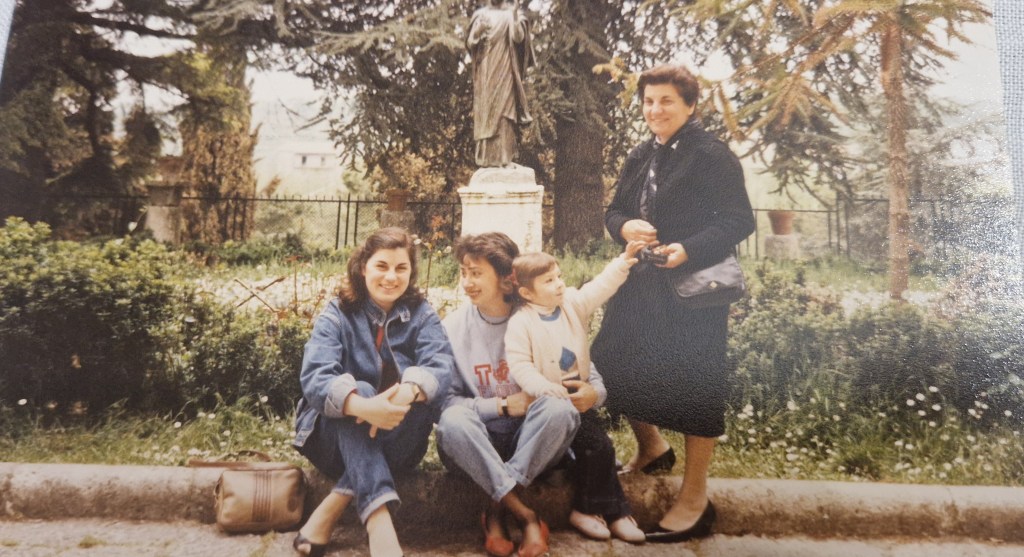
In Gaeta Lina found her habits again. In the morning she woke early. At ten she went out with Loreto, they took their walk. Everything always precise, impeccable, clean.
Before going out she dressed completely. Put on lipstick, combed her hair. She never went out in slippers or with an apron, like her sister-in-law Almerinda did in the village. Lina had lived in Anzio, she had a different mindset. She was more city-like compared to village mentality.
At home she kept everything in order, but she wasn’t obsessed. With little Isabella and Franca she let them turn the house upside down. They played, scattered toys everywhere, made a mess. She cleaned the next day. “She gave us freedom to do what we wanted,” Isabella says.
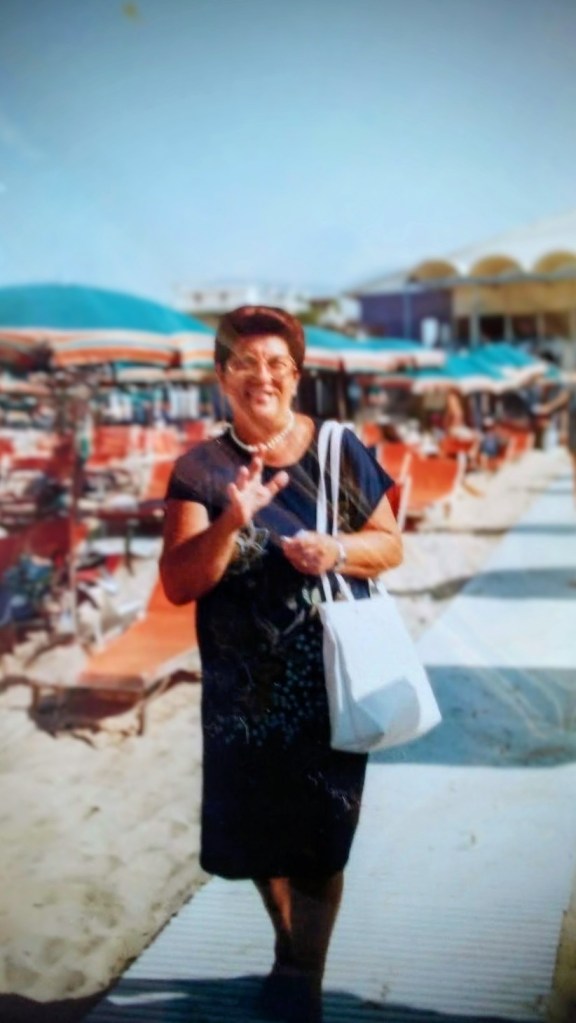
And the sea. Lina spent four months a year at the sea, walking on the beach. She got tan. Not like Isabella, who never burns. She instead got color, became dark like an Abruzzese peasant woman.
The sea had saved her once. And it continued to save her every day.
The Woman Who Remained
When I met Lina she was already the woman the sea had healed. Extroverted, sociable, always ready to talk. Fast. Too fast sometimes—Isabella at first didn’t understand everything when she spoke, because she mixed dialect and Italian and the words came out like a waterfall.
But then I got to know her better. And I also saw the shadow that sometimes passed through her eyes. That thing that remained from Sora. From the child who wasn’t born. From the breakdown that had bent her.
Loreto knew it. That’s why he gave her his whole paycheck. That’s why he trusted her for every decision. That’s why they went out together every day at ten for their walk.
It wasn’t just respect. It was protection. It was love. It was his way of saying: you’re not alone anymore. You’re not closed between the mountains anymore. The sea is here. And I’m here with you.
“Mom and papà were different from many other parents,” Isabella says. “They respected each other. They trusted each other.”
And when I look at Isabella, I see Lina. Not in character—that she got from Loreto, the silence and the shyness. But in strength. In that ability to get back up after life has bent you.
Lina taught Isabella that the sea washes everything away. Even fear. Even pain. Even children who aren’t born.
You just have to be patient. You just have to wait for the right wave to come.
“Lina was exceptional,” Isabella still says today. “Whatever she put her hand to, she succeeded at everything. And she was a tremendous example for me.”
She stopped. Her voice trembled slightly.
“We were particularly in sync. Everyone always says we look so much alike, but her character is completely different from mine. She was my alter ego.” Not a day went by that they didn’t see or hear from each other.
When Lina died, Isabella lost half of herself. “Every time I talk about her I get emotional,” she admits.
“The trauma of her death… I think I still haven’t gotten over it,” she confesses.
And she’s right. There are wounds that never fully close. You just learn to live with them, to carry them with you like a scar that burns on rainy days.
Not with shame, but with truth. As if that emotion were the only way to keep alive the memory of the one who was her alter ego, her anchor, the woman who taught her everything that truly matters.
To be continued…
Copyright © Andrew Lisi
Subscribe to follow along or check back regularly to read the next installment.
Previous episodes available here
La mamma di Isabella, Lina Cardarelli
Il medico non l’aveva ascoltata. Aveva aspettato troppo, e il bambino era morto dentro di lei prima di nascere. Quando mi raccontarono di quel figlio che mia nonna dovette partorire già morto, capii meglio quanta sofferenza e ingiustizia c’era in quegli anni. L’Italia del dopoguerra aveva ricostruito i palazzi, le strade, i ponti – ma la medicina era ancora quella dei paesi di montagna, dove un dottore arrogante poteva uccidere un bambino per pura presunzione e chiamarla errore di calcolo.
Questa è la storia della mia nonna materna, raccontata da mio padre.
Lina
La donna che faceva amicizia con tutti
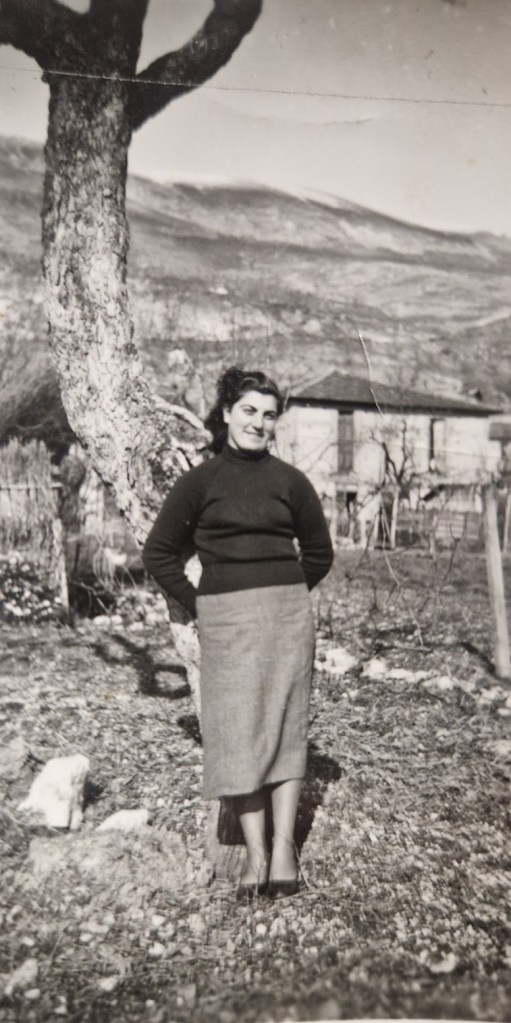
Lina era l’opposto di Isabella. Dove la figlia era timida e chiusa, lei era estrosa e socievole.
«Mamma faceva amicizia immediatamente», racconta Isabella. «Si ricordava i nomi di tutti. Una persona la vedeva una volta e già sapeva come si chiamava, di dove veniva, cosa faceva. Io no. I vicini di casa lei li conosceva tutti. Io sono stata anni nello stesso palazzo e non sapevo nemmeno chi abitava accanto.»
Isabella dice che in questo Lina assomigliava a Laura, la più piccola dei miei figli. Quella capacità di entrare in contatto con le persone senza sforzo, di farle sentire importanti, di memorizzare tutto di loro.
E aveva le mani d’oro. Cuciva, ricamava, lavorava a maglia. Cose spettacolari. E lo faceva senza nemmeno guardare il lavoro. Isabella ancora non capisce come fosse possibile. «Una cosa allucinante», dice. «Non guardava quello che faceva. Le mani andavano da sole.»
Era autodidatta. Nessuno le aveva insegnato. Aveva imparato guardando, provando, sbagliando. Quando si sposò si fece il vestito da sposa completamente da sola. Tutto lei. Il corpetto, la gonna, il velo. Perfetto.
Questa abilità l’aveva ereditata dal ramo della famiglia di sua madre. La sorella più giovane di Lina, quella che poi si trasferì a Formia, era andata addirittura a scuola di cucito da una sarta famosa di Avezzano. Aveva lavorato in due saloni di moda a Roma. Ma anche lei aveva quella predisposizione naturale che veniva da lontano.
Le radici abruzzesi
Lina era nata a Paterno d’Avezzano, in Abruzzo, nel 1933. La piana del Fucino, quella che una volta era un lago e poi era stata prosciugata. Tutte strade perpendicolari e una circolare che girava intorno, la strada 11.
Lì abitava la sua famiglia. Contadini. Tutti contadini, a meno che non eri un impiegato statale. I suoi genitori, nonno Santuccio e nonna Vittoria, si erano comprati dopo anni di sacrifici una casa grande. Dall’Ottocento, con i mobili antichi già dentro. Una stalla davanti, un cortile enorme che dava sulla statale. Quattro stanze al primo piano e quattro sopra. Stanzone grandi, quelli che si facevano una volta. Il bagno ricavato all’esterno.
Nonna Vittoria era rimasta vedova giovanissima, al tempo del terremoto. Era rimasta sola con tutti quei bambini. Poi si era risposata dopo tanti anni con uno che le fece fare «una carrettata di figli», come dice Isabella. Ma i primi tre – tra cui la madre di Lina – erano di quel primo matrimonio tragico.
Sulla strada 11 abitavano anche i tre fratelli di nonna Vittoria. Tutte famiglie di contadini, case con le aie davanti, poderi che si estendevano fino dove arrivava lo sguardo. E tra loro si aiutavano. Si passavano il lievito madre per fare il pane. «Oggi tocca a me, domani a te.»
Poi c’era la casetta con il forno che nonna Vittoria si era fatta costruire. E il lavatoio grande, perché si faceva anche il sapone. Una volta a settimana facevano il pane con il lievito madre – il crescito, lo chiamavano. Lina bambina correva dalla cognata a prendere il crescito. Attraversava la strada, entrava in quella casa che sapeva di farina e legna. «Mamma dice se puoi darmi il crescito.» E tornava con il barattolo stretto tra le mani come un tesoro.
Ti svegliavi la mattina e il profumo riempiva tutta la casa. Pane, pizza a pala, biscottoni da inzuppo – quelli grandi abruzzesi con lo zucchero semolato sopra. Isabella ricorda che quando andavano lì d’estate, lei e Franca mangiavano quei biscotti con la Nutella. Li davano pure al cane, di nascosto.
Il cane che apriva lo sportello della credenza con la zampa. Sapeva esattamente dove stavano i biscotti. Entrava in cucina, alzava la zampa, apriva, prendeva e scappava. Nonna Lina non lo seppe per tanto tempo. Quando lo scoprì rise. «Anche il cane ha più furbizia di me.»
Lina da bambina non andava in campagna come le sorelle più grandi. Lei restava a casa. Mandava avanti la casa. Cuciva, aiutava, teneva tutto in ordine. Era piccola ma già aveva quelle mani che sapevano fare tutto.
«Mamma praticamente ha mandato avanti casa perché lì c’era tanto da fare», dice Isabella. «Le altre andavano in campagna ma lei restava. E imparava.»
Imparava a cucire guardando. A ricamare seguendo i fili con gli occhi. A gestire una casa grande con tante bocche da sfamare. A dieci anni faceva cose che adesso una bambina non saprebbe nemmeno immaginare.
La sorella che quasi sposava il musulmano
La sorella più giovane di Lina – la zia che poi si trasferì a Formia – era diversa dalle altre. Aveva un talento naturale, quello sì, ma lo aveva anche coltivato. Era andata a scuola di cucito da una sarta famosa di Avezzano. Poi se ne era andata a Roma, aveva lavorato in due saloni di moda. Roba seria. Alta moda.
Era brava. Bravissima. E a Roma aveva incontrato un uomo.
«Si stava quasi per sposare con uno che era dell’Islam», racconta Isabella. «Ma allora apriti cielo.»
La notizia arrivò al paese. Nonna Vittoria andò dal prete a chiedere consiglio. E il prete, invece di calmare le acque, le agitò ancora di più.
«Signora», le disse con quella voce grave da confessionale, «quelli i musulmani c’hanno più di una moglie.»
Nonna Vittoria uscì dalla chiesa e andò in escandescenze. Non dormì per notti. Piangeva. Si disperava. «Mia figlia che sposa uno così. Mia figlia che diventa una delle tante.»
Non era questione di religione. Non era nemmeno questione di razzismo, non nel senso moderno. Era paura. Paura di perdere la figlia in un mondo che non capiva, in una vita che non riusciva nemmeno a immaginare.
Loreto a quel tempo non era ancora sposato con Lina. Ma la conosceva già. La corteggiava. E quando seppe della situazione, non ci pensò due volte.
«Digli di venire a vivere con noi», disse a nonna Vittoria. «A Sora. La accolgo io a casa. Le trovo lavoro. La aiuto a lasciarsi alle spalle questa storia.»
E così fece. La zia si trasferì a Sora, visse con Loreto e Lina. Loreto le trovò clienti per il cucito, la aiutò a rimettersi in piedi. La protesse come se fosse sua sorella.
«Però lei non ha mai capito la bontà di questo cognato», dice Isabella, e nella voce c’è ancora un’ombra di dispiacere. «Non è mai stata grata. Non veramente.»
Quella zia se ne tornò poi a vivere la sua vita. Ma quella storia rimase. Loreto che aveva aperto la casa a una ragazza in difficoltà. Che l’aveva protetta. Che aveva fatto quello che andava fatto, senza chiedere niente in cambio.
E quando anni dopo quella zia non mostrò mai riconoscenza, Lina lo notò. Isabella lo notò. Ma Loreto scrollò le spalle. «Ho fatto quello che dovevo fare. Il resto non conta.»
Era fatto così.
I tre mesi più felici
«Mamma se lo ricordava come il periodo più felice della sua vita», dice Isabella quando le chiedo di raccontarmi di Lina prima che diventasse la donna che ho conosciuto io.
Erano i primi tre mesi di matrimonio. Anzio, 1952. Una casetta proprio sulla spiaggia. Lina aveva ventun anni. Loreto ne aveva trenta, ma quando la guardava sembrava un ragazzino.
Isabella mi descrive quella casetta come gliela raccontò sua madre: piccola, con le finestre che si aprivano direttamente sul mare, il sale nell’aria che entrava in casa e si posava su tutto. I pescatori che la mattina presto tornavano con le reti piene e si fermavano a portare il pesce fresco. «Signora Lina, questo è per voi.» E lei che imparava a pulirlo, a cucinarlo in mille modi diversi.
Facevano passeggiate sulla riva ogni sera. Lina raccoglieva le conchiglie. Quelle più belle, quelle grandi e perfette, le teneva. I pescatori gliene regalavano altre, trovate chissà dove. Lei le lavava, le metteva in fila sul davanzale dove prendevano il sole.
Era incinta di Franca. Soffriva di nausea, soprattutto la mattina. Ma il mare la aiutava. L’aria pulita, lo spazio, la luce che si rifletteva sull’acqua e ti entrava negli occhi anche quando li chiudevi.
«Quei tre mesi», diceva sempre Lina a Isabella, «sono stati il paradiso.»
Poi arrivò il trasferimento. Sora. E il paradiso finì.
Lina portò via le conchiglie. Le tenne sempre, per tutta la vita. Stavano all’ingresso della casa, sopra la cassapanca. Come reliquie di una vita che non era più tornata.
Sora, la prigione
Quando Loreto fu trasferito a Sora da Anzio, Lina lasciò il mare. Lasciò l’aria, lo spazio, la luce. Finì in una città stretta tra le montagne, dove l’aria ristagnava e d’estate ti soffocava.
Abitavano in via Conte Canofari, una strada sterrata che portava al cimitero. Campagna intorno, case sparse. Un posto che ti stringeva il petto anche quando respiravi.
Il parto di Franca fu difficilissimo. Lina aveva l’albumina alta. I medici le dissero che rischiava di morire. Alla fine si salvarono entrambe, ma fu un trauma che segnò l’inizio della sua vita a Sora. I medici le consigliarono di non avere più figli. Lei non li ascoltò. Due anni dopo nacque Isabella, e per fortuna andò tutto bene.
Lina cercò di adattarsi. Tenne la casa, crebbe le figlie, cucì, ricamò. Ma Sora non era casa sua. Era troppo chiusa. Troppo piccola. Troppo lontana dal mare.
Nel 1963, quando Isabella aveva sei anni, morì nonna Elisabetta – la madre di Loreto. Una donna speciale, di sangue blu rovinato dal terremoto, che aveva sposato un contadino per amore e vissuto in povertà con la dignità di una regina. Al suo funerale c’era tutto il paese e anche quello vicino.
Lina le era molto affezionata. La perdita la colpì profondamente.
Il bambino che non nacque
Isabella aveva sei anni quando sua madre rimase incinta del terzo figlio. Dopo Franca e Isabella, sarebbe dovuto arrivare un maschio. O un’altra bambina. Non importava. Era un figlio.
Ma qualcosa andò storto.
«Il medico non ha ascoltato mamma», racconta Isabella. «Lei diceva che aveva finito i termini, che era ora. E lui: no, no, si sarà sbagliata con i conti. Aspettiamo, aspettiamo.»
Aspettarono troppo.
Il bambino morì poco prima di nascere. Dentro di lei. Lina dovette partorire un figlio morto.
Isabella non me ne parla mai nei dettagli. Alcune cose sono troppo intime, troppo dolorose anche solo da raccontare. Ma vedo nei suoi occhi che quel lutto segnò sua madre in un modo che non si riparò mai del tutto.
Ma il latte che non aveva potuto dare a quel figlio morto, Lina lo diede anni dopo al bambino di un’amica che non poteva allattare. Andava a casa sua ogni giorno, in silenzio, come si porta avanti un debito con la vita.
La morte di nonna Elisabetta. La perdita del bambino. Tutto nello stesso periodo. Tutto insieme.
Lina crollò.
L’esaurimento
L’esaurimento nervoso arrivò piano. O forse era già lì da tempo e nessuno se ne era accorto. Lina che non riusciva più a riprendersi. Che restava seduta per ore senza dire niente. Che guardava le figlie come se fossero molto lontane, dall’altra parte di un vetro spesso che non si poteva rompere.
«Aveva bisogno di mare», dice Isabella. «Di aria pulita. Di spazio.»
I medici dissero a Loreto che doveva cambiare aria. Che Sora era troppo. Le montagne che intrappolavano tutto – l’umidità, il caldo, i pensieri. Bisognava andare al mare.
Quando Loreto scrisse la lettera al ministero chiedendo il trasferimento, lo fece per salvare sua moglie.
La lista arrivò. Gaeta era la prima opzione. Lina sentì la parola «mare» e disse subito di sì. Per la prima volta da mesi, i suoi occhi si riaccesero.
Abitare al mare, senza il cane
29 settembre 1969. Il treno che fischiava entrando alla stazione di Gaeta portava con sé la speranza di una vita nuova. Io, mamma Lina e mia sorella Franca scendevamo con le valigie piene di vestiti che sapevano ancora di Sora, di montagne chiuse e di una tristezza che dovevamo lasciarci alle spalle.
Dodici anni, l’età in cui tutto ti sembra gigantesco e spaventoso. Il mare che non avevo mai visto così da vicino, l’aria che sapeva di salsedine invece che di boschi e pietre fredde.
La stazione sapeva già di salsedine, quella stazione che allora c’era ancora, proprio vicino via Serapide.
Ma quella speranza aveva un prezzo. Un prezzo che avevo già pagato settimane prima, quando papà era venuto da solo a cercare casa.
Aveva girato tutti gli appartamenti disponibili. Girò e rigirò per giorni, ma la risposta era sempre la stessa: «Con il cane no. Non affittiamo a chi ha animali.»
Il cane. Il nostro cane.
Per papà era come un terzo figlio. Lo portava sempre con sé in montagna, a caccia, a cercare tartufi nei boschi intorno a Sora. Stavano insieme per ore, si capivano senza bisogno di parole. Quando papà tornava a casa con lui, li vedevi camminare affiancati come vecchi compagni d’armi.
Ma per me era qualcosa di diverso. Era il mio fratello peloso.
Quando papà era via per lavoro, ero io che me ne occupavo. Lo portavo fuori, gli dava da mangiare, gli parlavo. Lui mi ascoltava con quegli occhi attenti, la testa leggermente inclinata, come se capisse ogni parola. E forse capiva davvero.
Era il mio confidente silenzioso. Quello a cui potevo dire tutto senza paura di essere giudicata. Quando piangevo per qualcosa, lui mi stava vicino. Quando ero felice, saltava intorno a me come se la mia gioia fosse anche la sua.
Poi papà tornò da Gaeta con la notizia.
«Ho trovato casa. Ma il cane…» Non finì la frase. Non serviva.
Lo regalarono a un amico di zio. Un uomo buono, dissero. Uno che aveva spazio, che sapeva come trattare gli animali. Ma a me non importava quanto fosse buono quell’uomo. Non era papà. Non ero io.
Il giorno in cui venne a prenderlo, io non riuscii a guardare. Mi chiusi in camera e sentii papà che gli dava le ultime raccomandazioni: come gli piaceva mangiare, quando preferiva uscire, quali erano i suoi posti preferiti per dormire.
Poi il cane abbaiò. Un abbaio diverso dagli altri. Come se avesse capito.
E io piansi come non avevo mai pianto.
Papà non ne parlò mai più. Portava quel dolore dentro, in silenzio, come portava tutte le cose difficili della sua vita. Ma io lo vedevo negli occhi, quando guardava altri cani per strada. Quel momento di esitazione, quel lampo di tristezza che attraversava il suo sguardo prima di girare la testa dall’altra parte.
Mamma invece diceva: «È meglio così. A Gaeta sarà tutto diverso.»
Ma per me Gaeta iniziò con una perdita. La perdita di quel fratello che non abbaiava più quando tornavo da scuola, che non mi aspettava più dietro la porta, che non mi guardava più con quegli occhi che dicevano: «Sono qui. Non sei sola.»
Quando salimmo le scale di Corso Italia fino all’ultimo piano, quando mamma aprì le finestre di quello che sarebbe stato il nostro salotto, l’orizzonte azzurro entrò in casa come una benedizione.
Mamma respirò profondo per la prima volta da mesi. Da quando era morta nonna Elisabetta e aveva perso il bambino che doveva nascere dopo di me. L’esaurimento nervoso l’aveva piegata, l’aveva resa fragile come un vetro. Ma davanti a quel mare, davanti a quell’infinito che si stendeva oltre la finestra, qualcosa in lei iniziò a guarire.
«Qui sarà diverso» mi disse guardando l’orizzonte.
Io annuii. Volevo crederle. Ma una parte di me era rimasta indietro, a Sora, con un cane che mi aspettava e che non avrebbe più capito perché non ero tornata a casa.
I primi tempi a Gaeta
Ma Gaeta non fu facile all’inizio. Anzi.
«Mamma l’ha sofferto quando siamo venute qui», racconta Isabella. «A Sora si era trovata benissimo, aveva fatto tante amicizie. Conosceva tutti. La gente la salutava, la rispettava. A Gaeta invece…»
A Gaeta erano arrivati i soldi delle navi. I mariti che partivano per mesi e tornavano con gli stipendi grassi. Famiglie di contadini che si erano comprati gli appartamenti. Palazzine nuove che spuntavano ovunque. Ma erano buzzurri. «Di un’ignoranza unica», dice Isabella senza mezzi termini.
Lina salutava la gente per le scale. Nessuno rispondeva. La guardavano appena, giravano la testa, passavano oltre. Come se non esistesse.
Lei che a Sora salutava tutti e tutti la salutavano. Lei che faceva amicizia con una parola, con un sorriso. Qui niente. Silenzio. Muri di indifferenza.
«Ma dove mi hai portato?» diceva a Loreto la sera, con la voce che si spezzava. «A Sora almeno la gente ti parlava. Qui è come stare in mezzo a fantasmi.»
Loreto la ascoltava, le prendeva la mano. «Ci vuole tempo. Vedrai. Il mare ti farà bene. Il resto verrà.»
Ma Lina soffriva. Isabella la vedeva sedersi alla finestra e guardare fuori, verso il mare che doveva salvarla. E invece si sentiva più sola che a Sora, stretta tra le montagne.
Poi un giorno bussò alla porta Maria Fantasia, che abitava al piano di sotto.
«Signora, le serve qualcosa?»
Lina la fece entrare. Le offrì un caffè. E iniziarono a parlare. Maria era diversa. Calda, aperta, curiosa. Voleva sapere da dove venivano, cosa facevano, come si trovavano.
«Mia suocera l’ha tenuta come una figlia», dice Isabella. «I figli di Maria sono diventati come nipoti per lei. Ancora adesso io ho rapporti con loro. Ancora adesso, dopo tutti questi anni.»
Maria Fantastica salvò Lina. Le mostrò che anche a Gaeta c’era umanità. Che non tutti erano muri di silenzio. Che si poteva ricominciare.
Piano piano Lina iniziò a uscire di più. A conoscere altra gente. Quando si trasferirono a Biancone, ricominciò da zero. Nuove amicizie. Nuovi vicini. Nuove chiacchierate al mercato, per strada, al bar.
Perché era fatta così. Non riusciva a stare sola. Aveva bisogno delle persone come aveva bisogno del mare.
E il mare, alla fine, la salvò davvero. Ma ci volle tempo. E ci volle Maria Fantasia a tenderle la mano quando tutto sembrava freddo e lontano.
Le abitudini di sempre
A Gaeta Lina ritrovò le sue abitudini. La mattina si svegliava presto. Alle dieci usciva con Loreto, si facevano la passeggiata. Tutto sempre preciso, impeccabile, pulito.
Prima di uscire si vestiva di sana pianta. Si metteva il rossetto, si pettinava. Non usciva mai in ciabatte o con il grembiule, come faceva invece sua cognata Almerinda al paese. Lina aveva vissuto ad Anzio, aveva un’apertura mentale diversa. Era più cittadina rispetto alla mentalità di paese.
A casa teneva tutto in ordine, ma non era fissata. Con Isabella e Franca bambine lasciava che mettessero la casa in rivoluzione. Giocavano, spargevano giocattoli ovunque, facevano casino. Lei puliva il giorno dopo. «Ci ha lasciato libertà di fare quello che ci pareva», dice Isabella.
E il mare. Lina passava quattro mesi all’anno al mare, a passeggiare sulla spiaggia. Si abbronzava. Non come Isabella, che non si brucia mai. Lei invece prendeva colore, diventava scura come una contadina abruzzese.
Il mare l’aveva salvata una volta. E continuava a salvarla ogni giorno.

La donna che restò
Quando conobbi Lina era già la donna che il mare aveva guarito. Estrosa, socievole, sempre pronta a parlare. Veloce. Troppo veloce a volte – Isabella all’inizio non capiva tutto quando parlava, perché mescolava dialetto e italiano e le parole le uscivano come una cascata.
Ma poi imparai a conoscerla meglio. E vidi anche l’ombra che ogni tanto le passava negli occhi. Quella cosa che era rimasta da Sora. Dal bambino che non era nato. Dall’esaurimento che l’aveva piegata.
Loreto lo sapeva. Per questo le dava tutto lo stipendio. Per questo si fidava di lei per ogni decisione. Per questo uscivano insieme ogni giorno alle dieci per la passeggiata.
Non era solo rispetto. Era protezione. Era amore. Era il modo di dirle: non sei più sola. Non sei più chiusa tra le montagne. Il mare è qui. E io sono qui con te.
«Mamma e papà erano diversi da tanti altri genitori», dice Isabella. «Si rispettavano. Si fidavano.»
E quando guardo Isabella, vedo Lina. Non nel carattere – quello l’ha preso da Loreto, il silenzio e la timidezza. Ma nella forza. In quella capacità di rialzarsi dopo che la vita ti ha piegato.
Lina insegnò a Isabella che il mare lava via tutto. Anche la paura. Anche il dolore. Anche i figli che non nascono.
Basta avere pazienza. Basta aspettare che arrivi l’onda giusta.
«Lina era eccezionale», dice Isabella ancora adesso. «Dove metteva mano, riusciva in tutto. Ed è stata per me un esempio grandissimo.»
Si fermò. La voce le tremò appena.
«Eravamo particolarmente in sintonia. Dicono sempre che ci somigliamo tanto, ma il carattere suo è completamente diverso dal mio. Era il mio alter ego.» Non passava giorno senza che si vedessero o sentissero.
Quando Lina morì, Isabella perse metà di se stessa. «Ogni volta che parlo di lei mi commuovo», ammette.
«Il trauma per la sua morte… penso ancora di non averlo superato», confessa.
E ha ragione. Ci sono ferite che non si chiudono mai del tutto. Si impara solo a conviverci, a portarle con sé come una cicatrice che brucia nei giorni di pioggia.
Non con vergogna, ma con verità. Come se quella commozione fosse l’unico modo per tenere viva la memoria di chi è stata il suo alter ego, la sua ancora, la donna che le ha insegnato tutto quello che conta davvero.
Continua…
Iscriviti alla newsletter per ricevere in anteprima i prossimi episodi.
Vuoi recuperare gli episodi precedenti? Li trovi qui
 EYES TO SEE