
A personal reflection on Peter Attia’s science-backed healthspan strategy, its limits, and the timeless wisdom of slow living in southern Italy
I started reading Peter Attia’s Outlive for a simple reason: I was about to become a father, again.
With another child on the way, I wanted to make sense of all the scattered health information I’d collected over the years—from metabolic fitness and blood markers to exercise routines and dietary frameworks.
I wasn’t looking for hacks. I wanted clarity. A deeper understanding of what it takes to not just live longer, but to live better.
The book promised exactly that: a science-backed approach to expanding not just lifespan, but healthspan—the years in which you’re truly functional, lucid, and active.
I already follow Andrew Huberman, and noticed how his influence played a positive role in my life. For instance, his historical episode on alcohol made me quit for keeps and it’s now almost 3 years I do not drink booze at all, in any form (after more than 20 years of abuse).
Since hearing of Attia’s clinical background, I was intrigued. It resonated with me: data-driven, prevention-focused, deeply personal.
Yet, I must admit: the book is too long. I had to take it chapter by chapter, mixing it with my own reflections and habits. But I stayed with it because the core message matters.
Did Attia’s book change anything for me? Absolutely.
Here’s what I took away—and where I think the book misses something essential, especially from my perspective as an Italian raised in a culture of natural longevity.
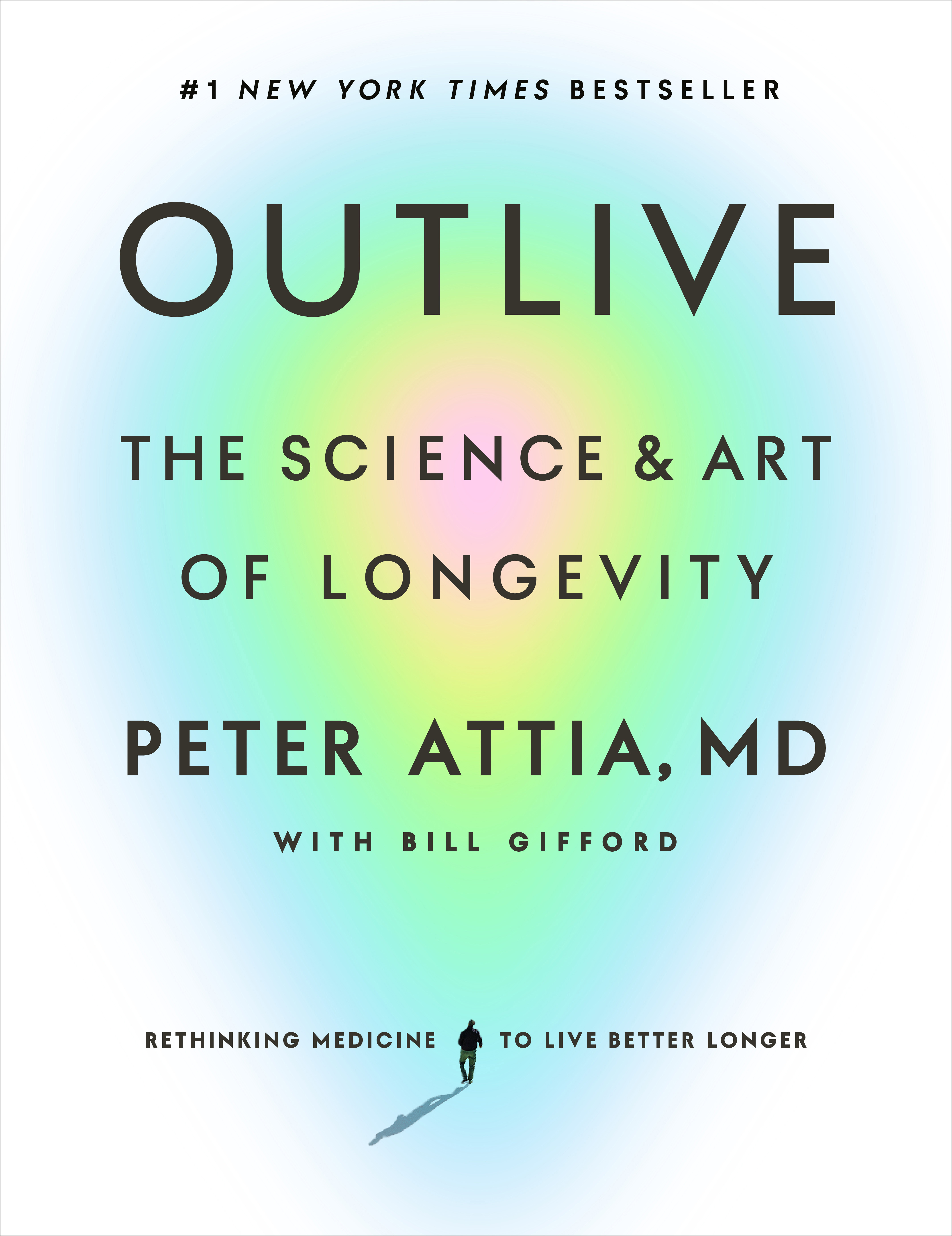
The heart of the book: prevention, not panic
Peter Attia is a former surgeon who became disillusioned with the traditional reactive model of healthcare. Outlive is the product of two personal transformations:
- A professional shift from treating disease to preventing it.
- A personal reckoning—from a performance-obsessed doctor to a father confronting his own emotional damage and blind spots.
The early chapters focus on what Attia calls Medicine 3.0, a new paradigm that seeks to replace the current model (Medicine 2.0), which he criticizes as too focused on treating symptoms once the damage is already done. Medicine 3.0 is personalized, data-driven, and, above all, proactive.
His message is sobering: most of us don’t die of sudden infections anymore—we die slowly, from chronic conditions that accumulate quietly over decades.
The medical system, meanwhile, continues to catch “falling eggs” instead of building better baskets. We need to shift from reaction to anticipation.
The 4 horsemen: your real enemies
The book centers around the Four Horsemen of chronic disease:
- Cardiovascular disease
- Cancer
- Neurodegenerative disease
- Metabolic dysfunction (type 2 diabetes and insulin resistance)
Attia’s thesis is that if we address these proactively—not when symptoms appear, but years in advance—we can significantly extend the quality years of our lives.
To do that, he proposes a complete change of strategy: not one-size-fits-all guidelines, but highly personalized tactics based on biomarkers, testing, and lifestyle design.
The book is filled with examples: the painful story of his father and uncles dying of early heart attacks; his professional frustrations in hospitals where patients arrive too late to be saved; and case studies of patients in his private practice who’ve managed to radically change their health trajectory.
He’s meticulous about data. He talks about why ApoB is a far better predictor of cardiovascular risk than LDL cholesterol, and why VO2 max is perhaps the most underrated metric of longevity.
But there’s more than science. The deeper I went into the book, the more I found myself nodding along—not just because I agreed, but because I had already internalized many of these lessons.
What I already do (and why it matters)
Chapter by chapter, I realized I was living many of these principles without calling them by name.
- I work out three to four times a week: weightlifting, cardio, walking.
- I try to take long walks daily, especially after meals (strolling my newborn around the neighborhood. In Italy we say “due piccioni con una fava”)
- I do weekly sauna and cold plunge sessions.
- I avoid alcohol and processed sugar entirely (I haven’t had a drink in nearly 3 years).
- I stopped using THC products altogether, both smoking and edible.
- I eat a simple, whole-foods diet.
- I check my blood work and thyroid every quarter (due to a family history of thyroid tumors).
- I do a full body composition scan (BIA) every year—and in 2024, the data showed clear improvements across the board.
Not because I want to live forever. But because I want to be fully present, especially for my wife, son and daughter.

What happens when you ignore the signs
Attia compares this to the Challenger space shuttle disaster—where warning signs were missed until it was too late. I don’t want to be that kind of story.
Back in 2021, I found myself standing in the garden, holding Mauro on my shoulders, suddenly aware of a sobering reality: the deep fatigue I felt wasn’t normal for someone my age. After several lockdowns, I was the most overweight ever. I spent all day sitting, mindless about even short walks (averaging less than 3.000 steps a day).
The cervical pain that had plagued me for years was getting worse, and the combination of entrepreneurial stress and new parent exhaustion was taking its toll.
I remember thinking: “Will I be able to carry him like this when he’s seven? Will I have the energy when he needs me most?”
That moment was illuminating. I had spent years building businesses and accumulating assets—my marketing agency was doing fine, and I also found space to learn fiction writing and publish a novel —but I was neglecting the most critical asset of all: my body.
So I made a conscious decision to recalibrate.
I established what I now call my “non-negotiable” morning routine: qi gong and tummo breathing before anything else.
Initially, it was a struggle—I would forget, procrastinate, make excuses. But by February 2025, I had completed over 180 consecutive days of this practice. My cervical pain virtually disappeared. My mental clarity improved dramatically.
The irony wasn’t lost on me: while obsessively tracking KPIs and marketing metrics for clients, I had failed to measure what mattered most in my own life.
This realization wasn’t prompted by a serious health scare or a doctor’s warning—it was catalyzed by the simple wish to be there, fully present and capable, for my children decades from now.
And because I know what happens when you ignore the signs. Attia compares this to the Challenger space shuttle disaster—where warning signs were missed until it was too late. I don’t want to be that kind of story.
I want to age with intention, not by default.
Mostly because I love this life. And I would like to see how my kids (and maybe grandkids too) find their way.

Best chapters (and where it drags)
Some chapters of Outlive are exceptional:
- The chapter on cardiovascular health reframes everything we think we know about cholesterol and statins.
- The chapter on cancer is a wake-up call on screening and prevention, and introduces new diagnostics like the Galleri test.
- The chapter on neurodegeneration is especially poignant: it connects heart, liver, and brain health with habits we can start in our 30s and 40s.
- The chapters on exercise are gold: VO2 max, strength, and stability are framed not as fitness goals, but as functional freedom goals.
But the book is also long—too long.
Some sections feel padded, as if Attia were repeating key ideas for different audiences. And while I appreciate the depth, a more concise version (30% shorter) would have hit harder. Still, the takeaways are worth the time.
The emotional turn: trauma, shame, and becoming human
What surprised me most—and what made the book truly stick—was Attia’s honest reckoning with his own emotional struggles.
He recounts, in raw detail, how he failed to come home immediately when his son suffered a cardiac emergency. How his pursuit of perfectionism and control drove him to the edge. How he finally checked himself into a trauma therapy center, spending days in silence before opening up about childhood abuse and internalized shame.
He writes about replacing the brutal inner coach in his head with a more compassionate voice. About how longevity isn’t just about muscle mass or biomarkers, but about healing relationships and becoming emotionally whole.
It’s powerful. And it echoes something I’ve been thinking a lot about: the link between emotional depth, presence, and true legacy.
But what about the Campodimele effect?
I grew up 40 minutes from a town called Campodimele, famous for its centenarians.
These people never wore fitness trackers. They didn’t know their ApoB or track glucose variability. But they lived long, functional lives. Why?
- A natural diet, rich in legumes and local vegetables.
- Daily physical activity—farming, walking, working.
- Strong social bonds and community ties.
- A slower pace of life with meaning and rhythm.
They were, in many ways, living Medicine 3.0 without knowing it.
Consider that Italy is home to several other longevity hotspots beyond Campodimele.
The island of Sardinia, particularly the Ogliastra region, is one of the world’s original Blue Zones—areas where people live significantly longer than average.
Other notable places include Acciaroli in Campania, home to many centenarians, and parts of Calabria, where strong community bonds and Mediterranean diets are still a way of life.
Again, these regions share common traits: high levels of natural physical activity, plant-based diets, intergenerational households, and a slower pace of life.
They stand in stark contrast to the modern stress-driven model found in urban environments—and even more so to the hyper-optimized mindset common in the U.S. wellness scene.
To put things in perspective: the average life expectancy in Italy is over 83 years, compared to 81 years in the United Kingdom – and only 76 years in the United States .

But it’s not just the years—it’s the quality of those years. Italians, especially in rural regions, often enjoy higher healthspan, staying functional and independent well into their 80s and 90s.
I can add a personal perspective to that. Me and are originally from a small town by the Thyrrenian sea, where we enjoyed a great climate and quiet environment.

After studying and working for a couple years in big cities such as Rome and Genoa, we chose to relocate to Ravenna – a mid-size capoluogo of about 160.000 people.
Here we can walk or ride a bicycle everywhere, and only use our car for rare trips outside the center. All public or important services are close to our house, and there is plenty of parks and cultural events. We have the Adriatic sea at just 8 km, and most of our friends live nearby.
This single decision enormously improved our quality of life, as opposed to when we were in our early 20s and still attracted by the urban lifestyle.
Thus Attia’s approach raised some doubts.
The most resonant criticism of Outlive? It’s the one I read in an article by Dhruv Khullar in The New Yorker titled “How to Die in Good Health”.
Attia’s system is expensive, intensive, and can end up reducing life to a series of spreadsheets and protocols. It asks a lot of the user—not just in time or money, but in emotional bandwidth. For many, the promise of optimized longevity could turn into the burden of constant self-surveillance.
Khullar warns that by focusing too much on controlling the future, we risk losing touch with the joy of the present: connection, spontaneity, and purpose.
He even cites Montaigne, who suggested that aging and its natural decline may carry a kind of wisdom—easing us into the idea of death not with fear, but with acceptance. According to Montaigne, losing certain capacities might actually make death feel more tolerable, as life slowly loosens its grip and invites us to let go with grace.
And this hits close to home—literally.
So while I embrace Attia’s framework, I also recognize its limits. The answer isn’t just in better data—it’s in integrating that data with the timeless wisdom of cultures that already know how to age well.

How I balance both worlds
In practice, I’ve come to build a hybrid model:
From Attia, I take:
- The science: structured exercise, not eating too much, caring about sleep, annual body comp analysis.
- The urgency: to prevent, not just react.
- The honesty: about emotional blind spots and trauma.
From Campodimele, I keep:
- The pace: slow mornings, daily walks, deep conversations.
- The food: unprocessed, seasonal, satisfying.
- The philosophy: live simply, love deeply, and stay curious.
That’s why I don’t chase optimization for its own sake.
I train not to be shredded, but to carry my daughter on my shoulders when I’m 70.
I test my blood not to flex on metrics, but to catch what matters early.
I sleep well not because a wearable tells me to—but because I care about who I am when I wake up.
The real lesson: design, don’t drift
Outlive isn’t perfect, but it’s a generous book. It gives you tools—not commandments. Frameworks—not fear.
What I took away is this:
Longevity isn’t about avoiding death. It’s about being ready for life—for as long as you’re lucky enough to have it.
Yes, we need metrics. But we also need meaning. Yes, we need data. But we also need to dance.
So here’s my working formula:
Science + Context + Humanity = Sustainable Longevity
If you’re a new father (or a tired one), know this: sometimes, the best marker of your health is whether you can sit still, hold your child, and be fully present. No sensor can measure that. But it counts.
Common doubts
Is Peter Attia’s approach in Outlive practical for busy parents?
It can be, but only if you adapt it. The core principles—like strength training, prioritizing sleep, and early screening—are valuable for anyone, including parents. But unless you have unlimited time and resources, you’ll need to simplify.
Focus on consistency over perfection.
For example, walking after meals and sleeping better can yield huge returns without complex routines.
How do traditional Italian longevity practices compare to modern biohacking?
They often achieve similar outcomes—long, functional life—but through very different means.
Where biohacking emphasizes measurement, optimization, and sometimes expensive tools, traditional Italian lifestyles rely on social cohesion, physical labor, local food, and slow rhythms.
Here people live long not because they track everything, but because they trust the life they lead.
What are the most actionable takeaways from Outlive for beginners?
Start with the basics:
- Build an exercise habit (especially strength and cardio)
- Avoid soft drinks, alcohol and ultra-processed food
- Improve sleep hygiene
- Get annual bloodwork (focus on metabolic health)
- Take emotional health seriously—relationships matter as much as biomarkers
You don’t need to apply everything at once. One small step, done consistently, is more powerful than a perfect plan never implemented.
Does cannabis accelerate cognitive decline?
What I’ve found most revealing through this journey isn’t just the physical transformation. It’s the cognitive clarity.
From 2021 to 2024, I maintained a casual relationship with cannabis—sometimes CBD, sometimes THC—justifying it as stress relief or creative stimulation.
Also, since 2023 I own a CBD company, which means I enjoyed free product for a long time.
But the cognitive costs became increasingly apparent. Subtle memory lapses, foggy mornings, difficulty recalling names. As I wrote in my journal recently, “I’m 38 years old and I can’t afford this decline.”
This wasn’t about moral judgments—it was pure pragmatism. If I wanted the mental acuity to write, build businesses, raise children, and maintain deep relationships for decades to come, something had to change.
So I started tracking days without cannabis (using a very simple, straightforward and free app).
What made it easy to break the habit was that I replaced that artificial dopamine hit with the natural high of tummo breathing and meditation.
The mental fog lifted. My thinking sharpened. What began as an experiment has become a cornerstone of my longevity strategy—not just adding years to life, but adding life to those years.
And if you’re a new father (or a tired one), know this:
sometimes, the best marker of your health is whether you can sit still, hold your child, and be fully present.
No sensor can measure that. But it counts.

Just yesterday, I practiced qi gong with Luce in my arms, feeling her gradually relax into sleep against my chest.
In those quiet moments of synchrony between my breath and hers, I realized this is what true health optimization looks like—not just surviving longer, but being truly present for the moments that matter.
 EYES TO SEE
One thought on “What Outlive Taught Me About Longevity (And What I Learned from a Village of Centenarians)”