
Vai in più basso per leggere l’originale in italiano.
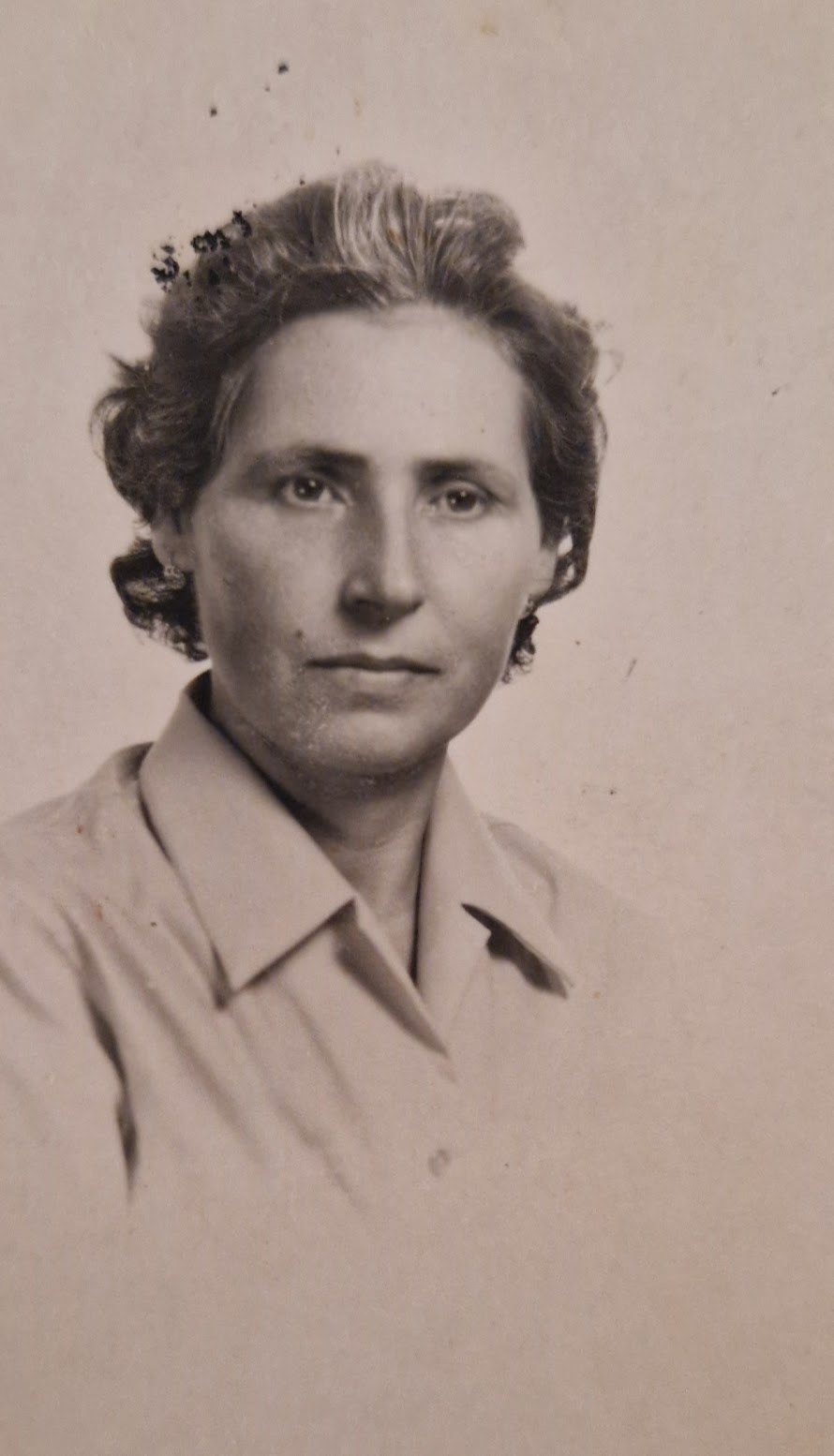
After Armando’s story, it’s time for his wife, my grandmother Pina.
From a harsh childhood of labor, to a youth that could have ended in illness, or with that Nazi pistol pointed at her heart. Or in the minefield she crossed alone. The story continues in my father’s words.
Hands too small
My mother never gave up. She went through every kind of hardship, from Nazi abuses during the occupation to illnesses in her later years. But she always remained almost indifferent to pain, stoic and patient. She never complained. She did what had to be done and moved on.
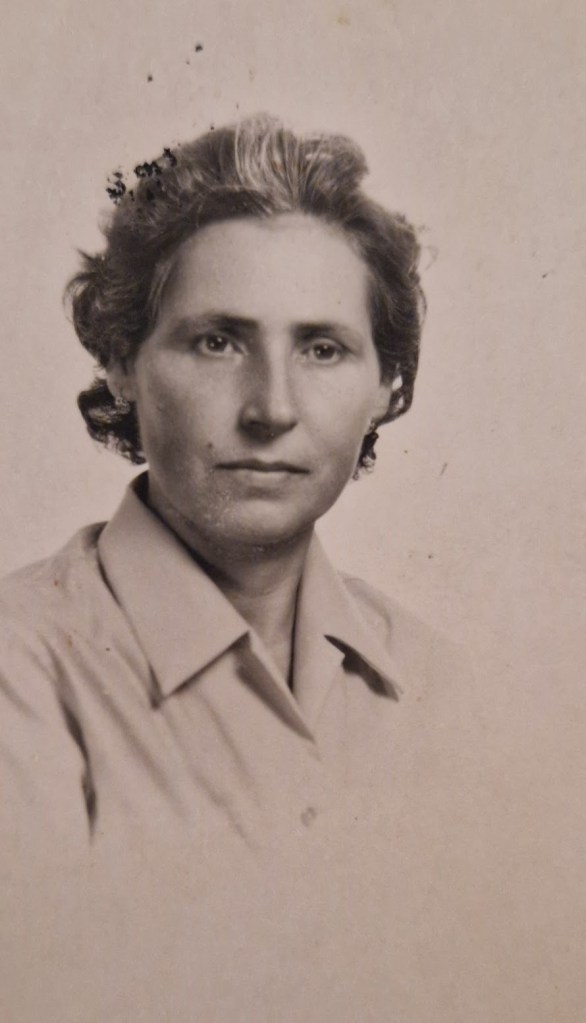
Her name was Giuseppina Di Ciaccio. Born in 1920 to a peasant family, her character was forged very early. “At eight years old she was taken out of school,” my older sister Tina recounts. “She would have wanted to keep going, would have liked to study a bit more, but unfortunately the family’s needs…”
Grandmother Civita had given birth to eleven other children besides her. Only seven had survived, of which she was the fourth. Seven living children in total: first a boy, then five girls, and the last one a boy.
Seven out of twelve. Five lost along the way. Dead from disease, hunger, childbirth. From all those things that killed children when there were no antibiotics or hospitals.
The oldest brother had already married, their father was beginning to struggle, the older sisters looked after the house. She and her sister Maria were put to work in the fields.
As Tina recounts, “The other three older sisters—Aunt Tettina, Aunt Elisa, Aunt Maria—were more devoted to the house. Especially Aunt Tettina and Aunt Elisa. They learned to sew, something Mamma never did. While she and Aunt Maria were put to work in the vegetable garden. She was a market gardener. But she was small, so she did what she could.”
A child in the fields. Hands too small for the hoe, but big enough to pick, to carry, to help.
The cart and the mule
The farmland where they lived and worked as sharecroppers was in Arzano di Gaeta. An area halfway between Gaeta and Formia, about four kilometers from each town center. Pina would accompany her father, Grandfather Stanislao, to Gaeta Vecchia or Formia, where the markets were held.
They would leave with the cart, pulled by the mule, from the refinery area, where the Agip depot stands today. She helped her grandfather load the vegetables, arrange them so they wouldn’t get damaged during the journey, sell them at the market calling out to customers with her still-young voice. Then she helped him return home because my grandfather was beginning to lose his strength.
Eight years old and already responsible for the family’s livelihood. Small hands helping to load and unload vegetables, a voice learning to bargain with customers, eyes watching everything to avoid mistakes. She learned fast. She had to.
Olive tree roots
Then the war came and things got worse.
During the German occupation, Grandfather Stanislao became paralyzed with pain. Rheumatism, they said. But back then there weren’t the treatments we have today. Medicine was primitive. You made herbal compresses, prayed, and hoped it would pass. Often it didn’t.
The man who had worked a lifetime in the fields found himself unable to move. His hands had become deformed, twisted like olive tree roots. His legs could no longer bear his body’s weight. His back had become a constant arc of pain. Stanislao, who had always commanded the household with a firm voice, now sat by the fireplace, wrapped in blankets even in summer, his gaze lost in the flames.
The family lost its pillar just when they needed it most.
Pina was twenty. The older brother already had his own family. Antonio, the youngest, was still a boy. The older sisters looked after the house, the children, the elderly. Only she was left for the fields.
She found herself doing everything alone. Hoeing. Sowing. Watering. Harvesting. Loading the cart without her father’s help. Taking vegetables to market. Bargaining with customers. Defending herself from swindlers who tried to cheat her because she was a woman and young. Coming home with hands full of blisters and a broken back.
Twenty years old with the weight of the world on her shoulders.
But she never complained. Not once.
“You have to keep going,” she would say. And she did.
When you saw her coming back from the fields in the evening, her skirt dirty with earth up to her knees and her hands trembling with exhaustion, you wondered where she found the strength. But she would come inside, wash her hands, prepare dinner for the whole family, and the next day rise before dawn to start again.
Pina didn’t seek recognition. She did what needed to be done. Period.
And when someone asked her, “How do you manage?” she would shrug: “What else am I supposed to do? Starve to death?”
She had learned very early that complaining doesn’t change things. Working does.
The only one who could read
And she was the only one who could read. The only one of all seven surviving children. Because her father, Stanislao, was devoted to prayer. “He had a bit of education, he could read,” Tina recounts. “And he passed this on only to her. I never saw the other aunts interested in reading. But Mamma, yes, she read.”
Filomena’s tragedy
My mother had also seen what happened to women who didn’t choose their own destiny. Her sister Filomena, just nineteen years old, had been forced to marry a violent and ignorant cousin in an arranged marriage. His family were illiterate and particularly cruel people. “She didn’t want to get married, but they forced her. Then she was mistreated by her husband’s family because children weren’t coming. And she let herself die, basically.”
At that time, daughters unfortunately depended heavily on their family—on their father or a husband—like in Islamic countries. And it was always the woman’s fault if babies didn’t come. Filomena endured daily humiliations, was treated like a failure, like someone who couldn’t even do what women were made for, according to them. The weight of shame crushed her chest every morning when she woke up. She couldn’t eat, couldn’t sleep. She wasted away day after day, consumed by guilt for something that wasn’t her fault. But she never said anything about any of this to her parents, to Pina, or to her other sisters. They only found out later.
Within a year of marriage she was on her deathbed. She was only twenty years old.
But life has a particular form of justice. Filomena’s husband remarried soon after. Years passed. No children came from the second marriage either. Never.
The problem was him. It had always been him.
It’s a boy, name him Antonio
Just as Filomena was dying, Grandmother Civita was pregnant with her last child. She was seven months along when her daughter—sick and weakened—told her something no one expected:
“Don’t cry for me because I’m fine where I’m going, but you think about this one who must be born. It’s a boy and you must name him Antonio.”
Ultrasound didn’t exist in the 1920s, and there was no way to know the sex in advance. But Filomena was right. In 1927, Uncle Antonio was born, seven years after my mother.
Meanwhile, Filomena had died for nothing. She had let herself be consumed by shame for a fault that wasn’t hers, let herself be humiliated for a defect that wasn’t hers. But when the truth came out, she was no longer there to know it. No longer there to see the faces of those who had tormented her, to hear the apologies that would never have come anyway.
My mother never forgot that lesson. That’s why she had refused all marriage proposals until she was thirty-three. And that’s why, when she decided to marry, it was her choice. Completely hers.
As a young woman, my mother was also a beautiful woman. When she went with the cart to sell in Gaeta, in Piazza Traniello, all the soldiers would whistle as she passed.
Aunt Nun
There was also a sister who was a nun. Annunziata was her name. Sister Maria Stanislao as a religious. She lived in Rome, in a convent. She was the only one in the family who had taken that path.
I never quite understood how it had happened. In a family of peasants, where everyone worked the land, where hands were for hoeing not praying, a daughter who chose the convent was a rare thing. But Annunziata—whom we all always affectionately called “Aunt Nun”—had felt that calling. And my mother, who was so devout herself, hadn’t felt it. Everyone is called toward something different, I suppose.
She would come back for important celebrations. Weddings, baptisms. She would arrive in her black habit, the veil, that way of walking that nuns have, silent and composed. She was much smaller than my mother, and more outgoing.
“When Grandmother Civita died,” Tina recounts, “Aunt Nun came from Rome. She was already there, at the bedside. And when grandmother saw all her children around her, when she saw Antonio too, the youngest, the one who had traveled the farthest to get there… she turned to Aunt Nun and whispered something in her ear. Only to her.”
We don’t know what she whispered. But it must have been something important. Because right after, she closed her eyes and died.
Mines in the Field
She was twenty when she decided to defy death.
It was 1943, maybe ’44. The Germans controlled everything. They had requisitioned houses, food, animals. And when they retreated north, they left a gift: anti-personnel mines in the cultivated fields. To slow the Allied advance, they said. To kill hungry civilians was the truth.
It wasn’t just our garden. The entire coast had become a death trap.
The Germans had expected the Allied landing right there, on Serapo beach and the surrounding areas. They had mined every meter of sand, every path, every access to the sea. The landing eventually happened further north, at Anzio, in January ’44. But the mines remained.
Between ’43 and ’46, so many died. Too many. People would go down to the beach to desalinate seawater—there where the Italcraft shipyards stand today—and be blown to pieces. One wrong step was all it took. A foot placed a few centimeters off. Then silence, smoke, pieces scattered across the sand.
Every week came news of someone who hadn’t returned. A father. A young boy. A woman just looking for some water for her children. The war was over, but it kept on killing.
Absolute prohibition on entering the land. Signs everywhere. Skulls and crossbones. Achtung Minen. Whoever tried, was blown to pieces. Someone had already tried. The pieces had been found scattered among the furrows.
But at home they were starving.
“I planted the cauliflowers there in September,” Pina would say, looking at the garden from the window. “The heads are almost ready. If they rot, what will we eat this winter?”
Stanislao, paralyzed in his chair, shook his head. “Pina, there’s nothing to be done. It’s too dangerous.”
Her sisters begged her. “Are you crazy? There are mines there. Are you trying to get yourself killed?”
“So what?” she replied with that hard voice she had when she’d made up her mind. “The food is going to waste. Are we supposed to starve because they put mines in our garden? In the fields we worked?”
“But Pina…”
“I have to go at night. So no one sees me.”
Golden curls
She went.
She waited for darkness to fall. A moonless night, black as pitch. She took a burlap sack and slipped out the back door without a sound. Her sisters prayed inside the house, hands clutched around rosary beads, eyes closed because they didn’t want to see.
The garden wasn’t far. But that night it seemed kilometers away.
She walked slowly. Every step could be her last. The ground beneath her feet was the same she had known since she was eight years old, every clod, every stone, every tree. But now it had become foreign. Hostile. Treacherous.
The cold bit her hands. The air smelled of wet earth and iron. In the distance, a dog barked. Closer, only her breathing and the rustle of her skirt against her legs.
She stopped at the edge of the field.
The mines are in here. Somewhere. Maybe here. Maybe further ahead. Maybe everywhere.
Her heart beat so hard she could feel the blood pulsing in her temples. Her hands trembled. Not from cold. From pure fear.
Jesus, Mary, and Joseph, she prayed inside. If I must die, let me die in God’s grace. And protect my family.
Then she took the first step into the minefield.
She walked along the path she herself had traced months before between the rows. She knew the ground there was compact, trampled. Maybe the mines were deeper, among the plants. Maybe.
Every step was an act of faith.
She didn’t turn around. Didn’t look back. She moved forward toward her goal. The cauliflowers were at the far end, near the dry stone wall. She had to get there.
The silence was absolute. Not even wind.
Then she heard something.
Footsteps. Behind her.
She stopped dead. Her heart froze in her chest.
Someone followed me. The Germans. A patrol. They saw me. Now we’ll all be blown to pieces.
The footsteps continued. But they weren’t from an adult. They were light. Too light.
She turned.
A few meters away, in the almost total darkness, she saw a small figure. A child. Four, maybe five years old. Full of blond curls that gleamed like gold even in the dark. A face pale as wax.
The child watched her. Didn’t speak. Didn’t move. Just stood there, still, in the middle of the minefield.
“What are you doing here?” Pina hissed in a thread of voice. “You have to leave. Now. We’ll all be blown to pieces here, understand? You have to leave. Go away!”
The child didn’t answer. Made no gesture. Didn’t cry. Remained motionless like a statue.
A chill crept up her spine. A chill that didn’t come from the cold of the night. A deeper chill.
“Go away!” she repeated.
Nothing.
“Do what you want,” she said finally. “I have to hurry. If they catch me, I’m dead.”
She turned and went on. Her heart hammered so hard it hurt. But she couldn’t turn back now. She was already in the middle of the field. Might as well go all the way.
She reached the cauliflowers. Touched them in the dark. They were swollen, ripe, perfect. She pulled one off. Then another. And another. Filled the sack quickly, hands trembling, fingers numb from cold.
She turned to check if the child was still there.
He was gone.
Vanished. As if he had never existed.
The field was empty. Dark. Silent.
Pina stood motionless for a long moment. The heavy sack on her shoulder. Her breath caught in her throat. Then she shook her head and went back, step by step, along the path, to the edge of the field.
No mine exploded.
She arrived home with the full sack. Her sisters wept with relief. Stanislao looked at her without saying anything, his eyes glistening.
“See?” said Pina. “It had to be done and I did it.”
The sound of boots
But someone had seen her. The gossips of Gaeta never missed an opportunity. Envy, jealousy. Look, she managed to go and even came back with all that food. How did she do it? She must be in cahoots with the Germans.
They reported her.
The next day, Pina was in the home garden when she heard the sound of boots. She turned. Four German soldiers. Three regulars and a lieutenant. They never went alone. Never.
The lieutenant had a perfectly pressed uniform, shiny insignia. The other three held their rifles ready. They spoke among themselves in German. Pina didn’t understand a word.
The lieutenant approached. Drew his pistol from its holster. A black Luger gleaming in the sun. Aimed it straight at Pina. Finger on the trigger.
Pina froze. Her dirt-covered hands still gripping a head of lettuce.
The lieutenant screamed something. Gestured toward the minefield. Pointed the pistol. Nein! Nein! he shouted.
Pina raised her hands. Slowly. Gestured toward the field. Then to herself. Then to her mouth.
“We’re hungry,” she said in Italian, even though he didn’t understand. “What are we supposed to do? The food is going to waste there.”
The lieutenant didn’t lower the pistol. Instead, he let it slide slowly from Pina’s forehead down to the center of her chest. The cold barrel against her heart.
Pina understood.
I’m dead.
She closed her eyes. “Jesus,” she whispered. “If I’ve done good, I thank you. If I’ve done wrong, forgive me.”
She waited for the shot.
It never came.
She opened her eyes. The lieutenant was staring at her. He had seen the fear. Recognized it. This wasn’t an act of war. Wasn’t an act of defiance. She was just a hungry girl trying to survive.
He lowered the pistol.
Then raised his hand.
And slapped her. Hard. Snapped her face to one side. Pain exploded across her cheek. Her ears rang.
The lieutenant shouted something in German. Hard words, sharp as blades. Then gestured toward the minefield. No more. Never again.
Pina nodded. Her cheek burned. But she was alive.
The four soldiers left. Boots beating on the road. Voices fading in the distance.
Pina stood there, one hand on her red cheek. She trembled. Her whole body trembled. But she didn’t cry.
Her life had been spared.
Head held high
Years later, when she told Tina that story, she added something she never forgot: “When you do things in broad daylight, you can walk through an army of soldiers and have nothing to fear if you’re an honest and upright person.”
It was the philosophy of a lifetime. Pina wasn’t afraid because she had nothing to hide. She was going to harvest her vegetables in her field. She wasn’t stealing. She wasn’t betraying anyone. She wasn’t lying. If she had to die, she would die with her head held high.
That courage saved her life.
Someone was protecting me
And that blond child with the golden curls? She never spoke of him to anyone. Except once, many years later, when Tina asked her about that night.
“There was a child,” my mother said in a low voice. “Very small. Blond. I don’t know who he was. I don’t know where he came from. He was there, then he wasn’t.”
“And who do you think he was?”
My mother didn’t answer right away. She looked far away, as if she could still see that dark night, that minefield, that small figure glowing in the darkness.
“I don’t know,” she said finally. “But someone was protecting me.”
To be continued…
Copyright © Andrew Lisi
In the next episode:
My mother had sacrificed her youth for the family.
But when her younger brother returned and told her that he was the man, that he was the one in charge, something broke.
At thirty-three, thin as a rail after malaria, she met a widower fresh out of prison. Two months later they were husband and wife.
Subscribe to follow along or check back regularly to read the next installment.
Previous episodes available here
Pina
Dopo la storia di Armando è il momento di sua moglie, mia nonna Pina.
Dalla dura infanzia di lavoro, alla giovinezza che poteva finire in malattia, o con quella pistola nazista puntata al cuore. O nel campo minato che attraversò da sola. Il racconto continua nelle parole di mio padre.
Mani troppo piccole
Mia madre non si arrendeva mai. Ne ha passate di tutti i colori, dai soprusi dei nazisti durante l’occupazione alle malattie in tarda età. Ma è sempre rimasta quasi indifferente al dolore, stoica e paziente. Non si lamentava mai. Faceva quello che doveva fare e andava avanti.
Si chiamava Giuseppina Di Ciaccio. Nata nel 1920 da una famiglia contadina, il suo carattere si era forgiato prestissimo. «A 8 anni fu tolta dalla scuola,» racconta mia sorella maggiore Tina. «Lei sarebbe voluta andarci ancora, avrebbe voluto studiare un po’, ma purtroppo le esigenze di famiglia…»
La nonna Civita aveva fatto altri undici figli, oltre lei. Erano rimasti in vita solo sette, di cui lei era la quarta. In totale quindi erano sette figli viventi. Di cui: primo maschio, poi cinque femmine, e l’ultimo maschio.
Sette su dodici. Cinque persi lungo la strada. Morti di malattia, di fame, di parto. Di tutte quelle cose che uccidevano i bambini quando non c’erano antibiotici né ospedali.
Il fratello più grande si era già sposato, il padre cominciava ad avere difficoltà, le sorelle più grandi badavano alla casa. Lei e la sorella Maria furono messe a lavorare nei campi.
Come racconta Tina, «le altre tre sorelle più grandi – zia Tettina, zia Elisa, zia Maria – erano più dedite alla casa. Specialmente zia Tettina e zia Elisa. Hanno imparato il cucito, cosa che mamma non ha fatto. Mentre lei e zia Maria sono state messe proprio a lavorare nell’orto. Faceva l’ortolana. Però lei era piccola e quindi faceva le cose che poteva fare.»
Una bambina nei campi. Le mani troppo piccole per la zappa, ma abbastanza grandi per raccogliere, per portare, per aiutare.
Il carretto e il mulo
La campagna dove vivevano e lavoravano da mezzadri si trovava ad Arzano di Gaeta. Una zona a metà strada con Formia, a circa 4km dai rispettivi centri urbani. Pina accompagnava il papà, nonno Stanislao, fino a Gaeta Vecchia o a Formia, dove si facevano i mercati.
Partivano col carretto, trainato dal mulo, dalla zona della raffineria, dove adesso c’è il deposito Agip. Aiutava il nonno a caricare la verdura, a sistemarla perché non si rovinasse durante il tragitto, a venderla al mercato chiamando i clienti con quella voce ancora acerba. Poi lo aiutava a tornare a casa perché mio nonno stava cominciando a non avere più le forze come una volta.
Otto anni e già responsabile del sostentamento familiare. Le mani piccole che aiutavano a caricare e scaricare la verdura, la voce che imparava a contrattare con i clienti, gli occhi che osservavano tutto per non sbagliare. Imparava in fretta. Doveva.
Radici di ulivo
Poi arrivò la guerra e le cose peggiorarono.
Nel periodo dell’occupazione tedesca, nonno Stanislao si paralizzò per i dolori. I reumatismi, dicevano. Ma all’epoca non c’erano le cure che ci sono oggi. La medicina era povera. Ti facevi gli impacchi di erbe, pregavi, e speravi che passasse. Spesso non passava.
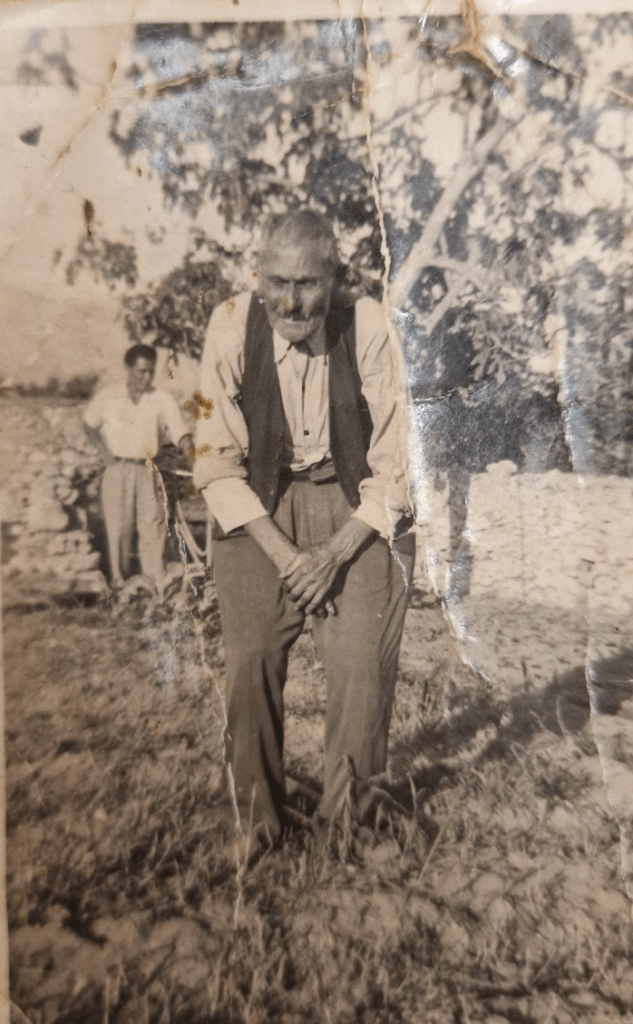
L’uomo che aveva lavorato una vita nei campi si ritrovò bloccato. Le mani si erano deformate, storte come radici di ulivo. Le gambe non reggevano più il peso del corpo. La schiena era diventata un arco di dolore costante. Stanislao, che aveva sempre comandato la casa con voce ferma, adesso restava seduto vicino al camino, avvolto in coperte anche d’estate, lo sguardo perso nel fuoco.
La famiglia perse il suo pilastro proprio quando ne aveva più bisogno.
Pina aveva vent’anni. Il fratello maggiore aveva già la sua famiglia. Antonio, il più piccolo, era ancora un ragazzo. Le sorelle più grandi badavano alla casa, ai bambini, ai vecchi. Restava solo lei per i campi.
Si ritrovò a fare tutto da sola. Zappare. Seminare. Innaffiare. Raccogliere. Caricare il carretto senza l’aiuto del padre. Portare la verdura al mercato. Contrattare coi clienti. Difendersi dai furbetti che cercavano di fregarla perché era donna e giovane. Tornare a casa con le mani piene di vesciche e la schiena spezzata.
Vent’anni e il peso del mondo sulle spalle.
Ma non si lamentò mai. Nemmeno una volta.
«Bisogna andare avanti,» diceva. E andava.
Quando la vedevi tornare dai campi la sera, con la gonna sporca di terra fino alle ginocchia e le mani che tremavano per la stanchezza, ti veniva da chiederti dove trovasse la forza. Ma lei entrava in casa, si lavava le mani, preparava da mangiare per tutta la famiglia, e il giorno dopo si alzava prima dell’alba per ricominciare.
Pina non cercava riconoscimenti. Faceva quello che andava fatto. Punto.
E quando qualcuno le chiedeva «Ma come fai?» lei scrollava le spalle: «E che devo fare? Ci devo morire di fame?»
Aveva imparato prestissimo che lamentarsi non cambia le cose. Lavorare sì.
Ed era l’unica che sapeva leggere. L’unica su tutte e sette figli viventi. Perché il padre, Stanislao, era uno dedito alla preghiera. «Aveva un minimo di istruzione, riusciva a leggere,» racconta Tina. «E questo lo trasmise solo a lei. Le altre zie non le ho mai viste prese dalla lettura. Ma mamma sì, leggeva».
La tragedia della sorella Filomena
Mamma aveva visto anche cosa succedeva alle donne che non sceglievano il proprio destino. La sorella Filomena, appena diciannove anni, era stata costretta a sposare un cugino violento e ignorante, in un matrimonio combinato. La famiglia di lui era di persone analfabete e particolarmente cattive. «Lei non si voleva sposare, però l’hanno obbligata. Poi fu maltrattata dalla famiglia del marito perché non venivano figli. E si è lasciata morire, praticamente.»

All’epoca le figlie femmine purtroppo dipendevano molto dalla famiglia, quindi dal padre o da un marito, come nei paesi islamici. Ed era sempre colpa della donna se non arrivavano bambini. Filomena subiva umiliazioni quotidiane, veniva trattata come una fallita, come una che non sapeva fare nemmeno quello per cui erano fatte le donne, secondo loro. Il peso della vergogna le schiacciava il petto ogni mattina quando si svegliava. Non riusciva a mangiare, non riusciva a dormire. Si consumava giorno dopo giorno, divorata dal senso di colpa per qualcosa che non dipendeva da lei. Ma lei di tutto questo, ai genitori, a Pina e alle altre sorelle non ha mai detto niente. Questa cosa l’hanno saputa dopo.
Nel giro di un anno dal matrimonio era sul letto di morte. Aveva solo vent’anni.
Ma la vita ha una forma particolare di giustizia. Il marito di Filomena si risposò poco dopo. Anni passarono. Anche dal secondo matrimonio non arrivarono figli. Mai.
Il problema era lui. Era sempre stato lui.
È un maschio, chiamalo Antonio
Proprio mentre Filomena stava morendo, nonna Civita invece era incinta del suo ultimo figlio. Era di sette mesi quando la figlia – malata e debilitata – le disse qualcosa che nessuno si aspettava:
«Non piangere per me perché io sto bene dove sto andando, ma tu pensa a questo che deve nascere. È un maschio e lo devi chiamare Antonio.»
L’ecografia non esisteva negli anni Venti, e non si sarebbe potuto sapere il sesso in anticipo. Ma Filomena aveva ragione. Nel 1927 nacque Zio Antonio, 7 anni dopo mamma.
Intanto Filomena era morta per niente. Si era lasciata consumare dalla vergogna per una colpa che non aveva, si era lasciata umiliare per un difetto che non era suo. Ma quando la verità venne fuori, lei non c’era più per saperlo. Non c’era più per vedere la faccia di chi l’aveva tormentata, per sentire le scuse che non sarebbero mai arrivate comunque.
Quella lezione mamma non l’aveva mai dimenticata. Per questo aveva rifiutato tutte le proposte di matrimonio fino ai trentatré anni. E per questo, quando decise di sposarsi, fu una scelta sua. Completamente sua.
Da ragazza mamma era anche una bella donna. Quando andava con il carretto a vendere a Gaeta, in Piazza Traniello, tutti i soldati fischiavano al suo passaggio.
La zia Suora
C’era anche una sorella suora. Annunziata, si chiamava. Suor Maria Stanislao da religiosa. Viveva a Roma, in convento. Era l’unica della famiglia che aveva preso quella strada.
Non ho mai capito bene come fosse successo. In una famiglia di contadini, dove tutti lavoravano la terra, dove le mani servivano per zappare e non per pregare, una figlia che sceglieva il convento era una cosa rara. Ma Annunziata – che tutti abbiamo sempre chiamato affettuosamente “Zia Suora” – aveva sentito quella chiamata. E mamma, che pure era così devota, non l’aveva sentita. Ognuno viene chiamato verso qualcosa di diverso, suppongo.
Tornava per le feste importanti. I matrimoni, i battesimi. Arrivava con l’abito nero, il velo, quel modo di camminare che hanno le suore, silenzioso e composto. Era molto più piccola di mamma, e più estroversa.
«Quando nonna Civita è morta,» racconta Tina, «zia Suora è arrivata da Roma. Era già lì, al capezzale. E quando nonna ha visto tutti i suoi figli attorno, quando ha visto anche zio Antonio, l’ultimo, quello che aveva fatto più strada per arrivare… si è girata verso zia suora e le ha detto qualcosa all’orecchio. Solo a lei.»
Non sappiamo cosa le abbia sussurrato. Ma dev’essere stato qualcosa di importante. Perché subito dopo ha chiuso gli occhi ed è morta.
Le mine nell’orto
Aveva vent’anni quando decise di sfidare la morte.
Era il 1943, forse il ’44. I tedeschi controllavano tutto. Avevano requisito le case, i viveri, gli animali. E quando si erano ritirati verso nord, avevano lasciato un regalo: mine antiuomo nei campi coltivati. Per rallentare l’avanzata degli Alleati, dicevano. Per uccidere i civili affamati, era la verità.
Divieto assoluto di entrare nei terreni. Cartelli ovunque. Teschi e ossa incrociate. Achtung Minen. Chi provava, saltava per aria. Qualcuno aveva già provato. I pezzi li avevano trovati sparsi tra i solchi.
Ma in casa si moriva di fame.
«Là c’ho piantato i cavolfiori a settembre,» diceva Pina guardando l’orto dalla finestra. «I cappucci sono quasi pronti. Se marciscono, quest’inverno che mangiamo?»
Stanislao, paralizzato sulla sedia, scuoteva la testa. «Pina, nun ce sta da fà. È troppo pericoloso.»
Le sorelle la imploravano. «Sei pazza? Là ci sono le mine. Una è amica tua, ti vuoi ammazzare?»
«E allora?» rispose lei con quella voce dura che aveva quando decideva qualcosa. «La roba si perde. Noi ci dobbiamo morire di fame perché quelli hanno messo le mine nel nostro orto? Nei campi che noi abbiamo lavorato?»
«Ma Pina…»
«Ci devo andare di notte. Che nessuno mi vede.»
Riccioli d’oro
Ci andò.
Aspettò che calasse il buio. Una notte senza luna, nera come pece. Prese un sacco di iuta e uscì dalla porta sul retro senza fare rumore. Le sorelle pregavano in casa, le mani strette sul rosario, gli occhi chiusi perché non volevano vedere.
L’orto distava poco. Ma quella notte sembrava lontano chilometri.
Camminava lenta. Ogni passo poteva essere l’ultimo. Il terreno sotto i piedi era quello che conosceva da quando aveva otto anni, ogni zolla, ogni pietra, ogni albero. Ma adesso era diventato estraneo. Ostile. Traditore.
Il freddo le mordeva le mani. L’aria sapeva di terra bagnata e ferro. In lontananza, un cane abbaiava. Più vicino, solo il suo respiro e il fruscio della gonna contro le gambe.
Si fermò all’inizio del campo.
Qui dentro ci sono le mine. Da qualche parte. Forse qui. Forse più avanti. Forse ovunque.
Il cuore le batteva così forte che sentiva il sangue pulsare nelle tempie. Le mani tremavano. Non di freddo. Di paura pura.
Gesù, Maria e Giuseppe, pregò dentro di sé. Se devo morire, fammi morire in grazia di Dio. E proteggi la mia famiglia.
Poi fece il primo passo nel campo minato.
Camminava nel vialetto che lei stessa aveva tracciato mesi prima tra i filari. Sapeva che lì il terreno era compatto, calpestato. Forse le mine stavano più in profondità, tra le piante. Forse.
Ogni passo era un atto di fede.
Non si girava. Non guardava dietro. Andava avanti sul suo obiettivo. I cavolfiori stavano in fondo, vicino al muretto a secco. Doveva arrivare fin là.
Il silenzio era assoluto. Neanche il vento.
Poi sentì qualcosa.
Un calpestio. Dietro di lei.
Si fermò di colpo. Il cuore le si ghiacciò in petto.
Qualcuno mi ha seguito. I tedeschi. Una pattuglia. Mi hanno vista. Adesso ci saltiamo tutti per aria.
Il calpestio continuava. Ma non era di persona adulta. Era leggero. Troppo leggero.
Si voltò.
A pochi metri di distanza, nella notte quasi totale, vide una figura piccola. Un bambino. Quattro, forse cinque anni. Pieno di riccioli biondi che brillavano come oro anche al buio. Il viso pallido come cera.
Il bambino la guardava. Non parlava. Non si muoveva. Stava solo lì, fermo, in mezzo al campo minato.
«Che ci fai qua?» sibilò Pina con un filo di voce. «Te ne devi andare. Subito. Qua saltiamo tutti per aria, hai capito? Te ne devi andare. Vattene!»
Il bambino non rispose. Non fece un gesto. Non pianse. Restava immobile come una statua.
Il gelo le salì lungo la schiena. Un gelo che non veniva dal freddo della notte. Un gelo più profondo.
«Vattene!» ripeté.
Niente.
«Fa quello che vuoi,» disse alla fine. «Io qua mi devo sbrigare. Se mi prendono, sono morta.»
Si voltò e andò avanti. Il cuore le martellava così forte che faceva male. Ma non poteva più tornare indietro. Era già nel mezzo del campo. Ormai tanto valeva arrivare fino in fondo.
Raggiunse i cavolfiori. Li toccò al buio. Erano gonfi, maturi, perfetti. Ne staccò uno. Poi un altro. E un altro ancora. Riempì il sacco in fretta, le mani che tremavano, le dita intorpidite dal freddo.
Si voltò per controllare se il bambino era ancora là.
Non c’era più.
Era scomparso. Come se non fosse mai esistito.
Il campo era vuoto. Buio. Silenzioso.
Pina rimase immobile per un lungo momento. Il sacco pesante sulla spalla. Il respiro bloccato in gola. Poi scosse la testa e tornò indietro, passo dopo passo, lungo il vialetto, fino all’uscita del campo.
Non saltò nessuna mina.
Arrivò a casa con il sacco pieno. Le sorelle piansero di sollievo. Stanislao la guardò senza dire niente, gli occhi lucidi.
«Visto?» disse Pina. «C’era da andare e ci sono andata.»
Il rumore degli stivali tedeschi
Ma qualcuno l’aveva vista. Le malelingue di Gaeta non perdevano mai un’occasione. L’invidia, la gelosia. Guarda, quella è riuscita ad andare ed è pure tornata con tutta la roba da mangiare. Come ha fatto? Sicuro che è d’accordo coi tedeschi.
La denunciarono.
Il giorno dopo, Pina era nell’orto di casa quando sentì il rumore degli stivali. Si voltò. Quattro soldati tedeschi. Tre semplici e un tenente. Non andavano mai da soli. Mai.
Il tenente aveva la divisa stirata perfetta, le mostrine lucide. Gli altri tre tenevano i fucili pronti. Parlavano tra loro in tedesco. Pina non capiva una parola.
Il tenente si avvicinò. Tirò fuori la pistola dalla fondina. Una Luger nera che brillava al sole. La puntò dritta contro Pina. Il dito sul grilletto.
Pina si bloccò. Le mani sporche di terra ancora strette intorno a una pianta di insalata.
Il tenente urlava qualcosa. Faceva segni verso il campo minato. Puntava la pistola. Nein! Nein! gridava.
Pina alzò le mani. Lentamente. Fece segno al campo. Poi a sé stessa. Poi alla bocca.
«Noi c’abbiamo fame,» disse in italiano, anche se quello non capiva. «Come dobbiamo fare? Là la roba si perde.»
Il tenente non abbassò la pistola. Anzi. La fece scivolare lentamente dalla fronte di Pina fino al centro del petto. La canna fredda contro il cuore.
Pina capì.
Sono morta.
Chiuse gli occhi. «Gesù,» sussurrò. «Se ho fatto del bene, ti ringrazio. Se ho fatto del male, perdonami.»
Aspettò lo sparo.
Non arrivò.
Riaprì gli occhi. Il tenente la fissava. Aveva visto la paura. L’aveva riconosciuta. Non era un’azione di guerra. Non era un atto di sfida. Era solo una ragazza affamata che cercava di sopravvivere.
Abbassò la pistola.
Poi alzò la mano.
E le diede uno schiaffo. Forte. Le fece girare la faccia dall’altra parte. Il dolore esplose sulla guancia. Le orecchie fischiavano.
Il tenente urlò qualcosa in tedesco. Parole dure, taglienti come lame. Poi fece un gesto verso il campo minato. Non più. Mai più.
Pina annuì. La guancia bruciava. Ma era viva.
I quattro soldati se ne andarono. Gli stivali che battevano sulla strada. Le voci che si perdevano in lontananza.
Pina rimase in piedi, una mano sulla guancia rossa. Tremava. Tutto il corpo tremava. Ma non piangeva.
Aveva avuto salva la vita.
A testa alta
Anni dopo, quando raccontò quella storia a Tina, aggiunse una cosa che non dimenticò mai: «Quando fai le cose alla luce del sole, puoi attraversare un esercito di soldati e non avere nulla da temere se sei una persona retta e corretta».
Era la filosofia di una vita. Pina non aveva paura perché non aveva nulla da nascondere. Andava a raccogliere la sua verdura nel suo campo. Non rubava. Non tradiva. Non mentiva. Se doveva morire, sarebbe morta a testa alta.
Quel coraggio le salvò la vita.
E quel bambino biondo coi riccioli d’oro? Non ne parlò mai con nessuno. Tranne una volta, molti anni dopo, quando Tina le chiese di quella notte.
«C’era un bambino,» disse mamma con voce bassa. «Piccolo piccolo. Biondo. Non so chi fosse. Non so da dove venisse. Era lì, poi non c’era più.»
«E secondo te chi era?»
Mamma non rispose subito. Guardò lontano, come se vedesse ancora quella notte buia, quel campo minato, quella figura piccola che brillava al buio.
«Non lo so,» disse alla fine. «Ma qualcuno mi stava proteggendo.»
Continua…
Nel prossimo episodio:
Mia madre aveva sacrificato la gioventù per la famiglia. Ma quando il fratello minore tornò e le disse che il maschio era lui, che toccava a lui comandare, qualcosa si spezzò. A trentatré anni, magra come un chiodo dopo la malaria, incontrò un vedovo appena uscito dal carcere. Due mesi dopo erano marito e moglie.
Iscriviti al alla newsletter per ricevere in anteprima i prossimi episodi.
Vuoi recuperare gli episodi precedenti? Li trovi qui
A Family Memoir in Progress — All episodes
← Episode 5: Armando’s War | Episode 7: The First One To Arrive, I’ll Marry →


2 thoughts on “A Family Memoir in Progress — Episode 6: Pina, the Land and the War”